A hunting boot can seem fine when you first try it on. Then a few miles into a hunt, your toes start hitting the front of the boot, your heel feels loose, and every step becomes annoying.
We’ve dealt with this ourselves and have seen plenty of hunters run into the same problem. Most of the time, the boot isn’t defective. The issue usually comes down to fit, sizing, socks, insoles, or lacing.
The good news is that foot movement inside hunting boots is often easy to fix once you know what’s causing it.
In this guide, we’ll look at the most common reasons your foot slides forward in hunting boots and what you can do about it.
Why Does Your Foot Slide Forward in Hunting Boots?
There are a few reasons likely to cause your foot to move inside a boot:
The Boots Are Too Long
This is the most obvious reason.
When there is too much space in front of your toes, your foot naturally shifts forward while walking downhill, climbing over obstacles, or crossing uneven ground.
Many hunters intentionally size up for thick socks or cold-weather insulation, but going too large often creates more problems than it solves.
Understanding how hunting boots should fit can help you avoid foot movement before it becomes a problem.
The Boots Are Too Wide
Many hunters focus only on boot length. It isn’t always the issue.
A boot can be the correct length but still allow excessive movement if it’s too wide for your foot. If your foot moves side to side, it will often move forward as well.
This is especially common for hunters with narrow feet wearing standard or wide-width boots.
If you’re unsure whether you need a standard D width or a wider EE fit, understanding boot width measurements can help you choose a better-fitting pair.
Your Insoles Are Worn Out
Insoles lose support over time.
Once they flatten out, your foot may sit lower in the boot and move around more than it should.
If your hunting boots are several seasons old, replacing the insoles may improve the fit significantly.
Your Socks Don’t Match the Boot
Sock choice plays a bigger role than many hunters realize.
Thin socks can leave extra space inside the boot. Thick socks can sometimes improve fit, but only if the boot isn’t already tight.
The goal is a secure fit without creating pressure points.
Your Boots Aren’t Laced Properly
This normally happens with lace-up leather hunting boots. If the boot is not tied well, your heel can lift, and your foot can drift forward every time you take a step.
A properly laced hunting boot should hold your heel in place while allowing comfortable movement.
What Happens When Your Foot Keeps Sliding?
This is not just an annoyance. It can wear you down.
The most common problem is toe bang. That is when your toes keep hitting the front of the boot. After a while, your toenails start feeling it. On a long hunt, that kind of pressure can ruin your day.
When this becomes regular, it leads to a fungal infection affecting your toenail and the skin around it.
Also, the back-and-forth movement when your foot slides forward can cause blisters on your feet and heel.
In cases where the blisters burst due to pressure, they cause the skin on which they form to peel and sometimes bleed. Foot sliding in shoes can also cause subtle burns beneath the feet, often resulting from the friction between your leg and the shoes.
Aside from these foot issues, some hunters also end up with sore arches, tender ankles, or hot spots that turn into raw patches before the day is over.
We have learned that when a boot is sliding around too much, your whole foot pays for it later.
How to Stop Foot From Sliding Forward in Shoes?
You don’t have to abandon all your favorite shoes and heels just because your foot slides forward when you wear them.
There are several ways to prevent this from happening and help you enjoy your footwear properly.
Start with the fit
If the boots are clearly too long, there is no magic trick that will make them fit right. You may need a different size.
The same goes for width. If the boot feels loose even when you lace it up well, try another width before giving up on the whole boot.
A lot of hunters get stuck thinking only about length. Width matters just as much. A boot that is too wide can feel roomy in all the wrong places.
Try a better insole
This is one of the easiest fixes. A good insole can take up dead space and help your foot sit deeper and more stable in the boot. It can also add support, which helps on long walks and uneven ground.
If the original insole is thin or worn out, replacing it can change the feel of the boot fast. I have had boots go from sloppy to solid with nothing more than a better insole.
Wear the right socks
Sock choice matters more than most people think. For hunting boots, I like socks that give me some cushion without making the boot feel packed full.
If your foot is sliding because the boot feels too roomy, a slightly thicker hunting sock may help. If the boot already feels tight, do not force it with a heavy sock. That usually makes things worse.
The goal is a snug fit, not a cramped one.
Lace the boots the right way
A lot of hunters tie their boots once and forget about them. That works until the boot starts moving around.
Make sure the lower part of the boot holds your foot down well, and the upper part keeps your heel stable. If your heel lifts, your foot often shifts forward a little each step.
Take a minute to retie the boots before you start walking. It sounds small, but we have fixed a bad-feeling boot just by tightening the laces the right way.
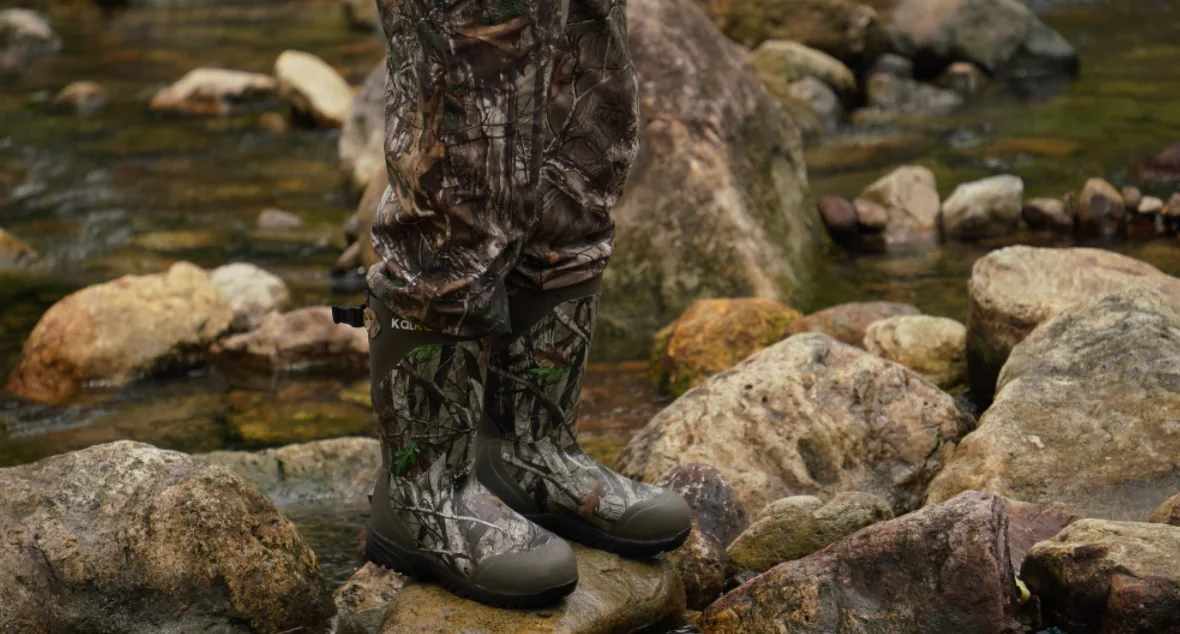
Try out Kalkal rubber hunting boots with adjustable fits, so you don’t need to worry about the lace problem.
Break them in
Some boots need time. New hunting boots often feel stiff at first, and that stiffness can make your foot move in a strange way until the boot softens a little.
Do not take a brand-new pair straight into a full-day hunt if you can help it. Wear them around the house, in the yard, or on shorter walks first.
That gives the boot time to settle and lets you find out early if something feels off. See our tips to break in hunting boots effectively.
Check the heel hold
If your heel lifts every time you walk, your foot is more likely to slide forward. That is usually a sign the boot is not locking your foot in place the way it should.
A better heel fit can make a bigger difference than people expect. Sometimes the fix is a different lace pattern. Sometimes it is a different boot shape. Either way, heel hold matters.
A Few Small Fixes That Can Help
If the boot is close to right, but not perfect, these small changes may help.
You can try a more supportive insole. You can also try a sock with a little more structure. If the boot has a lot of extra room in the front, sometimes a different thickness of sock is enough to improve the feel.
Another thing we have seen help is simply not over-tightening the top of the boot while leaving the lower part loose. That can make the foot slide in a way that feels worse, not better.
The boot should feel secure, but not crushed.
When It Is Time to Move On
Sometimes a boot just is not the right match. That happens.
If your foot still slides after you try the right size, the right width, better socks, and new insoles, the boot shape may not suit your foot.
For different brands, some boots run narrow, some run wide. Some fit a high instep better than others. That is why one hunter can swear by a boot while another hunter hates it. Feet are not all built the same.
If the fit keeps causing pain, do not fight it too long. A boot that works against you will cost you more than the price of a new pair.
Final Thoughts
A hunting boot should help you stay steady, quiet, and comfortable. It should not make you think about your feet every few steps.
If your foot slides forward in your boots, start with the simple stuff first: fit, width, insoles, socks, and lacing. Most of the time, one of those is the real problem.
When a boot fits right, the whole day goes better. You walk better, climb better, and stay focused on the hunt instead of your feet.
A good boot does not need to feel fancy. It just needs to stay put.