
When is the best time to hunt deer?
Most hunters will tell you the same thing: deer move at dawn and dusk. That’s true, but it’s not enough to help you make better decisions in the field.
The truth is, deer don’t move on a fixed schedule. Their behavior changes based on the season, weather, pressure, and food. What works one week might completely fail the next.
In this guide, you’ll learn not just when deer move, but why they move, and how to use that to your advantage. So instead of guessing, you can pick the right time, the right conditions, and the right setup to hunt smarter.
The Best Time of Day to Hunt Deer
There’s no solid study that shows exact success rates for morning vs evening hunts. Everyone has their own chance of bagging a buck in different time of the day.
For a successful hunt, you need more information to understand deer movement, determine the right hunting timing, and position yourself based on that.
Early Morning (1 – 2 Hours After Sunrise)
In the early morning, deer are usually on their way back from feeding areas to their bedding cover. This is a short but valuable window where the deer movement is still active, and the visibility is good enough for you to hunt effectively.
If you’re set up along one of those travel routes, especially on the downwind side, you have a solid chance to catch them before they disappear for the day.
One thing many beginners get wrong is going too deep into deer resting areas. Getting closer doesn’t increase your odds, instead you risk spooking deer before shooting.
Once that happens, your hunt is basically over.
Is Midday Hunting Worth It?
Midday is often ignored, but it shouldn’t be.
Deer movement is lower, but certain conditions can make it worthwhile. Such as, during the rut, bucks may move at any hour while searching for does.
On pressured land, midday can also become a quieter window when deer feel safer. Cold fronts can trigger unexpected movement as well.
It’s not the most consistent time of day, but staying in the woods longer increases your chances of encountering a buck that isn’t following a strict pattern.
This is often how mature deer get taken. We’ve seen more than a few good bucks taken between 11 AM and 2 PM, especially when other hunters have already left the woods.
Evening (2 – 3 Hours Before Dark)
Evening hunts are generally more predictable. Deer rise from bedding and begin moving toward food. They will often take their time and stage in cover before entering open areas.
This makes the last couple of hours before dark one of the most reliable windows to hunt.
A better setup is slightly off the food, along entry trails or transition zones, so you can catch movement earlier without adding pressure.
But remember to check the time. Each state has regulations for a specific time on how late you can hunt deer in the field.
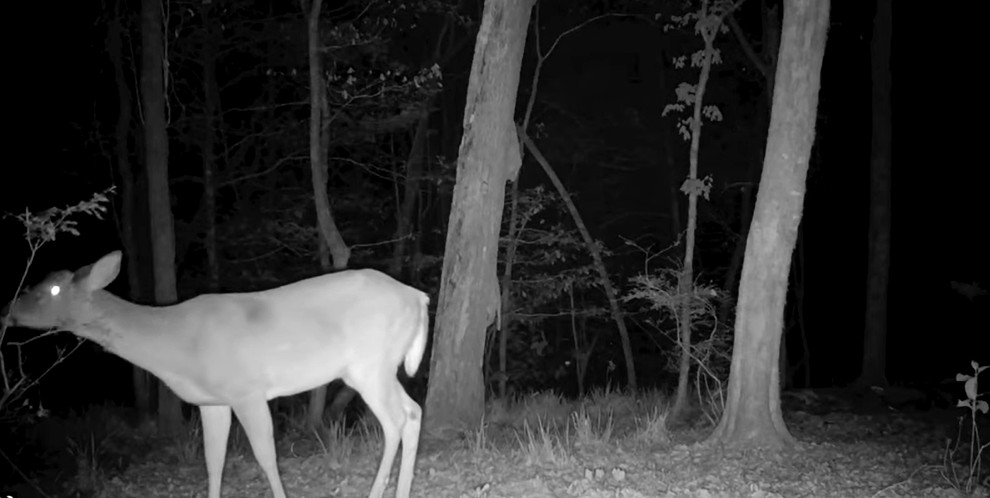
The Best Time of Season (This Matters Most)
If you’re hunting at the right time of day but in the wrong part of the season, your odds are still low.
Deer behavior changes throughout the season, and those changes matter more than the clock.
Early Season
In the early season, deer are still on a consistent routine. Food is the main driver, and movement tends to be short and predictable.
If you can locate an active food source, like crops or acorns, you can often catch deer moving along the same paths day after day.
The key here is to hunt carefully, because pressure will break that pattern quickly.
Pre-Rut
As the pre-rut begins, movement starts to increase.
Deer become more active and begin expanding their range, checking for does and leaving signs like scrapes and rubs.
Deer become less reliant on food and more focused on travel. This is where funnels, edges, and transition zones start to outperform food-based setups.
Rut (Peak Time to Hunt Deer)
The rut is the peak season that most hunters talk about, normally around early to mid-November.
Bucks are driven by breeding and move more during daylight, often covering ground without much regard for danger. During this time, their patterns become less predictable, but overall activity goes up. This is when longer sits start to make sense.
Instead of targeting a specific deer, you’re hunting movement itself, especially near areas where does are likely to be.
Late Season
Late season deer hunting is a different story; it shifts back to survival.
After months of pressure and the stress of the rut, deer reduce movement, become more cautious, and focus heavily on food again.
Daylight activity becomes more limited, and deer are quicker to react to pressure.
If you push too hard or hunt too aggressively, deer will simply adjust and move after dark. But if you can locate a reliable food source and hunt it with minimal pressure, you can still find consistent opportunities during colder weather.
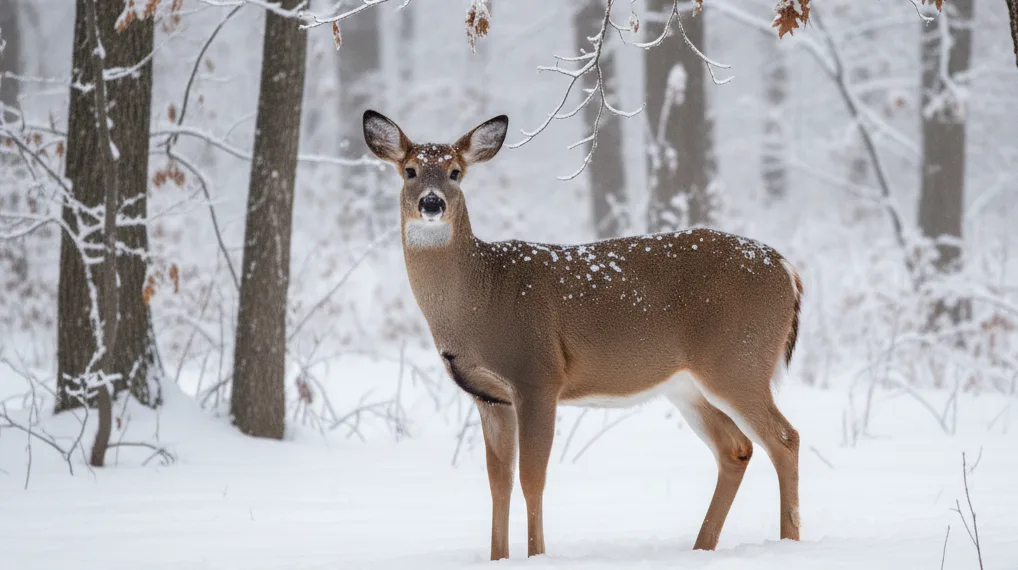
The Best Weather Triggers for Deer Movement
Weather not only affects deer movement, but also decides whether you should go to a hunt or not.
Cold Fronts (Top Trigger)
The biggest trigger is a cold front.
When temperatures drop after a warm stretch, deer tend to move more. Cooler air helps deer stay active longer, and it often lines up with better daylight movement.
But it’s not just the temperature. What really matters is the change, not the number.
Barometric Pressure Changes
Barometric pressure is another factor hunters should pay attention to for good reason.
When pressure starts rising, movement often goes up. Deer seem more comfortable getting on their feet during those stable, high-pressure periods.
Falling pressure, on the other hand, is less reliable. You might still see movement, but it’s usually not as strong or predictable.
Wind Direction vs Wind Speed
Wind is where a lot of hunters get it wrong. It’s not just about wind speed; it’s about direction.
Deer have a good sense and rely heavily on their nose, and they move in ways that help them stay downwind of danger.
A steady, consistent wind is usually better than swirling conditions. Even if it’s a bit stronger, as long as it’s predictable, you can plan around it.
Remember, always position yourself downwind.
Before or After Rain
Rain is often misunderstood too.
Light rain or drizzle can actually be good. It softens noise, keeps scent down, and makes deer feel more secure. Movement during light rain is often steady, especially if it’s been dry.
Heavy rain is different. Most deer will bed down and wait it out. But right after the rain stops, that’s a window worth paying attention to. Deer often get up and move once the weather clears.
▶Read More: How Realistic Is Deer Hunting In The Rain?
Where Should You Hunt at Different Times?
Knowing when deer move is only half the equation. If you’re in the wrong place at the right time, it still doesn’t work.
The key is matching the time of day with where you should actually sit.
In the morning, deer are heading back to bed. That means you want to be closer to bedding areas, but not right on top of them. Focus on trails leading into thick cover so that you can catch them on the way back.
In the evening, everything changes. Deer are getting up and moving toward food. This is when you come closer to feeding areas, but still not right on top.
Set up along entry routes or edges so you can catch movement earlier and avoid spooking deer after dark.
During the rut, bucks are moving between areas. This is when funnels, ridges, and pinch points become your best spots.
Late season is simpler again. Deer care about food and safety. Focus on reliable food sources, especially in the evening, and keep pressure low. If you push too hard, they’ll just go nocturnal.
For beginner hunters, if you only remember one thing, remember this:
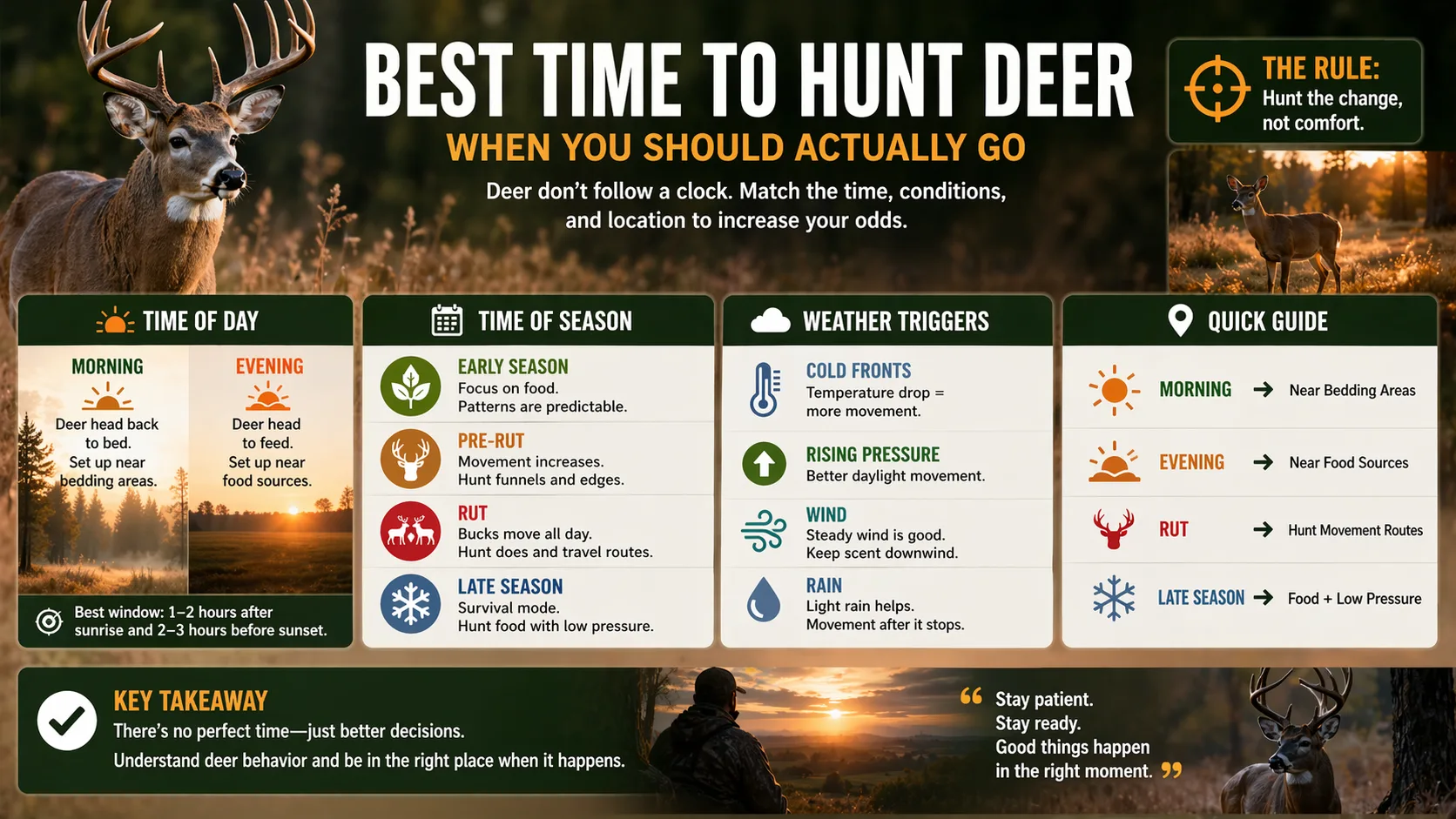
- Morning: near bedding
- Evening: near food
- Rut: hunt movement routes
- Late season: food plus low pressure
Based on these tips, you are ahead of most hunters.
Does Moon Phase Really Matter for Deer Hunting?
A lot of hunters believe in the moon phases. You’ll hear things like “full moon slows deer down” or “new moon gets them moving.”
But if you look at actual research, there’s no strong or consistent link between moon phase and deer movement.
So why do people believe it?
Most of the time, it’s because other factors are lining up at the same time. Hunters hunt on a full moon, see good movement, and assume the moon caused it. But in reality, it’s often something else, like a cold front, rising pressure, or the rut kicking in.
That doesn’t mean the moon has zero effect. It may shift movement slightly, especially at night. But it’s not strong enough to base your hunt around.
What actually matters more:
- Weather changes (especially cold fronts)
- Barometric pressure rising
- Time of season (rut vs early season)
If everything else looks good, don’t skip a hunt just because the moon phase looks “wrong.”
Quick Cheat Sheet: When Should You Hunt?
If you don’t want to overthink everything, this is the simple way to decide.
- If you see a weather change, especially a temperature drop or rising pressure, it’s a good time to go.
- If the rut is starting or active, spend more time in the woods. Movement can happen at any hour.
- If it’s early season, focus on food patterns and hunt carefully to avoid pressure.
- If it’s late season, slow down and hunt food in the evenings, especially on cold days.
- If conditions feel “perfect” but nothing has changed, expectations should be lower. Deer often move best when something shifts, not when everything stays the same.
At the end of the day, you don’t need perfect conditions. You just need to be in the right place when something triggers movement.
Conclusion
There’s no single perfect time to hunt deer. But there are patterns.
Deer move based on food, pressure, weather, and the time of season. When you start paying attention to those factors and how they change, you stop guessing and start making better decisions.
For hunters with limited time, you don’t need to hunt every day. Just pick the right days, stay patient, and put yourself where deer are most likely to move.
That’s what makes the difference.