
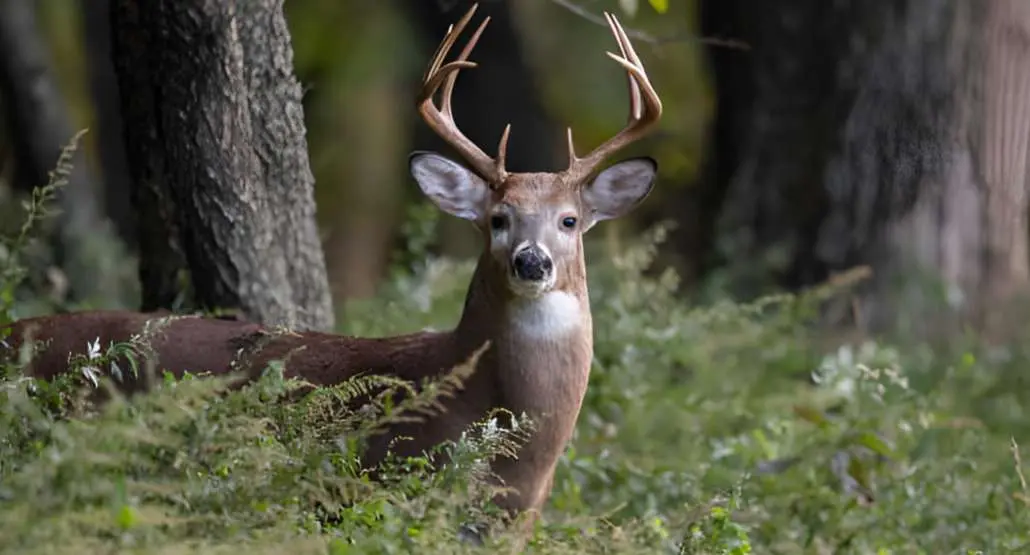
Welcome to Kansas, known for its beautiful landscape and deer hunting opportunities. In Kansas, the dominant deer species are the white-tailed deer and the mule deer. The new Kansas deer seasons will start soon, and let’s get ready for the hunt together!
Learn everything about the deer hunting season with our guide on dates, rules, and licensing details, and make your hunting plan in advance.
What’s New in 2026?
Kansas deer hunting rules don’t change dramatically every year, but a few updates are worth knowing before you apply or plan your hunt.
- Some Deer Tags Are More Limited:
Kansas reduced deer permit numbers in several western units, including Units 1, 2, 17, and 18. If you’re hunting these areas, expect fewer tags available and pay closer attention to your draw strategy. - Check Antlerless Opportunities Before Planning a Hunt:
Most Kansas deer season dates stay the same for 2026, but some units have special antlerless opportunities that run beyond the regular season. Always check the dates for your hunting unit before making plans. - Nonresident Hunters Should Review Draw Odds Before Applying:
Kansas is still one of the most popular states for out-of-state deer hunters. With permit numbers changing in some units, picking the right unit can make a big difference in your chances of drawing a tag.
Kansas Hunting Season Schedules 2026 – 2027
The hunting seasons have been officially released in advance, which gives you clear timelines to plan your schedule, secure any needed arrangements early, and prepare your equipment and strategy accordingly.
Kansas Hunting Seasons By Species
| Species | Zone / Area | Season / Type | Date |
|---|---|---|---|
| Antelope | Statewide | Archery | Sep 19–27, 2026 Sep 18–26, 2027 Sep 23–Oct 1, 2028 |
| Antelope | Statewide | Muzzleloader Only | Sep 28–Oct 5, 2026 Sep 27–Oct 4, 2027 Oct 2–9, 2028 |
| Antelope | Statewide | Firearms | Oct 3–5, 2026 Oct 1–4, 2027 Oct 6–9, 2028 |
| Deer | Statewide | Youth and Disability | Sep 5–13, 2026 Sep 4–12, 2027 Sep 2–10, 2028 |
| Deer | Statewide | Muzzleloader Only | Sep 14–27, 2026 Sep 13–26, 2027 Sep 11–24, 2028 |
| Deer | Statewide | Regular Archery | Sep 14–Dec 31, 2026 Sep 13–Dec 31, 2027 Sep 11–Dec 31, 2028 |
| Deer | Unit 19 Only | Extended Archery, Whitetail Antlerless Only (WAO) | Jan 25–31, 2027 Jan 24–31, 2028 Jan 22–31, 2029 |
| Deer | Statewide | Firearms – Pre-Rut, Whitetail Antlerless Only (WAO) | Oct 10–12, 2026 Oct 9–11, 2027 Oct 7–9, 2028 |
| Deer | Unit 12 Only | Firearms – Extended Pre-Rut, Whitetail Antlerless Only (WAO) | Oct 13–18, 2026 Oct 12–17, 2027 Oct 10–15, 2028 |
| Deer | Statewide | Regular Firearms | Dec 2–13, 2026 Dec 1–12, 2027 Nov 29–Dec 10, 2028 |
| Deer | Unit 3 Only | Extended Firearms WAO – 1st Segment | Jan 1–10, 2027 Jan 1–9, 2028 Jan 1–7, 2029 |
| Deer | Units 4, 5, 6, 7, 8, 9, 10, 16 | Extended Firearms WAO – 2nd Segment | Jan 1–17, 2027 Jan 1–16, 2028 Jan 1–14, 2029 |
| Deer | Units 11, 12, 13, 14, 15, 19 | Extended Firearms WAO – 3rd Segment | Jan 1–24, 2027 Jan 1–23, 2028 Jan 1–21, 2029 |
| Elk | Statewide (Except Fort Riley Subunit 2a & Unit 1) | Archery | Sep 14–Dec 31, 2026 Sep 13–Dec 31, 2027 Sep 11–Dec 31, 2028 |
| Elk | Statewide (Except Unit 1) | Muzzleloader Only | Sep 1–30 (each year) |
| Elk | Statewide (Except Fort Riley Subunit 2a & Unit 1) | Firearms – 1st Segment | Aug 1–31 (each year) |
| Elk | Statewide (Except Fort Riley Subunit 2a & Unit 1) | Firearms – 2nd Segment | Dec 2–13, 2026 Dec 1–12, 2027 Nov 29–Dec 10, 2028 |
| Elk | Statewide (Except Fort Riley Subunit 2a & Unit 1) | Firearms – 3rd Segment | Jan 1 – Mar 15 (each year) |
| Elk | Fort Riley, Subunit 2a | Archery & Muzzleloader Only | Sep 1–30 (each year) |
| Elk | Fort Riley, Subunit 2a | Firearms – 1st Segment | Oct 1–31 (each year) |
| Elk | Fort Riley, Subunit 2a | Firearms – 2nd Segment | Nov 1–30 (each year) |
| Elk | Fort Riley, Subunit 2a | Firearms – 3rd Segment | Dec 1–31 (each year) |
| Elk | Fort Riley, Subunit 2a | Firearms – Extended Season | Jan 1–31 (each year) |
| Turkey | Statewide | Spring – Youth and Disability | Apr 1–14, 2026 Apr 1–13, 2027 Apr 1–11, 2028 Apr 1–17, 2029 |
| Turkey | Statewide | Spring – Archery Only | Apr 6–14, 2026 Apr 5–13, 2027 Apr 3–11, 2028 Apr 9–17, 2029 |
| Turkey | Statewide | Spring – Regular (Firearms & Archery) | Apr 15–May 31, 2026 Apr 14–May 31, 2027 Apr 12–May 31, 2028 Apr 18–May 31, 2029 |
| Upland Birds | Statewide | Pheasant & Quail – Youth and Disability | Nov 7–8, 2026 Nov 6–7, 2027 Nov 4–5, 2028 |
| Upland Birds | Statewide | Pheasant & Quail – Regular | Nov 14, 2026–Jan 31, 2027 Nov 13, 2027–Jan 31, 2028 Nov 11, 2028–Jan 31, 2029 |
| Upland Birds | Statewide | Greater Prairie-Chicken | Sep 15 – Jan 31 (each year) |
| Upland Birds | Statewide | Lesser Prairie-Chicken | Closed |
| Migratory Birds | Statewide | Crow | Nov 10 – Mar 10 (each year) |
| Migratory Birds | Statewide | Mourning & Whitewing Dove | Sep 1 – Nov 29 (each year) |
| Migratory Birds | Statewide | Exotic Dove (Eurasian Collared/Ringed Turtledove) | Year-round |
| Migratory Birds | Statewide | Rail (Sora & Virginia) | Sep 1 – Nov 9 (each year) |
| Migratory Birds | Central Crane Zone | Sandhill Crane | Nov 11, 2026–Jan 7, 2027 Nov 10, 2027–Jan 6, 2028 Nov 8, 2028–Jan 4, 2029 |
| Migratory Birds | West Crane Zone | Sandhill Crane | Oct 17–Dec 13, 2026 Oct 16–Dec 12, 2027 Oct 21–Dec 17, 2028 |
| Migratory Birds | Statewide | Snipe | Sep 1 – Dec 16 (each year) |
| Migratory Birds | Statewide | Woodcock | Oct 17–Dec 1, 2026 Oct 16–Nov 29, 2027 Oct 14–Nov 27, 2028 |
| Migratory Birds | Low Plains (Early, Late & Southeast Zones) | Extended Falconry | Feb 24–Mar 10, 2027 |
| Migratory Birds | High Plains Zone | Extended Falconry | Closed |
| Waterfowl | High Plains Unit | Teal | Sep 19–27, 2026 |
| Waterfowl | Low Plains Unit | Teal | Sep 12–20, 2026 |
| Waterfowl | High Plains Unit | Duck – 1st Segment | Oct 10, 2026–Jan 3, 2027 |
| Waterfowl | High Plains Unit | Duck – 2nd Segment | Jan 22–31, 2027 |
| Waterfowl | Low Plains – Early Zone | Duck – 1st Segment | Oct 10–Dec 6, 2026 |
| Waterfowl | Low Plains – Early Zone | Duck – 2nd Segment | Dec 19, 2026–Jan 3, 2027 |
| Waterfowl | Low Plains – Late Zone | Duck – 1st Segment | Oct 31, 2026–Jan 3, 2027 |
| Waterfowl | Low Plains – Late Zone | Duck – 2nd Segment | Jan 23–31, 2027 |
| Waterfowl | Low Plains – Southeast Zone | Duck – 1st Segment | Nov 7, 2026–Jan 3, 2027 |
| Waterfowl | Low Plains – Southeast Zone | Duck – 2nd Segment | Jan 16–31, 2027 |
| Waterfowl | High Plains Unit | Duck – Youth, Veteran & Military Days | Oct 3–4, 2026 |
| Waterfowl | Low Plains – Early Zone | Duck – Youth, Veteran & Military Days | Sep 26–27, 2026 |
| Waterfowl | Low Plains – Late Zone | Duck – Youth, Veteran & Military Days | Oct 17–18, 2026 |
| Waterfowl | Low Plains – Southeast Zone | Duck – Youth, Veteran & Military Days | Oct 24–25, 2026 |
| Waterfowl | Statewide | Canada & Cackling Goose – 1st Segment | Oct 31–Nov 1, 2026 |
| Waterfowl | Statewide | Canada & Cackling Goose – 2nd Segment | Nov 4, 2026–Feb 14, 2027 |
| Waterfowl | Statewide | Light Goose – 1st Segment | Oct 31–Nov 1, 2026 |
| Waterfowl | Statewide | Light Goose – 2nd Segment | Nov 4, 2026–Feb 14, 2027 |
| Waterfowl | Statewide | Light Goose – Conservation Order | Feb 15–Apr 30, 2027 |
| Waterfowl | Statewide | White-Fronted Goose – 1st Segment | Oct 31, 2026–Jan 3, 2027 |
| Waterfowl | Statewide | White-Fronted Goose – 2nd Segment | Jan 23–Feb 14, 2027 |
| Furbearer | Statewide | General (Badger, Bobcat, Fox, Mink, Muskrat, Opossum, Raccoon, Skunk & Weasel) | Nov 18, 2026–Feb 28, 2027 Nov 17, 2027–Feb 28, 2028 Nov 15, 2028–Feb 28, 2029 |
| Furbearer | Statewide | Beaver Trapping | Nov 18, 2026–Mar 31, 2027 Nov 17, 2027–Mar 31, 2028 Nov 15, 2028–Mar 31, 2029 |
| Furbearer | Statewide | Otter Trapping | Nov 18, 2026–Mar 31, 2027 Nov 17, 2027–Mar 31, 2028 Nov 15, 2028–Mar 31, 2029 |
| Furbearer | Statewide | Coyote | Year-round |
| Furbearer | Statewide | Opossum – Extended Season | Mar 1–Nov 17, 2026 Mar 1–Nov 16, 2027 Mar 1–Nov 14, 2028 |
| Furbearer | Statewide | Raccoon – Extended Season | Mar 1–Nov 17, 2026 Mar 1–Nov 16, 2027 Mar 1–Nov 14, 2028 |
| Furbearer | Statewide | Running – Bobcat, Red Fox & Gray Fox | Mar 1–Nov 11, 2026 Mar 1–Nov 10, 2027 Mar 1–Nov 8, 2028 |
| Small Game | Statewide | Bullfrog | Jul 1 – Oct 31 (each year) |
| Small Game | Statewide | Rabbit – Cottontail & Jackrabbit (Taking) | Year-round |
| Small Game | Statewide | Rabbit – Running | Mar 1 – Nov 1 (each year) |
| Small Game | Statewide | Squirrel | Jun 1, 2026–Feb 28, 2027 Jun 1, 2027–Feb 28, 2028 Jun 1, 2028–Feb 1, 2029 |
Deer Hunting Season In Kansas
Kansas is known as one of the best trophy whitetail destinations in the Midwest. Every year, hunters travel from across the country hoping to chase mature bucks across Kansas farmland and woods.
The deer season in Kansas starts in early September and ends in late January of the next year. While the season dates are important, successful Kansas deer hunting is usually more about where you hunt, how you access the property, and understanding deer movement.
Understanding Kansas Deer Permits
To hunt deer in Kansas, in addition to a hunting license, hunters will need to have a permit, too. Resident or Nonresident hunters will need to apply for certain deer hunting permits.
In previous years, Resident permits could be directly purchased. But this year, there are some differences. Residents and nonresidents may have different application processes, and popular units can be highly competitive.
Resident hunters will need to apply for the Resident Firearm Either-Species/Either-Sex Deer Permit. The Application period is: May 12 – June 12.
Apply DrawingApplication Fees:
- $50 General Residents;
- $30 Resident Landowner/Resident Tenant
- $95 NR Tenant
- $20 Resident Youth (15 and younger)
The permit is valid in either the East Units (3, 4, 5, 7, and 16) or West Units (1, 2, 17, and 18) during the regular firearm season.
For non-residents, there is also a lottery system(deer draw) that is used to allocate deer permits.
📅Application periods: April 1 – April 24
Apply DrawingThe application costs $25, and it is nonrefundable,while the full permit fee is only charged if the hunter is selected.
What if hunters don’t get selected? If you are not chosen, you will receive a preference point for a future drawing instead.
You can also buy preference points that will be applied toward a deer permit in a future drawing. The more preference points you have, the higher the chance you are being selected.
Best Time to Hunt Deer in Kansas
Although every season offers opportunities, many Kansas hunters look forward to November.
The reason is simple: cooler temperatures increase daytime movement, the rut pushes bucks to travel more, and mature bucks become less predictable but more active.
Early season can also be excellent, especially when deer are still following predictable food patterns.
Where To Hunt Deer In Kansas
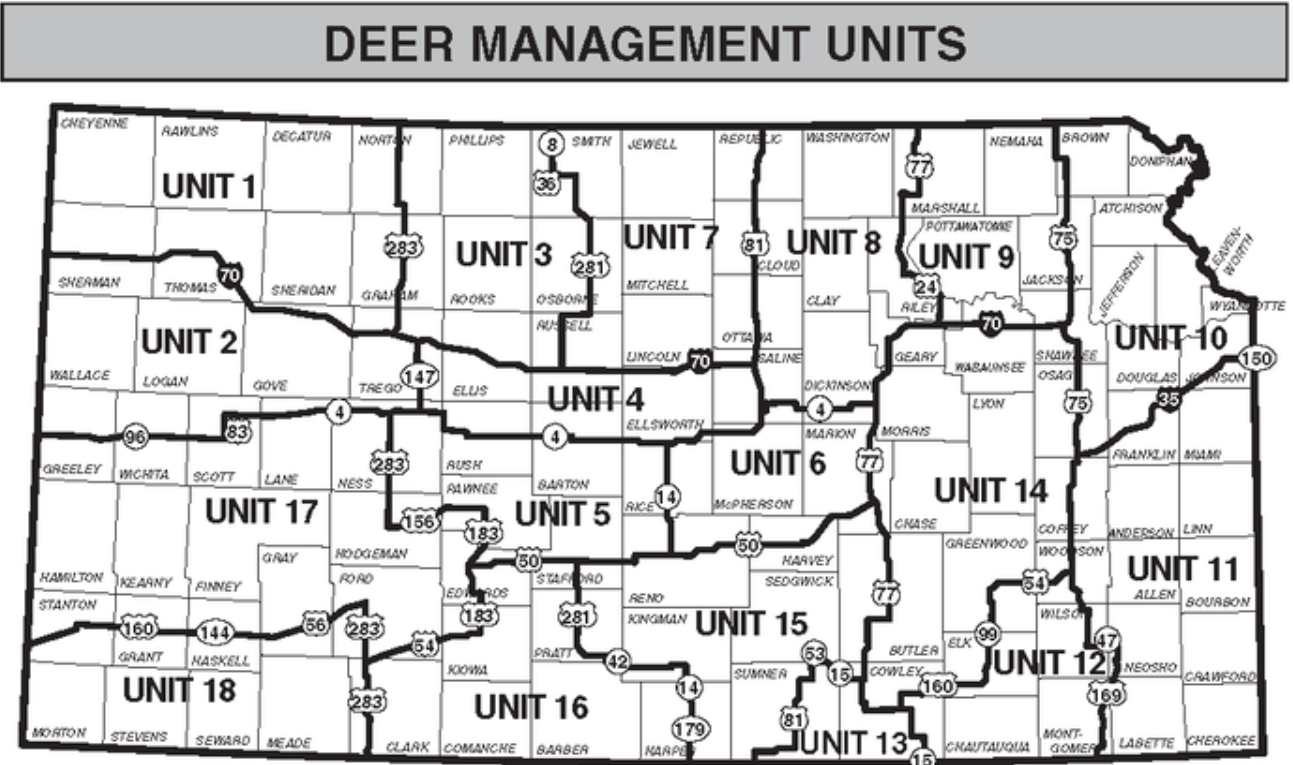
There are 18 deer management units that offer hunting opportunities in Kansas. You can check the following map and find a unit that is near you.
Here are some of the popular deer hunting units in Kansas:
- Unit 15/16: Known as one of the best deer hunting units in Kansas. It is located in the south-central part of the state.
- Unit 16: It is historically known for quality whitetails.
- Unit 17: This unit is more favorable for hunting mule deer.
Kansas has a mix of agricultural land and wooded areas, which creates excellent deer habitat.
A common mistake is focusing only on food sources. Mature bucks often spend daylight hours in thick creek bottoms, brushy cover, and small woodlots surrounded by agriculture,
Finding the bedding area and the route between bedding and food is often more productive than simply sitting over a field.
Kansas Turkey Hunting Seasons
Kansas has a long turkey hunting tradition, but hunters should know that turkey populations have changed in recent years.
The state currently offers spring turkey hunting only. The fall turkey season remains closed as wildlife managers continue monitoring turkey populations.
For most hunters, Kansas spring turkey season is the main opportunity.
Kansas Turkey Permit
Nonresident turkey hunters need to pay close attention to the permit process. The turkey permits are issued through a lottery system, and permits are valid for only one hunting unit.
If you are planning a Kansas turkey trip, you should apply early and choose your unit carefully.
Turkey Hunting Tips
Spring turkey hunting in Kansas is all about finding birds before opening day.
The best spring turkey setups usually combine: roost locations, open feeding areas, timber edges, and creek bottoms. Kansas landscapes can be very open, so scouting from roads and glassing fields can save a lot of walking.
Also, Kansas spring weather can change quickly. One day birds may be vocal and moving, and the next day strong wind can completely change their behavior.
To increase your chance for a successful experience, it is suggested to:
- Scout before hunting
- Locate roost areas
- Avoid overcalling pressured birds
- Hunt field edges and travel routes
▶Read more about Spring Turkey Hunting Tactics.
Kansas Upland Bird Hunting Seasons
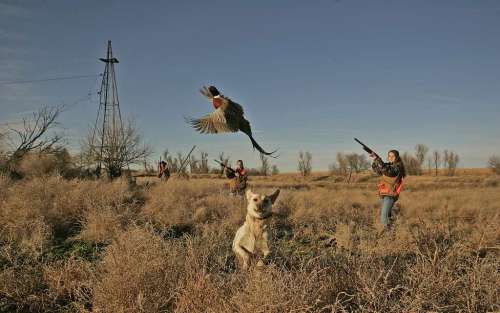
For many hunters, Kansas is not just a deer state; it is also a pheasant state. The wide agricultural landscape, grasslands, and CRP habitat create ideal conditions for pheasant, quail, and prairie chicken hunting.
Kansas Pheasant Hunting
Pheasant hunting is one of Kansas’s biggest outdoor traditions. The biggest factor affecting pheasant hunting success is often habitat quality. The best pheasant habitat usually includes:
- Native grass
- CRP fields
- Crop edges
- Shelterbelts
- Brushy cover
Good weather helps, but birds need places to hide and survive throughout the year.
Many hunters prefer later-season pheasant hunting because birds become more concentrated in better cover. Cold weather can actually improve hunting because pheasants need more energy and often spend more time near quality cover.
However, early season has its advantages. You will find it is easier to predict bird locations and have less hunting pressure.
Kansas Quail Hunting
Kansas also offers excellent bobwhite and scaled quail opportunities. Quail hunters often focus on:
- Brushy fence lines
- Creek edges
- Grasslands
- Shrubby cover
Unlike pheasant hunting, quail hunting is often about walking and covering habitat rather than focusing on large fields.
Kansas Hunting License And Permits
There are various hunting licenses for residents and nonresidents who want to hunt in Kansas. Note that most licenses expire 365 days from the date of purchase, except for multi-year and lifetime licenses.
The license prices are a bit cheaper than last year. Check out how much it will cost you to hunt:
Resident Hunting License Fees
| License | Fee |
| Lifetime Hunting License | $500 |
| Senior One Year License | $12.5 |
| Senior Combination Hunt/Fish | $22.5 |
| Resident One Year License | $25 |
| Resident Combination Hunt & Fish | $47.50 |
| Resident Apprentice | $27.50 |
| 5 Year Resident Combo Hunt & Fish | $182.50 |
| 5 Year Resident Hunt License | $100 |
| Multi-Year Youth Hunt License | $40 |
| Multi-Year Youth Combination Hunt & Fish | $70 |
| Kids under age 15 | Free |
| Kansas Kids Lifetime Combination Hunting and Fishing License | $302.50 (age 5 or younger) $502.50 (age 6 – 7) |
| Resident Lifetime Hunting License | $502.50 |
| Lifetime Hunting & Fishing Combination License | $962.50 |
| Lifetime Furharvester License | $502.50 |
Non-residents Hunting License Fees
| License | Fee |
| Nonresident One Year | $125 |
| Nonresident Under 15 | $40 |
| Nonresident Apprentice | $125 |
| Nonresident Combination Hunt & Fish | $190 |
How to Buy a Kansas Hunting License?
There are 3 ways to buy all valid hunting licenses. Check the following:
- Buy on the official website: Visit the Kansas licensing system and create an account, then you will be able to purchase any license and permits.
- Buy with license agents: Here are all the agents that you can buy licenses from: Locate an Agent.
- By phone: You can call 1-833-587-2164 to purchase the licenses at the office.
Kansas Hunting Regulations Hunters Should Know
Kansas regulations are generally straightforward, but a few things hunters should always keep in mind.
Legal Firearm and Archery
Acceptable firearms include centerfire rifles and handguns that are not fully automatic, utilizing various types of ammunition such as hard-cast solid lead, soft point, hollow point, tumble-on-impact, or other expanding bullets; shotguns of any gauge are also permitted if using only slugs.
Permitted archery such as longbows, recurve bows, compound bows, and crossbows. No electronic device that controls the flight of the arrow can be attached to any arrows or bows.
Hunter Orange Requirements
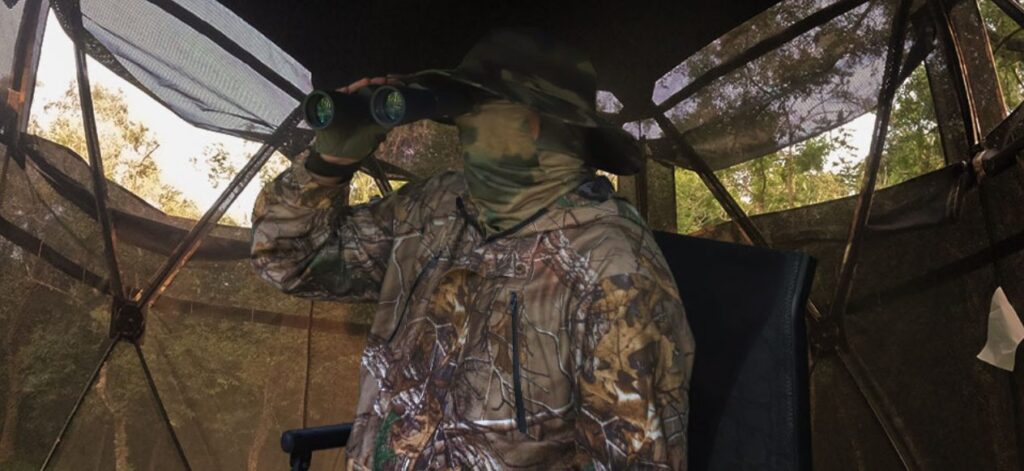
During an open firearm or muzzleloader season, all deer hunters must wear orange. An orange hat and a minimum of 200 square inches of orange are necessary, with 100 square inches visible from the front and 100 square inches visible from the back on the upper body.
Camouflage orange is acceptable as long as it meets the required visibility.
Understand Public Land and WIHA Access
One of the biggest challenges for nonresident hunters is access. Kansas has a large amount of private agricultural land, so public access requires planning.
Many hunters use wildlife areas, Walk-In Hunting Access (WIHA) properties, and private land permission. Do not wait until you arrive in Kansas to start looking for access.
Check Unit and Permit Requirements
Different species have different permit systems.
Before hunting, confirm your season type, hunting units, permit requirements, and tagging rules
This is especially important for deer and turkey because permit availability can affect your entire trip.
Prepare for Kansas Weather
Kansas weather can change fast. A November deer hunt might shift from freezing mornings to warm afternoons,
For upland hunters, walking conditions can also change quickly after rain or snow. Good waterproof hunting boots and layered clothing are often more important than bringing too much gear.
How to Hunt Kansas WIHA Like a Local?
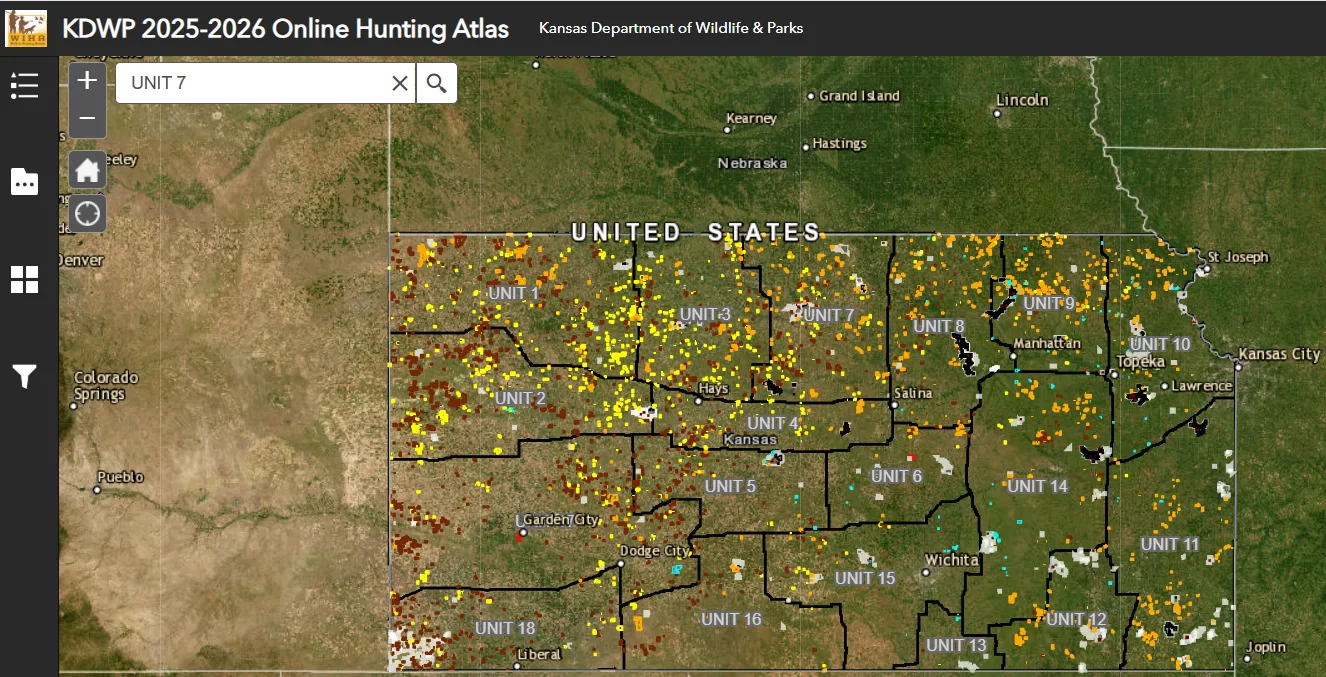
Kansas WIHA(Walk-In Hunting Access) gives you over a million acres to hunt. Luck won’t get you a big buck; you need strategies. Here are some practical tips:
- Small-tract advantage: Most folks chase the big 1,000+ acre tracts on the map. Don’t fight the crowds. Some of the best mature bucks live on small, ignored parcels (40–80 acres) right next to private corn or soybean fields. Those small lands are perfect bedding spots. Lazy hunters may directly drive past them, leaving you with opportunities.
- Late season pays off: October (pre-rut) is pressured with heavy hunter traffic. Data shows the January Extended Firearm Season is hardly used. If you can stand the cold, encounter less competition, observe feeding patterns more effectively, and achieve better results.
- E-scout with a purpose: Don’t just focus on trees. In western Kansas (mule deer and whitetail country), look for old homesteads, CRP fields, and deep draws. Use the Kansas Department of Wildlife and Parks (KDWP) historical aerials to find locations that hold water during droughts. Those spots matter.
Follow these things, and you’ll skip the crowds and find better deer.
FAQs About Kansas Hunting
Can I Use a Crossbow During the Regular Archery Season?
Yes. Unlike some states that restrict crossbows, Kansas allows crossbows for all hunters during the entire archery season. This makes Kansas a popular destination for hunters who prefer using crossbows.
What Happens If I Draw a Tag but Can’t Go?
Kansas has a strict refund policy for hunting permits. In most cases, tags are non-refundable after they are drawn. However, hunters may be able to return their permit before the season begins to restore preference points, although the permit fee is typically not refunded.
Which Zones Have the Best Draw Odds for Non-Residents?
Historically, some Kansas hunting units have offered better draw odds for non-residents than highly sought-after trophy units. However, these areas may have more challenging terrain and limited public access, so hunters should consider both draw chances and available hunting opportunities when choosing a unit.
Are There Safety or Legal Things I Should Watch For?
Yes. Hunters should respect private property boundaries, follow posted signs, obey firearm safety rules, and maintain good relationships with landowners and other hunters. Always review current Kansas hunting regulations before entering the field.
Is Baiting Deer Legal in Kansas?
Baiting deer is allowed on some private properties in Kansas but is prohibited on public lands and certain department-managed areas. Always check the current regulations for the specific property where you plan to hunt.
What Does Purple Paint on Trees Mean in Kansas?
In Kansas, purple paint on trees or fence posts indicates “No Trespassing.” If a wounded animal crosses onto private property marked with purple paint, hunters should not enter without permission and should contact the landowner if possible.
How Do I E-Tag My Deer in Kansas?
Kansas hunters can complete the deer tagging process electronically through the official Go Outdoors KS app. Make sure you follow the required steps and complete the registration process after harvesting a deer.
Conclusion
Kansas is known as the “land of the giants” and is one of the top 3 States for Pheasant & Quail hunting. It also provides abundant opportunities for hunting white-tailed deer, upland game, waterfowl, and more.
We’ve summarized the details of the upcoming Kansas Deer Hunting Season and many other seasons. Hope this guide will prepare you for your journey. Get ready with your gear, go out, and create lasting memories.
I have a friend that owns land in Kansas.
He has invited me to come archery hunt deer there on his land.
What are the laws, rules or options on getting an out of state permit.
Hi, there. To hunt in Kansas, you need an nonresident hunting license and a deer permit.
There is no specific rule with the hunting license and you can buy it online or any licensed offices.
However, for the deer permit, you cannot buy it directly, you need to apply for it through a drawing. The application period usually starts in April.
You can see more details here: https://ksoutdoors.com/Hunting/Applications-and-Fees.