A stack of two hay bales is a great target for your bow. Sometimes I fire at the big stack to just feel the bow out and enjoy shooting arrows down the yard. Most of the time I hang a target on the hay bales to work on precision.
Eventually, that work on the hay bales will translate into a real scenario. In fact, I might only be a few yards away from my yard when that scenario becomes reality.
You might think that hunting out of your backyard is something reserved for people who live in the country. It might exist only as a dream when you live on your 40 acres, 40 miles from where you live now.
Well, all across the country, states have urban archery seasons. When I say URBAN, I mean within city limits! These are hunting opportunities that are like nothing else for the aspiring suburban or urban bow hunter.
Does your state have an urban archery season?
What is Urban Archery Hunting?
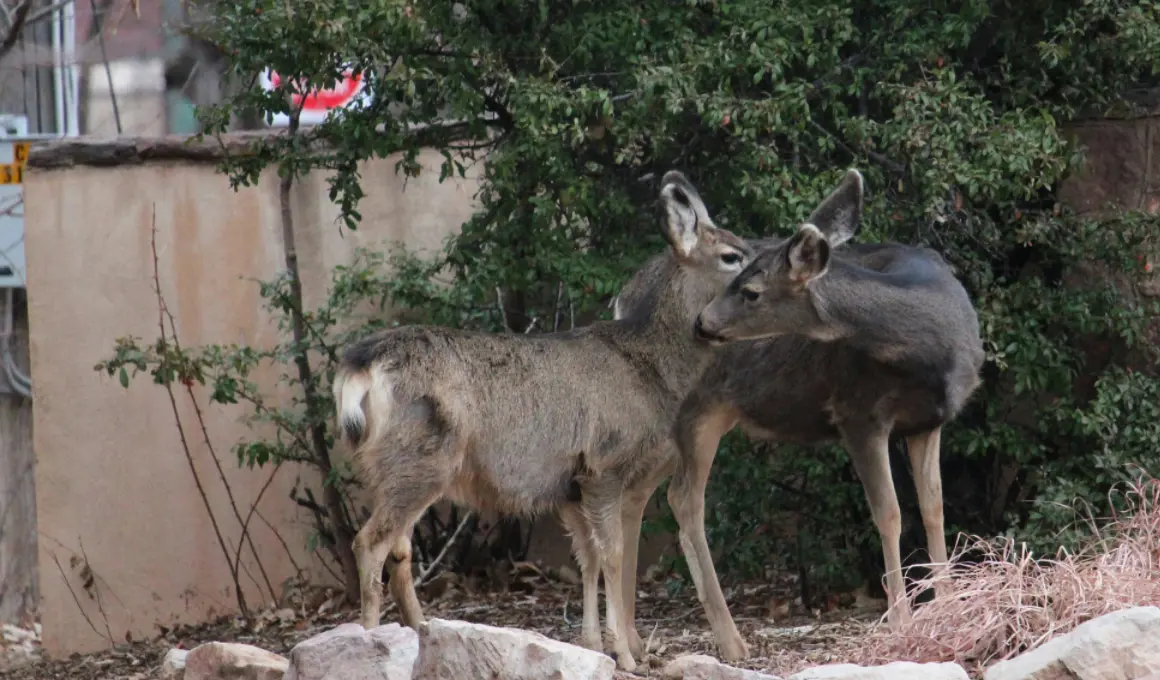
Urban archery is a season of deer hunting where bow hunters can take deer in the city limits. It often occurs before and after regular hunting seasons and is designed to help manage the growing urban deer populations.
All across the country, deer populations are exploding thanks to constant building and removal of deer’s natural habitat. This is particularly true in urban and suburban areas.
This overabundance makes both the people and the animals suffer. There is not enough food to support them; they get hit by cars while running from one small piece of cover to another, and of course, they eat up your gardens and flowers.
Urban archery season seeks to engage more potential bow hunters and help manage the growing populations of displaced deer in areas where they are in danger.
How to Hunt Legally in Urban Areas
While the exact rules and regulations of urban archery season will differ from state to state, urban archery season as a concept is straightforward. Many of the hunting basics also apply to this season.
Most common archery weaponry can be used to take deer during urban archery season. Be sure to check your local regulations, but even powerful crossbows can be used, and these are great for urban archery!
Legal Weapons for Urban Hunting
Crossbows
Crossbows can be very effective for urban archery season as they are easier to aim than traditional archery and have a farther effective range, up to 50 yards.
The compact nature and down sight design make them easier to carry, and they also require less practice than a traditional bow and arrow. You will still have to practice to become accurate, but it will take less time than shooting a recurve bow.
Compound Bows
Compound bows are the most common bows used in hunting and should be allowed in urban archery seasons across the board. Of course, double-check local regulations.
These bows have an ethical shooting range of 20-40 yards, which gives you plenty of distance to set up on the deer you have been scouting. These bows are very powerful and will bring down deer quickly with good shot placement.
Traditional Bows
The ethical range of traditional archery is much lower and should be kept around 15-20 yards.
This makes for a much more challenging hunt. Still, there is something magical about harvesting game with a simple stick-and-string bow like a longbow or a recurve. It’s something we have been doing for thousands of years as humans.
Be sure to use bowstring dampeners, like beaver strip, when hunting with traditional archery. This will make your shots even quieter and keep the string from slapping the bow.
Licenses & Tags
To hunt during urban archery season, you are going to need a hunting license, an archery license, and deer tags.
Any deer you take during the urban archery season will take away from your deer tags for the year. Since most urban archery seasons allow only antlerless deer, keep that in mind if you are going for a big 12-point buck this year.
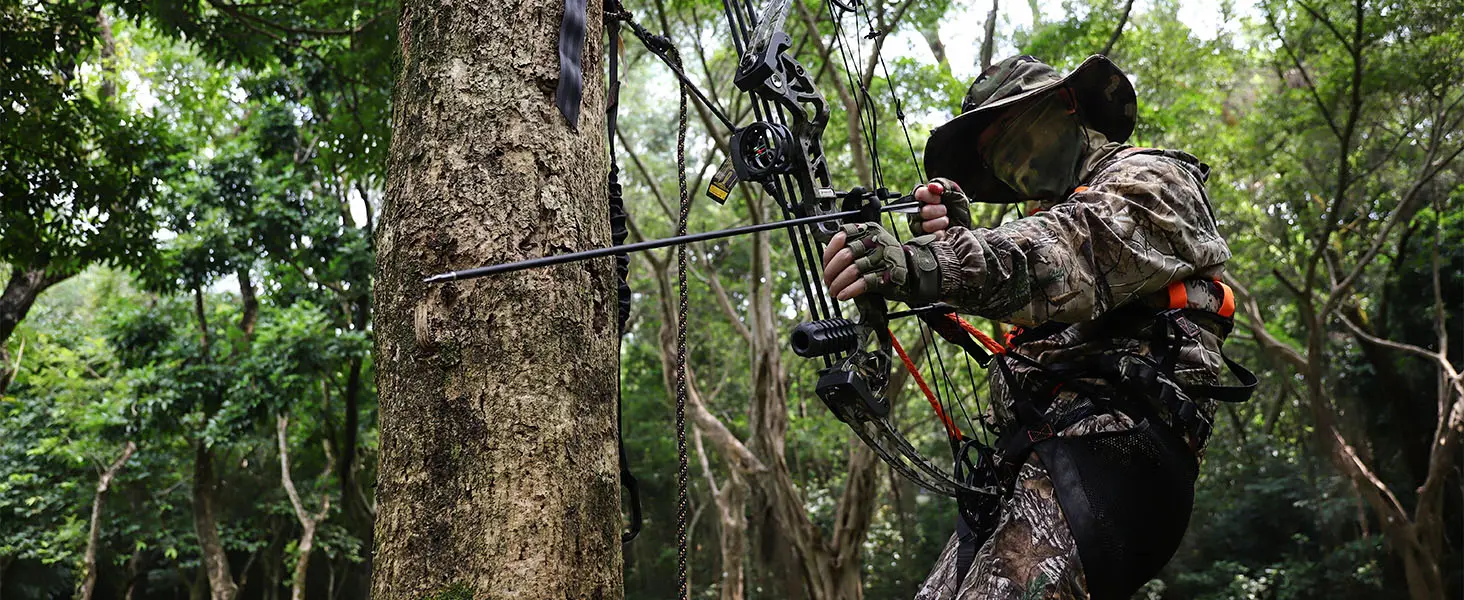
Where to Hunt in Urban Limits?
One of the first things you have to do is open up a map of your area and look for open land. Use something simple and free like Google Maps and look for large areas of GREEN on the map.
Some of these areas will be in neighborhoods, while others will be adjacent to privately owned businesses. There are hunting opportunities in both of these areas.
Very few people are going to have access to hunting lands on their own small urban properties. For the most part, you are going to be seeking out rare public lands that allow hunting or asking permission from landowners.
There is a good chance that landowners will be open to you removing deer from their land. Deer can be a problem with traffic; they eat decorative flowers and gardens.
You might also consider neighborhoods with their own community garden. These gardens are often targeted by deer. While there is a bit of majesty to seeing deer in your neighborhood, that tends to wear off once they start eating the gardens and expensive roses.
How Do You Scout and Hunt Urban Deer?
Urban archery is the only hunting where you will do better scouting in a car than you will on foot!
At dawn and dusk, you can travel to neighborhoods that back up to woods to see if there are deer working through these neighborhoods.
You can do the same near industrial parks and strip malls. All of these are viable areas to scout because it means the adjacent woods could hold deer.
Strip malls and business parks are much easier to get permission from when it comes to isolating who to ask. You can find out who owns the building easily by looking for an empty store or rental information.
Once you receive permission to hunt a section of wood, then you can scout the area further. Unlike large stands of woods, you do not have to scout as hard or as long to find deer. In fact, the less time you spend in these areas, the better!
Before you decide on a good hunting spot, spend some time learning to read deer sign around the property, especially on small urban lots where deer move in tight patterns.
Chances are you are going to see deer in these woods because they have fewer options. You will likely spook them, and they will go running off. If you don’t see deer, then just look for the following:
- Deer scat
- Deer tracks
- Deer paths
- Musky deer scent
Getting permission from neighborhoods in particular can be more of a struggle because the properties are divided along with permissions. If they have a community-owned piece of land, like a park, then you might be able to get permission for that.
The best option is to look at adjacent land or city-owned land and see if you can get access to that.
Urban Hunting Safety and Shot Considerations
The biggest difference in regular hunting and urban hunting is the proximity of property and people. There are going to be way more opportunities for making a mistake when you take a shot.
In the basics of hunter’s safety, you should always consider your shot and what’s beyond it. This is the concept of seeing your prey, in this case deer, and looking beyond that target to ensure there is not a person, another animal, a home, or a road that your arrow could hit or pass through.
One stray arrow could put an end to urban archery season in your area for good!
Another aspect of urban hunting safety is your interaction with people and animals. When hunting urban properties, you can run into people. You might run into a person’s lost dog, or you could even run into a homeless person’s camp.
These could all become very sticky situations, so keep your eyes open when you are walking through new sections of urban woods. They hold a different kind of “wildlife” than what you might be used to.
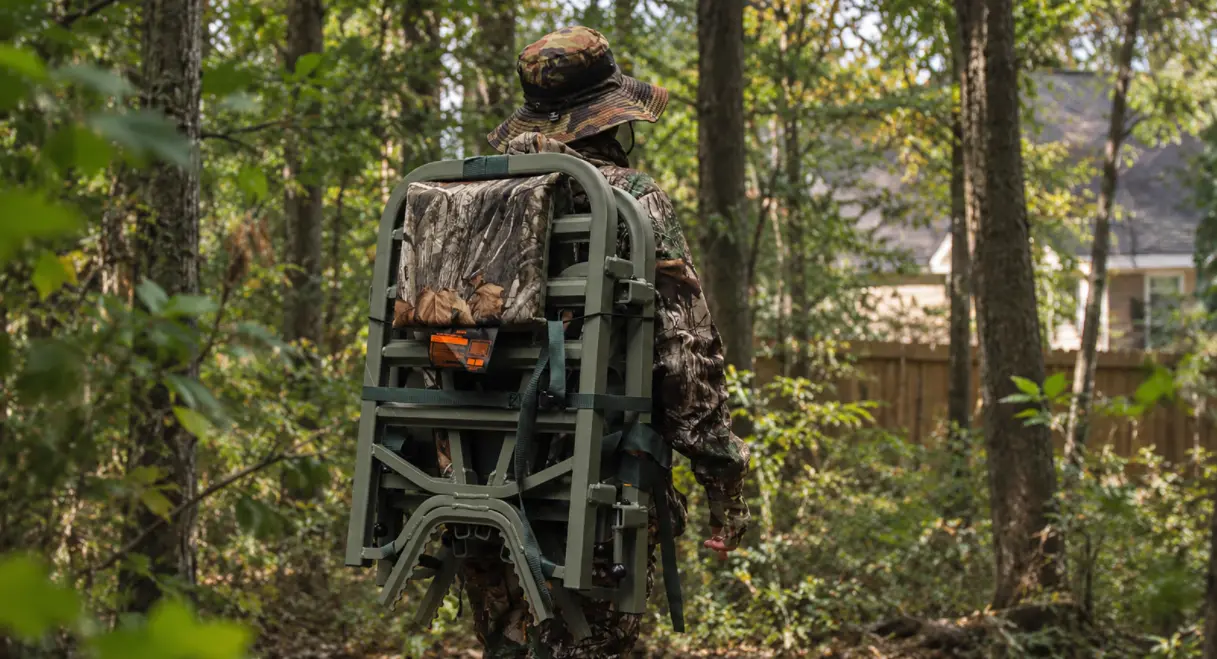
What Gear Do You Need for Urban Deer Hunting?
The good news about gear is that if you are already bow hunting, then you probably have everything you need for an urban hunting season!
Ground blind or tree stand
Ground blinds and tree stands have pros and cons based on the bows you plan to use.
In the urban setting, you might find lots of fields with sparse trees, and deer will often bed down in those fields just outside of neighborhoods.
If you are typically a tree stand hunter, you can try something new. A pop-up ground blind can be a great way to set up in fields like these.
Your bow matters here too. Ground blinds work well for compound and crossbow. Trad hunters can have a harder time in a fully closed blind because of the long limbs, so many of us use an open-top blind, or a DIY one from natural cover like brush and branches.
If you do go with a tent blind, put it out a week or more before you hunt so the deer can get used to it.
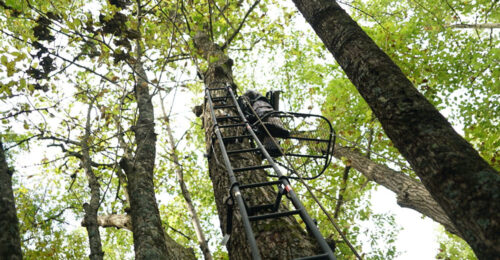
But if you have good trees to work with, most people go with a tree stand.
The first is safety. When you’re up in a tree, your arrow travels downward and ends up in the ground. That matters a lot when you’re hunting close to houses, roads, and backyards. A shot from the ground is level, and a miss can carry a lot farther than you’d like.
The second is scent. Urban areas are full of people, dogs, and cooking smells, and the deer are used to all of it. Still, getting up off the ground helps keep your scent above and away from them, so you get a better chance at a calm, close shot.
That’s also why a lightweight setup works so well on small urban lots. A climbing treestand is great when you have a solid tree in the right spot. If you like to move around, a tree saddle with a set of climbing sticks lets you get up, hunt, and get out without carrying much.
Whichever way you go, let the property decide. Good trees? Go up. Open field? Try a blind.
Additional gear you will need
Of course, you are going to need your weapon of choice and any arrows or bolts required. It’s a good idea to have things like spare bow strings and any tools for repairing bows with cams, like a compound or crossbow.
A deer sled is another essential item. You might keep this in the car until you need it, but having a means of dragging a deer out of the woods once it’s dressed is faster and safer.
Also, when you are hunting urban archery, you don’t really want a lot of people to see you dragging a dead deer out of the woods because people can get irate over hunters and hunting.
Don’t forget your blaze orange!
Gear you don’t need
Forget about the scent cover products. While many hunters swear by them, in this setting the deer are used to the smell of people and have limited routes to avoid it. The deer are also limited in the paths they can take to avoid different scents.
Heavy camouflage is another thing you can leave at home. You are going to spend the bulk of your time in a ground blind or up in a tree, and that will cover you up plenty.
Urban archery season happens early and late throughout the year. There is something nice about traveling light and enjoying your time as an archery hunter.
Conclusion
Urban archery seasons feel like this quiet club that most hunters do not or cannot even join. For those of us who live closer to urban settings, it takes away the burden of a long day of travel.
It can also serve as a great way to sharpen up your skills and test out gear before the real archery season kicks off. Better to have something go wrong when you are hunting antlerless deer in a field than when you have that big buck in your sights.
Late urban archery seasons are great for filling out those last tags of the season. If you didn’t harvest all the deer, you would have liked to through archery and firearms season, then use late season to do so.
We can all use more hunting in our lives and better access to high-quality protein like venison. If we are careful and thoughtful, then urban archery season can give us that opportunity.