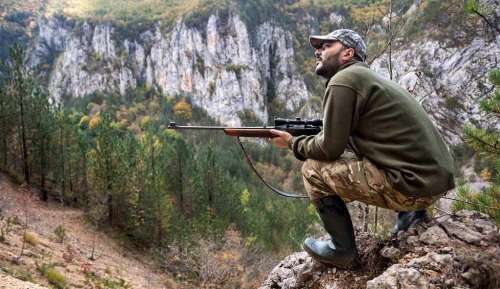
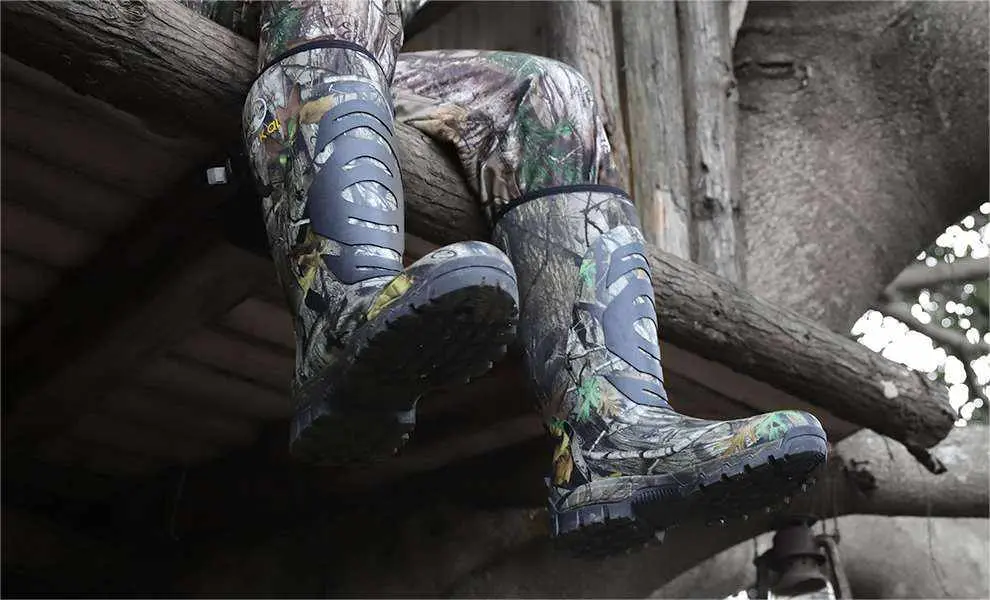
When out in the field, the right hunting boots play an important role in determining your performance, comfort, and overall experience. Among many options available, two options are popular choices for hunting: leather hunting boots and rubber hunting boots.
So when people ask, “rubber or leather,” our honest answer is: it depends on where you plan to hunt.
There’s no boot that wins every hunt. What wins is knowing which one fits the ground you’re actually going to be on. Let’s get into it.
Here, we will look at the features of rubber and leather boots, looking at their advantages against the demands of different hunting conditions and individual needs, and answer the question: which type of hunting boots is best for you.
What Kinds Of Boots Do Hunters Wear?
Most hunters end up choosing between two camps: rubber and leather. Everything else, such as hybrids, synthetics, whatever — is really just a variation on one of these two.
Rubber Hunting Boots
Rubber hunting boots are made to offer waterproof protection and insulation. They are made from a vulcanized rubber material that ensures durability and resistance to damage. They mainly feature a neoprene lining for comfort and added insulation.
⭐What they are good at:
- 100% Waterproof: Rubber boots perform well in wet environments, protecting your feet from moisture when navigating swamps, marshes, or rainy conditions.
- Scent control: Rubber boots are great at preventing scent dispersion, which helps prevent hunters from being detected by deer.
- Easy to clean: You can easily wipe dirt and mud off rubber boots. No conditioning, no drying them out slowly.
❌Where they fell short:
- Limited breathability: Rubber boots are less breathable than leather boots. They are uncomfortable in warm conditions due to sweaty feet.
- Lack of ankle support: Some rubber boots may lack ample ankle support, which can cause discomfort in uneven terrain.
Rubber hunting boots are suitable footwear in swampy and wet areas, such as for waterfowl hunting. They are also good for hunting activities like early-season deer hunting and turkey hunting.
Basically, anywhere scent control and wet ground matter more than covering miles.
Leather Hunting Boots
Hunting boots made from leather are crafted from different types of leather, including nubuck, suede, and full-grain leather.
They trade some waterproofing for breathability, flexibility, and support that actually holds up on rough terrain.
⭐What they’re good at:
- Ankle support: Most leather hunting boots are created with ample ankle support. They lock your ankle down in a way rubber rarely does.
- Breathability: Leather boots offer better breathability. Your feet can actually vent, which matters on long walks or warmer days.
- They last: Full-grain leather takes a beating and keeps going, especially if you take care of it.
❌Where they fall short:
- Need maintenance: Leather shoes need regular maintenance to maintain their water resistance and suppleness, or it dries out and crack.
- Not fully waterproof: Even treated leather will eventually let water in if you’re standing in it long enough.
Leather is our go-to for upland bird hunting, big game hunts when covering ground, and anywhere dry or moderately wet where breathability matters more than total waterproofing.

Rubber vs Leather Hunting Boots Comparison
When selecting the correct hunting boots, two options come to mind: rubber and leather. Each material has its advantages and disadvantages and offers different preferences to hunters.
In this section, we will do a comparison between rubber and leather hunting boots across various crucial features.
Durability
Rubber boots are popular for their durability. They are resistant to general wear and tear. This makes them a great choice for navigating challenging terrains. They also have reinforced soles that offer protection against sharp objects.
Leather boots are also durable. High-quality full-grain leather is known for its toughness and resistance to wear and tear. However, they may need extra maintenance to make them more durable, including regular conditioning and cleaning.
In terms of durability, rubber shoes carry the day, especially in wet and harsh conditions.
Mobility and weight
Rubber hunting boots are heavier than leather hunting boots. This extra weight offers protection and sturdiness; however, it may interfere with movement during long treks.
Leather hunting boots are lighter than rubber hunting boots so they are easier to trek on. They are suitable for hunters who trek quietly and quickly through different terrains.
Leather boots are a great choice for hunters who prefer agility and mobility.
Moisture and waterproofing
Rubber is waterproof, making rubber hunting boots great for muddy and wet environments. They are easy to maintain and clean, offering protection from moisture.
Despite leather boots being able to be treated to be water-resistant, they may not be 100% waterproof as rubber boots. In wet conditions, moisture may seep through, leading to wet feet.
For hunters in wet environments, rubber hunting boots have more waterproof capabilities as compared to leather hunting boots.
Foot Support
Rubber hunting boots offer support for the ankle and foot, offering stability on rough terrain. The design features a snug fit on the ankles, preventing debris from entering the hunting boots. Rubber hunting boots usually have a high shaft design to cover the whole of your calf.
Leather boots offer reinforced ankle support. The level of support, however, depends on the specific style and design of the boot. Normally, leather hunting boots
Both leather and rubber hunting boots offer good support for the foot but the particular fit and design of the boot are important factors.
Material Scent
Rubber boots are scent-free, and they can trap the odor of your feet. This makes them a good choice for hunters who can focus on stealth and then enables hunters to come near game animals without being noticed. Rubber boots are often preferred by whitetail hunters for their scent control properties.
Leather boots that are sprayed with waterproofing products can have a faint smell. However, the smell is less noticeable as compared to the natural rubber scent. But leather has the potential to absorb and retain odors, especially if not properly cared for and cleaned.
For hunters who do not want scented boots. rubber boots are a preferred option.
Comfort
Rubber boots are popular due to their comfort thanks to their insulated and cushioned interior. They are easily slipped on and off, making them preferred for quick outdoor activities.
Leather boots that feature ergonomic designs and quality padding offer great comfort. However, they have a longer break-in period to adjust to the foot’s shape.
Comfort depends on the hunter’s preference. Both leather and rubber boots can be comfortable if selected based on personal requirements and fit.
The choice between leather and rubber hunting boots depends on the specific requirements of the hunter. Rubber boots are the best in wet environments, and leather boots are good for mobility and comfort.
Quick Comparison Table
| Category | Rubber Boots | Leather Boots |
|---|---|---|
| Durability | Reinforced soles handle abuse well; hold up in wet, harsh conditions | Full-grain leather is tough and abrasion-resistant, but needs regular conditioning |
| Weight & Mobility | Heavier — sturdy, but can slow you down on long treks | Lighter, better for hunters who move quickly and quietly |
| Waterproofing | 100% waterproof, built for mud and standing water | Water-resistant at best, even when treated |
| Ankle Support | Snug, high-shaft fit that blocks debris but varies by design | Reinforced support built into most designs; depends on the boot |
| Scent Control | Doesn’t hold odor, favored by whitetail hunters | Can absorb and retain odor if not cleaned and treated |
| Comfort | Insulated, cushioned, easy on and off | Comfortable once broken in, but takes longer to get there |
Are Rubber Boots Warmer Than Leather?
Short answer: yes, generally. But it comes down to what’s lining the boot, not just what the boot is made of.
Rubber boots almost always use neoprene insulation, usually somewhere between 3.5mm and 7mm thick. Neoprene works because it’s a closed-cell material, and it traps heat and doesn’t let cold air or water through, period.
A 7mm neoprene boot is about as warm as rubber boots get, and it’s why they’re the default choice for guys sitting still in a duck blind at first light.
Leather boots usually rely on Thinsulate insulation instead, measured in grams. You’ll see 400g, 800g, sometimes 1000g+ in the heaviest winter boots. See details on: How Many Grams Of Insulation You Need For Hunting Boots?
Thinsulate traps warm air in tiny synthetic fibers rather than sealing it in completely, so it insulates well but still lets some air move through the boot. That’s a plus for breathability and a minus for pure warmth.
Put them side by side at similar thickness, and neoprene will out-warm Thinsulate almost every time, especially in wet conditions, since neoprene doesn’t care if it’s soaked and Thinsulate performance drops once moisture gets in.
However, leather boots offer distinct advantages during prolonged, active hunts; since you are constantly on the move, extreme insulation isn’t required.
Good breathability prevents your feet from becoming soaked with sweat and keeps your feet warmer than boots that trap moisture due to overheating.
How to Choose the Right Hunting Boots?
Material is only one piece of the decision. Terrain, how far you’re walking, how cold it’s going to be, and how your feet actually fit into a boot all matter just as much, sometimes more.
We’re not going to rehash all of that here, because we already put together a full walkthrough covering exactly that: terrain matching, insulation weight, fit, and break-in.
If you want more details before you buy, continue to read the 5 Steps to Choose the Right Hunting Boots.
Best Hunting Boots Recommendations
These are some of the leather hunting boots that we have picked for you:
Leather Boots
Kalkal Ridge Gunner: Full-grain leather, 400 grams of insulation. The boots are built for hunters who need support and warmth without giving up breathability.
It would be a solid pick if you’re spending long days on your feet in rougher country.
Other leather boots worth a look if you want to compare: the Danner Pronghorn 8″ GTX (Gore-Tex lined, excellent waterproofing for a leather boot, but heavier than most) and the Kenetrek Mountain Extreme 400 (built stiff for extreme terrain, long break-in period).
Rubber Boots
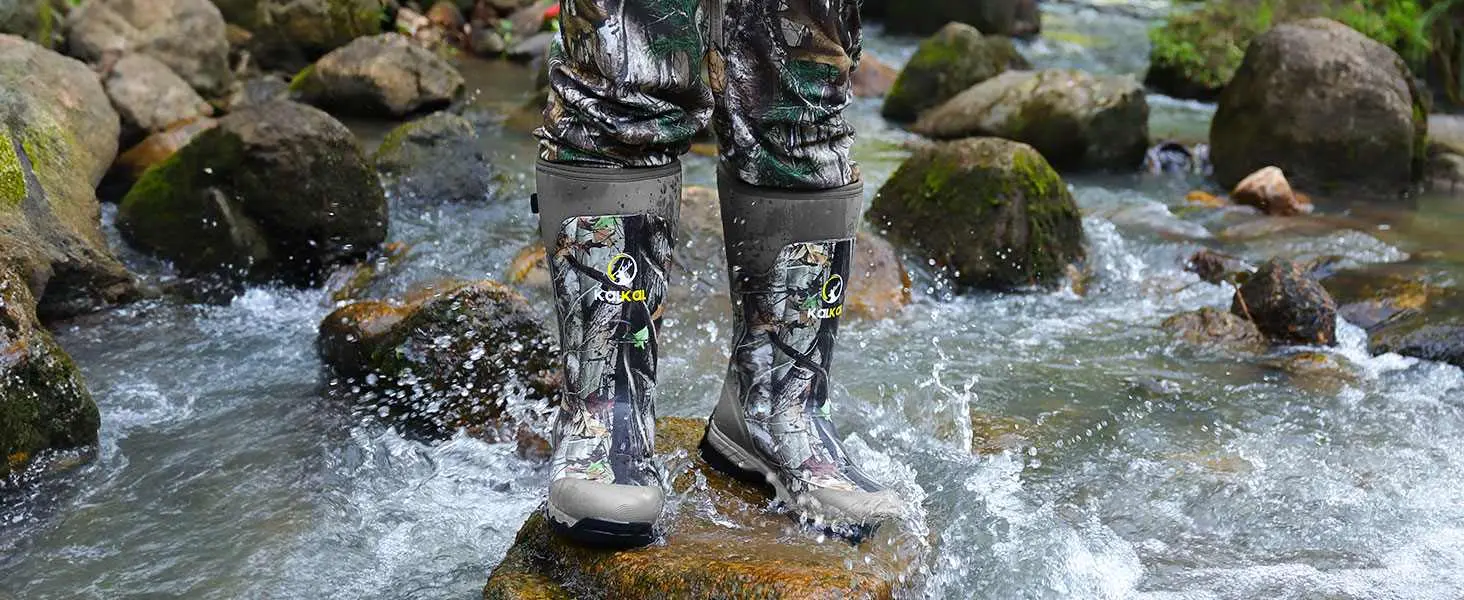
There Kalkal 6mm Neoprene rubber hunting boots provide extra toughness, anti-slip, and 100% waterproof features, along with shock absorption and heat retention properties.
This is what most customers wear for anything wet and cold.
If you want to see how other rubber brands stack up, the Muck Boot Woody Arctic and LaCrosse Alphaburly Pro are both solid, well-known options in the same category.
FAQs
Are rubber boots warmer than leather boots?
Generally, yes. Rubber boots use neoprene insulation, which seals out cold and moisture completely, while leather boots typically use Thinsulate, which insulates well but stays more breathable. At similar thickness, neoprene tends to run warmer, especially in wet conditions.
Do rubber boots make your feet sweat more than leather boots?
Yes. Rubber doesn’t breathe, so heat and moisture stay trapped inside. Leather lets some of that vent out. That’s why rubber feels great on short, cold sits but can leave your feet damp on longer hunts — and damp feet get cold feet faster, even with good socks.
What type of boots help minimize human scent while hunting?
Rubber boots are the top choice for scent control since rubber doesn’t hold odor the way leather can. Keeping any boot clean and stored away from strong smells (gas, food, etc.) matters just as much as the material itself.
Is rubber or leather better for deer hunting?
It depends on the season. Rubber boots are better for early-season sits and wet terrain where scent control matters most. Leather boots make more sense once you’re covering ground during the rut or in colder, drier late-season conditions.
Which is more comfortable, rubber or leather?
Rubber hunting boots win right out of the box, as they are no break-in is needed. Leather takes time to break in but molds to your foot and holds up better on long walks.
Do rubber boots last as long as leather?
Leather usually lasts longer and maintains good shape if you keep it conditioned. Rubber holds up great against water and mud, but the material can crack or go brittle with age faster, especially with sun exposure or freezing temps in the off-season.
Conclusion
If we had to boil it down: rubber wins when the ground is wet and scent control matters most. Leather wins when you’re covering distance and need your feet to breathe.
Most serious hunters we know end up owning both and grabbing whichever one matches the hunt that day, not because they couldn’t decide, but because neither boot does everything well.
Think about where you’ll actually be standing this season, and pick from there.