

*The newest turkey season has been updated in March, 2026.
Ohio is famous for its wide range of hunting opportunities, providing hunters with different game seasons to participate in all year round.
The state consistently ranks in the top five nationally for whitetail deer harvest. According to records, more than 210,000 deer were hunted last year. And, it’s one of the few Midwest states where out-of-state hunters can still find solid public land to hunt on Sunday.
In this article, we will summarize the popular hunting seasons and rules, along with other information that the official regulations booklet won’t cover.
What Hunting Season Is It In Ohio Right Now?
The Ohio hunting seasons are mainly assigned in the second half of the year. Here is a breakdown of what hunting season is available in Ohio for each month:
January and February: Deer muzzleloader season, Fur trapping (fox, raccoon, skunk, opossum, weasel, mink, muskrat), Beaver and river otter trapping, Waterfowl hunting season
March: Crow season
April, May: Turkey season
June, July and August: No major hunting seasons
September: Deer archery season, Squirrel season, Early Canada goose and teal seasons, Mourning dove hunting
October: Deer archery season, Fall turkey season, Squirrel season, Ruffed grouse, Youth small game (rabbit, pheasant, quail), Waterfowl youth, active military, and veterans season, Goose seasons, Duck seasons
November: Deer archery, gun, and bonus gun seasons, Squirrel, rabbit, pheasant, chukar, quail seasons, Fur trapping season (fox, raccoon, skunk, opossum, weasel), Goose and duck seasons,
December: Deer archery, gun, and bonus gun seasons, Squirrel, rabbit, pheasant, and chukar seasons, Waterfowl seasons
Throughout the year, coyote and woodchuck hunting are open with no closed seasons.
Ohio Hunting Season Schedules by Species
Click to check the season dates for each species you want to hunt:
Season dates, license fees, and bag limits change annually. Always verify current regulations at wildohio.gov before your hunt.
Source: Ohio Division of Wildlife 2025–26 Hunting and Trapping Regulations.
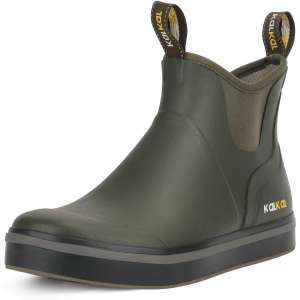
Gear up, go outdoors with Kalkal hunting gear
Ohio Hunting Licenses Requirements and Costs
There are different types of licenses and permits available for purchase. We have listed some common licenses that you may need to hunt in Ohio.
Who Doesn’t Need a Hunting License To Hunt In Ohio?
In Ohio, certain individuals are not required to buy a hunting license:
- Ohio resident landowners, their spouses, and children can hunt or trap on their own land without a license or other permits.
- Nonresident landowners and their family members can hunt on their Ohio property without a license.
- Ohio resident members of small limited liability companies or partnerships that own land are also considered landowners and exempt from the license requirement.
- Members of the U.S. Armed Forces on active duty.
In addition to the popular white-tailed deer hunting dates in Ohio, we also summarize the season information for other game species that you can hunt in the state, allowing you to extend your hunting opportunities and enjoy more.
📌For more information, check this out: Can You Hunt On Your Own Land Without A License?
Ohio-Specific Regulations You Must Know
Hunt The Right Time
Ohio’s Gun season runs in the first week of December, with a short bonus weekend in late December, 20 – 21, 2025.
The rut mostly happens during archery season here, which is actually good if you bowhunt; you get the best deer movement all to yourself.
If you’re a rifle hunter coming from a state where gun season lines up with the rut, you might need to adjust your expectations.
Legal Cartridges to Use
Use straight-wall cartridges only. Ohio does not allow traditional rifle rounds with a bottleneck case for deer hunting.
You’re limited to straight-wall cartridges from .357 to .50 caliber. The .350 Legend, .44 Magnum, .45-70, and .450 Bushmaster are all popular choices.
Bring the right ammunition before you arrive.
CWD Awareness
The Disease Surveillance Area (DSA) has its own season structure.
Ohio monitors for Chronic Wasting Disease in a defined set of counties: primarily Hardin, Marion, and Wyandot counties, plus specific townships in Allen, Crawford, Delaware, Hancock, Morrow, and Union counties.
If you’re hunting in these areas, the archery season starts earlier, and there’s a special early firearm window in October that doesn’t exist elsewhere in the state.
The boundaries of the DSA expand as new cases are identified, so check the ODNR website before your season to confirm whether your county is included.
Harvested Game Transportation Rules
If you’re coming from a state with confirmed CWD in wild deer, Ohio restricts what parts of a harvested deer you can bring back in.
You cannot import whole carcasses, brain, spinal cord, or any unprocessed meat still on the bone from CWD-positive states. If you’re doing a multi-state trip, this matters.
Hunter Orange Requirements
Blaze orange is inquired in gun season, but not archery.
During any firearms deer season, you need a vest or jacket with solid or camouflage hunter orange. Archery and muzzleloader hunters aren’t required to wear it, though it’s recommended to do so when seasons overlap.
Turkey hunters are also exempt from blaze orange.
Sunday Hunting is Legal
Ohio allows hunting seven days a week. If you’re coming from Pennsylvania or Maryland, where Sunday hunting is restricted or prohibited by county, this is a significant advantage.
Baiting Rules
Bait piles, mineral blocks, and food attractants are prohibited on any public hunting area. On private land, they’re legal. Don’t assume what works on your lease will work on a WMA.
Mandatory Game Check
Every harvested deer and turkey must be checked in through the ODNR HuntFish OH app or by phone before you move the animal.
Don’t skin it until you have a confirmation number. The system is actually pretty straightforward, but if you’ve never used it before, download the app and create an account before the season opens.
Ohio Hunting Regions Explained
Ohio looks flat on a map. It’s not.
The state splits pretty cleanly into three different hunting environments, and where you hunt determines what gear you need, what tactics work, and honestly, what species you’re realistically going after.
Southeast: The hill country
This is where many serious deer hunters plan their time. The Appalachian foothills in counties like Muskingum, Coshocton, Morgan, and Vinton have steep ridges, tight hollows, and hardwood forests thick with oaks.
The terrain holds mature bucks because it’s harder to access. If you’re not willing to hike a mile off the road and deal with some elevation change, you’re sharing the same ground as everyone else.
The soil in this area is mainly a clayey mixture. After any rain, it gets really sticky, which can add serious weight to your boots over a long morning. This matters for gear selection more than you realize.
Northwest: Flat farm country
Wyandot, Defiance, Paulding, and the surrounding counties are completely different. Flat agricultural land, drainage ditches, and wetlands define this part of the state.
It’s not as consistently known for mature bucks as the southeast, but it’s where you want to be for waterfowl.
Lake Erie’s western basin sits near the overlap of the Mississippi and Atlantic flyways, making it a strong corridor for ducks and geese, especially when cold fronts push birds south.
East-central: The sweet spot
Counties like Licking, Knox, and parts of Coshocton sit in between farmland and hill country. You’ll find rolling terrain, woodlots, creek bottoms, and oak ridges. It’s easier to navigate than the hill country in the southeast, but it still holds a lot of deer.
This is where many out-of-state hunters target this region, especially on managed private land.
Best Public Lands in Ohio to Hunt
Understanding the regions is one thing. Knowing where to actually hunt is another.
Ohio has over 800,000 acres of public hunting land across state WMAs, state forests, and federal ground. If you’re planning to hunt public land in Ohio, these are a few areas worth looking into.
Recommended Public Lands
Wayne National Forest (Athens, Lawrence, and Gallia counties) is the only National Forest in Ohio, covering roughly 240,000 acres across three separate districts in the southeast.
It’s big enough that, even during gun season, you can still get away from people if you’re willing to walk. That alone makes it different from most public grounds in the state.
It holds good deer, turkey, and small game. The Athens Unit is worth a closer look with the OnX app before you go.
AEP Recreation Land (Morgan, Muskingum, and Noble counties) is about 34,000 acres of privately owned land that’s open to public hunting.
You do need a free permit. It just takes a few minutes to get one, but a surprising number of hunters never bother with it. Because of that, pressure here tends to be lower than in most state-owned areas.
The ground is a mix for deer to move through it well, especially during the rut when those narrow transitions start to matter more.
If you’re willing to deal with the permit, it’s one of the better public options in this part of Ohio.
Dillon Wildlife Area (Muskingum County) often gets overlooked, mostly because Woodbury is just down the road and pulls a lot more attention.
Dillon has around 3,700 acres of wooded terrain with decent deer numbers, and it doesn’t take much to get away from the easiest access points.
If you can get in there in July and August and scout a couple of stand locations before season, you’ll already be in better shape than most of the hunters who show up on opening week.
Berlin Lake Wildlife Area (Portage and Mahoning counties) isn’t usually mentioned as part of the deer hunting spots, but it’s worth knowing about if you like having more options.
The area covers about 8,500 acres and offers more than just deer; there are dove fields, waterfowl spots, and pheasant areas.
It’s a good place for a weekend trip where you can chase more than one species during the whole time.
One honest note: Ohio’s most popular public areas, like the Woodbury, parts of Coshocton, and Egypt Valley, can get genuinely crowded during archery and rifle seasons.
You’ll notice more Pennsylvania and neighboring hunters around that time, particularly during the first couple of weeks of the rut.
If you’re hunting public during peak rut season, go deeper, go earlier in the morning, or turn to a less famous area.
How to Find a Place to Hunt in Ohio?
Ohio has made it easy for hunters to find a place to hunt with the Ohio Landowner/Hunter Access Partnership (OLHAP)program, which connects hunters with private landowners.
How it works:
- Simply visit the ODNR website and use the Interactive OLHAP Map.
- Complete and get an annual endorsement.
- Browse the interactive map to find an enrolled property and get a Daily Access Permit on your phone. It’s first-come, first-served.
Remember to print your permit or keep it on your phone when hunting on that property.
What Gear Actually Works in Ohio Conditions
Once you start hunting in different places, your gear matters more than you think, especially your boots.
Early season (September–October)
Early season in Ohio can still feel like summer most days. Daytime temps often range from the mid-60s to upper 70s°F, with a lot of humidity, especially in the southern part of the state.
And, be aware that ticks are a real issue this time of year, particularly in thicker cover and edge habitat.
You’ll want tick-resistant pants and lightweight, breathable hunting boots early on, something you can walk in without overheating.
Non-insulated rubber boots or lighter hunting boots both work, depending on how much ground you plan to cover.
Rifle season (November)
By November, conditions change fast.
Temperatures usually drop into the 30s–50s°F range, and it’s common to deal with rain, wet leaves, and muddy ground, especially in the hill country.
This is where waterproof boots with high grip start to matter more. Most hunters switch to light insulated rubber boots instead of leather hunting boots. Read more: How Many Grams of Insulation You Need?
If you’re in a stand all day, you’ll want a simple rain shell or water-resistant outer layer that keeps you dry and warm from the elements.
Late season & waterfowl (December–January)
In northern Ohio, especially around Lake Erie and the surrounding wetlands, you’re often dealing with freezing temperatures, ice, and standing water.
For waterfowl hunters, neoprene waders are standard. For deer hunting or mixed use, heavily insulated rubber boots (800g or more), better layering, and dry storage bags become almost necessary if you’re sitting for long periods.
Frequently Asked Questions About Hunting in Ohio
Can I hunt on Sundays in Ohio?
Is it legal to use corn or bait?
Do I always have to wear blaze orange?
Can I hunt on my own land without a license?
Is there a minimum age to hunt?
Conclusion
Hunters in Ohio can make the most of their time in the field and target a trophy buck by understanding the dates and regulations for the 2025 hunting season in Ohio.
If you enjoy hunting deer or prefer to pursue a different game, Ohio’s hunting seasons offer plenty of chances to go out and enjoy the abundant wildlife resources.
For nearby options, see:

Add comment