
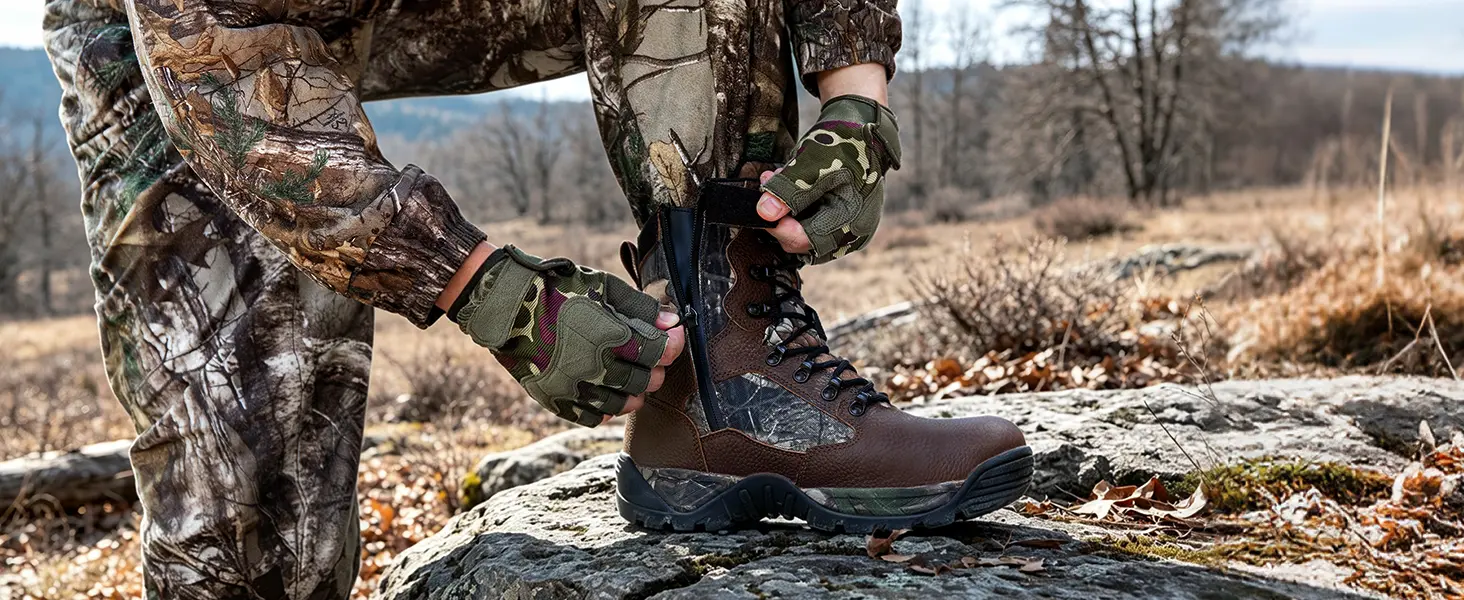
You’ve probably heard the term “shaft height” when it comes to boots. But what does it all mean, and why should you be concerned? Shaft height changes what a boot is actually good for. Picking the right height means matching the boot to where you’re actually wearing the boots.
This guide covers what shaft height means, how to measure it, how it’s different from shaft circumference, and which height works best for different hunting conditions, helping you select the best hunting footwear.
What Does Shaft Height Mean In Boots?
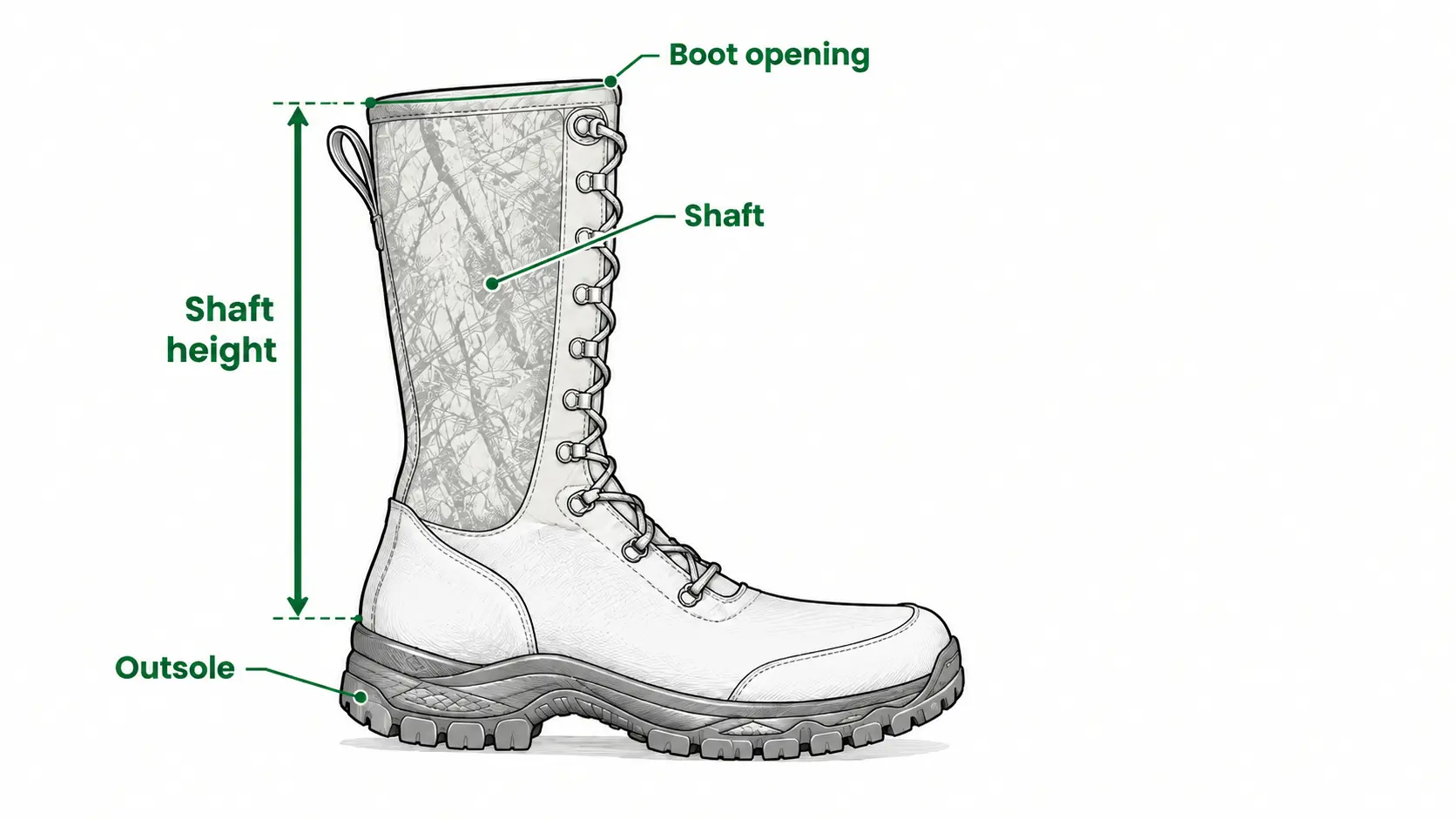
Let’s start with the basics of a boot shaft and shaft height.
The shaft is the part of the boot that covers your leg, everything above the top of the sole (not counting the outsole), up to wherever the boot ends (boot opening).
Shaft height is how tall that part is, measured from the top of the sole to the top edge of the boot.
How to Measure Shaft Height on Boots?
Here’s a quick guide to accurately measuring shaft height:
- Put on the socks you actually plan to wear hunting. Thick socks may change how a boot sits on your leg.
- Stand with your foot flat on the ground.
- Find where your heel meets the top of the sole. That’s your starting point, not the ground.
- Run the tape straight up the back of the boot to the top edge.
- Write down the number.
You now know how tall your boot’s shaft is. If you’re comparing boots online, this is the number brands usually list in the product specs, worth checking before you buy, especially if you’ve had fit problems before.
Shaft Height by Boot Type
Not every hunt calls for the same height. When selecting hunting boots, here’s a rough breakdown of what works where:
| Height Range | Best For | Common Boot Type |
|---|---|---|
| Ankle-height (3″–8″) | Warm-weather hunts, turkey, upland walking, hunts where you’re covering a lot of ground | Lightweight leather or fabric boots |
| Mid-calf (9″–13.5″) | General field and farm use, most all-around hunting boots | Leather or insulated rubber boots |
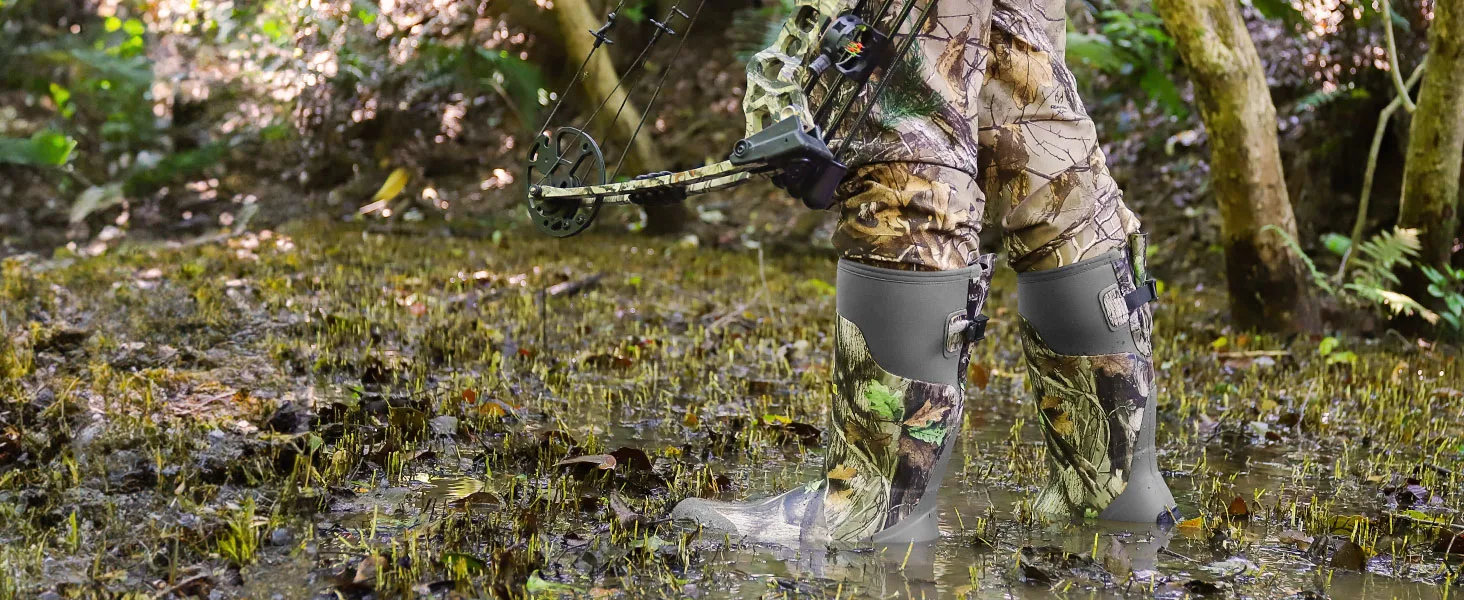
| Knee-high (13.5″+) | Mud, standing water, waterfowl, snake country | Rubber or neoprene boots |
If you’re mostly walking dry ground, a shorter boot keeps you lighter on your feet and cooler. If you’re wading through mud or hunting somewhere with snakes, the extra height on a knee-high boot is preferable.
Shaft Height vs. Shaft Circumference
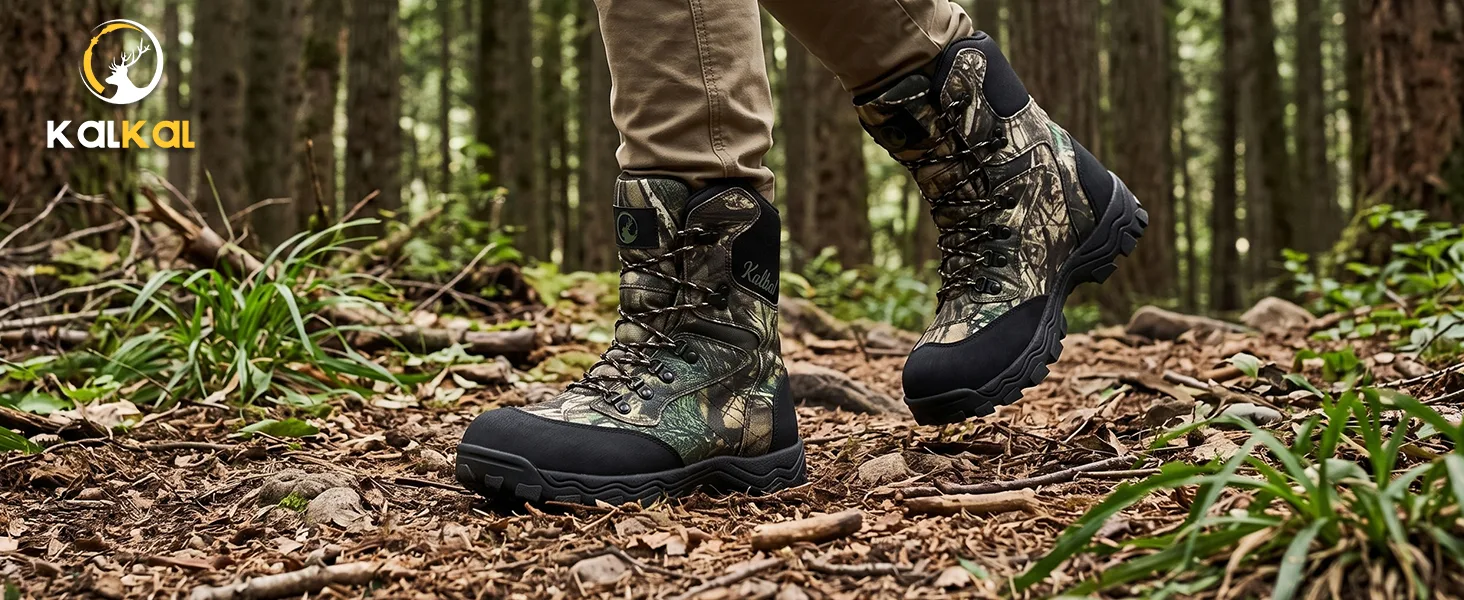
Shaft height and shaft circumference sound similar, but they’re two different measurements, and mixing them up is one of the most common reasons a boot doesn’t fit right.
Height is how tall the boot is. Circumference is how wide it is around your calf. A boot can have the perfect height and still feel wrong if the shaft is too tight or too loose around your leg. That’s a circumference problem, not a height problem.
This matters more for hunters than it does for most boot shoppers. Think about what you’re actually wearing when you hunt: heavy wool socks, maybe a base layer under your pants, sometimes a leg gaiter if you’re in thick brush or deep snow.
All of that adds bulk around your calf. A boot that measured fine in the store can feel tight in the field once you’ve layered up for a cold morning sit.
If your boots fit at the foot but feel like they’re squeezing your calf, or you can’t get them zipped or pulled up comfortably with your hunting socks on, that’s a circumference issue.
Sizing up in height won’t fix it; you need a boot with more room around the calf, or one with an adjustable shaft.
For a closer look at how to measure and choose the right calf fit, check out our guide on shaft circumference measurement.
Does Shaft Height Matter for Hunting Boots?
Short answer: yes, more than most hunters realize until they’re standing in the wrong boots.
- Protection. Taller boots cover more leg, which matters if you’re pushing through briars, thick brush, or country where snakes are a real concern. A knee-high boot puts a barrier between your skin and whatever you’re walking through. Shorter boots leave more skin exposed, which is fine on a mowed field edge but not so fine in a fence row.
- Cold and wet. The taller the shaft, the deeper you can walk into water or mud before it gets in your boot. If you’re hunting waterfowl or anything near standing water, height is the difference between staying dry and walking back to the truck with soaked socks.
- Support. A taller shaft gives your ankle and lower leg more support, especially useful on uneven ground or if you’re carrying weight — a pack, a deer, decoys. Shorter boots give you less support but a lot more freedom of movement.
- Weight and mobility. This is the trade-off. Taller boots are heavier and stiffer, and they can wear on you over a long day of walking. Shorter boots are lighter and easier to move in, but they trade away some of that protection and support.
There’s no single “right” height; it depends on the hunt. A boot built for wading a flooded timber isn’t the boot you want for a five-mile upland walk.
Matching shaft height to where you’re actually hunting is what makes the difference.
How to Stretch a Boot Shaft
So you’ve got a great pair of boots, but they’re a little tight around the calf. Don’t worry; there are some simple ways to stretch your boot shaft and make it more comfortable.
To stretch your leather hunting boots, try the following effective ways:
1. Use Boot Stretchers
Boot stretchers are tools that can be used to give a little extra room around the shaft of your boots, and it is very easy to use:
- Insert the boot stretcher into your boot, making sure it’s the desired width. Turn the handle gradually to expand the stretcher while applying gentle pressure to the shaft.
- Allow the stretcher to remain in the boot for at least a day to allow the leather to relax and stretch.
2. Use the Cold Method
You can try a few DIY methods at home, but they may not be as effective as professional tools. One popular method is to fill a plastic bag with water. Here is what you need to do:
- Fill a plastic bag halfway with water, but remember not to overfill it. Insert the bag into your boot, making sure it reaches the restricted area.
- Place the boots and bags in the freezer. When the water freezes, it expands and gently stretches the leather.
- Take the boots out of the freezer and allow the ice to melt before removing the bags.
While this method is useful for minor stretching, be careful not to overstretch or damage your boots.
3. Use the Hot Method
Proper temperature can sometimes work well to stretch boots. You can try to use a hair dryer to apply heat to the tight areas of the boot shaft while flexing your calves and ankles.
Keep the boots on until they cool down, then repeat the process as necessary.
4. Boot Stretching Sprays
There are boot stretching sprays on the market that can help soften and make the leather pliable.
Apply it to the inside and outside of the boot shaft according to the instructions, and then wear the boots while they are still damp to allow the boots to stretch.
5. Ask For Professional Help
If you don’t feel confident stretching your boots yourself, take them to a professional cobbler or shoemaker.
They have the knowledge and tools to stretch your boot shafts safely and without causing damage.
*These methods are best for boots that are just a little too snug, not for a shaft that’s a full size too small around the calf.
Rubber doesn’t stretch the way leather does. If your rubber hunting boots are too tight around your calf, stretching isn’t really the fix.
What actually helps:
- Adjust your sock thickness. If the boots run tight, wearing thick socks can sometimes naturally stretch the shaft of your boots and make them wearable.
- Size up. If you’re between sizes, going up a size in a rubber boot is usually safer than trying to force a tight fit.
- Look for an adjustable-calf style. Some rubber and neoprene hunting boots come with a gusset or adjustable strap built into the shaft specifically for this problem.
FAQs About Boot Shaft
How to determine the shaft height of a boot?
The shaft height is measured from the top of the sole, not the ground. You’re measuring from where your heel sits inside the boot up to the top edge of the shaft (the outsole thickness isn’t part of the measurement).
What’s the difference between shaft height and shaft circumference?
Height is how tall the boot is. Circumference is how wide it is around your calf. A boot can be the right height and still feel too tight or too loose if the circumference doesn’t match your leg.
What is a good shaft height for hunting boots?
It depends on the hunt. Ankle to mid-calf height (roughly 6″–10″) works well for dry ground and upland hunting where you need to move fast. Knee-high boots (13.5″ or taller) are better for mud, standing water, or areas with snakes.
Can rubber hunting boots be stretched?
Not really. Rubber doesn’t behave the same way as leather, so stretchers, heat, and cold methods won’t do much for a rubber boot. If it’s too tight, try a thinner sock, size up, or look for a style with an adjustable calf.
How do I know if my hunting boots are too tight around the calf?
If you can’t zip or pull the boots up comfortably with your hunting socks on, or you feel pressure or pinching around your calf after standing for a while, that’s usually a circumference problem rather than a height problem. You’d need more room around the shaft instead.
Conclusion
Choosing the proper boot shaft height isn’t just about looks; it’s also about comfort and functionality.
Getting it right just means matching the boot to where you’re actually hunting: shorter and lighter for dry ground and long walks, taller for mud, water, and thick cover.
If you’ve measured your shaft height and calf circumference and you’re ready to find the right fit, take a look at our leather hunting boots for classic support and durability, or our rubber and neoprene hunting boots if you need something built for mud and standing water.