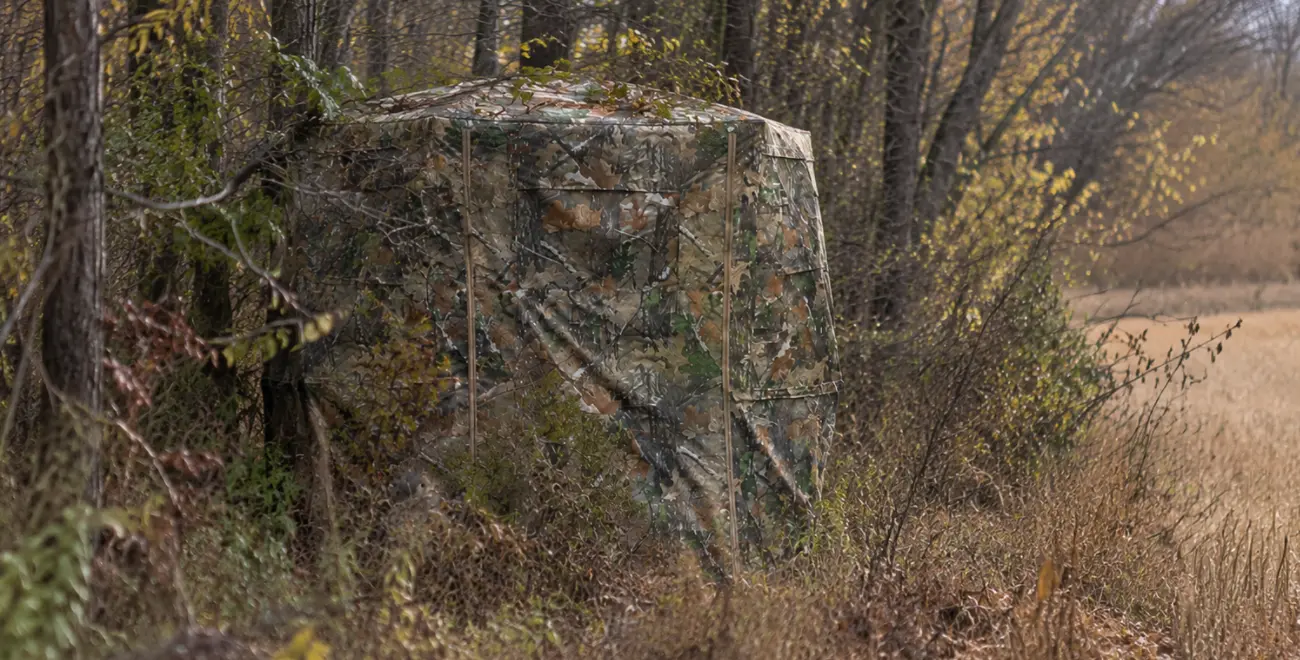
Where you set up your ground blind can make or break your deer hunt. Putting it in the right spot helps attract deer walking right into range without ever knowing you’re there.
Finding the right ground blind location for deer hunting is all about scouting, reading deer movement, and setting up before the season starts. When you combine these with the cover of a quality ground blind, harvesting a deer gets a lot easier.
Here’s how to do it.
Start With Identifying Deer Movement
You can pop a ground blind up anywhere you like and spend the morning or the evening sitting inside. It’s kind of fun to hang out in a ground blind. However, your chances of harvesting a deer if you are just sitting in some random spot in the woods or in a field are terrible!
Any hunter has to understand the animals they are tracking. The routines and behaviors of your prey are a book to be studied. The proof is nature because every predator acts in much the same way.
There is very little left up to chance. The spider doesn’t spin its web in random locations. The fox doesn’t prance around the forest at random looking for burrows. Predators study their prey, and that is what keeps them alive and fed.
I study deer to find out where they are, at what times of the day, what they eat, and the routes they take.
This is what scouting for deer is all about.
If you walk a wood line, then you will very easily be able to identify deer paths. These are small breaks in the brush and trees where deer enter the woods. These deer trails are pretty easy to follow.
During scouting, I follow these paths and see what other paths intersect with them and where they lead. Following these paths allows you to travel the exact routes of the deer you are hunting. You might even find some areas where they bed down along the way.
These routes will tell you so much about the deer in the area that they are the first thing to scout when you are hunting a section of woods.
Use Wind and Sun Direction to Eliminate Bad Blind Locations
While deer are outmatched by high-powered rifles and bows, they do bring a lot to the battle. Not the least of which is keen eyesight and a powerful sense of smell. If you are going to be set up in a ground blind, then wind and sun direction are very important.
If you can keep the sun from shining directly on your blind, then it will stay hidden. Avoid facing east or west, as the sun will, at one point or another, be shining directly on the blind.
Imagine a blind in the middle of a field under the noonday sun. Camo or not, it is going to stand out. Now imagine a ground blind that is stuffed into the woods’ edge facing north or south, and the sun just running over that same wood line. The blind will be much harder to pick out.
When it comes to wind, I have less control, as wind direction changes throughout the day. However, scouting an area can give you an idea of areas where the wind will affect things less.
You can hide your blind from the wind at large and place it in a location downwind from the animals you’d like to hunt. Prevailing winds mostly travel from west to east, so this should help. Keep the area you like to hunt to the west of your blind.
This will not prevent a change of wind in the wrong direction, but it is a good starting point. In most cases, a dramatic wind change could flood a hunting area with your scent.
There is little you can do in this case. Moving a ground blind is loud and will do much more harm than just sitting through the wind change or leaving for a return hunt at dusk.
You might have to take into account nearby bodies of water as they can affect the wind direction, too.
Plan Your Access and Exit Route
The best play or using a ground blind is to set it up the night before. If you are on your own property, then it might be a good idea to set it up days before. No matter how you do it, struggling with a pop-up blind in the dark is going to be loud and scare everything off.
That said, just setting up the blind is not good enough. You will have to get to the blind in the morning. If your path takes you through the same field you plan on hunting, then you are just putting down scent and potentially being seen by the very deer you hope to hunt.
Instead, create an access route that keeps you downwind from these animals and in as much cover as possible. This might be through woods or on a long loop around the whole hunting area. It will be worth it to silently slip into the blind and then let the day unfold as though you don’t even exist.
You may also wanna take the same route to exit. This is particularly true if you plan on returning for a night hunt. These microclimates and wind patterns are part of your scouting, too.
Choose a Location Where Deer Won’t Easily See the Blind
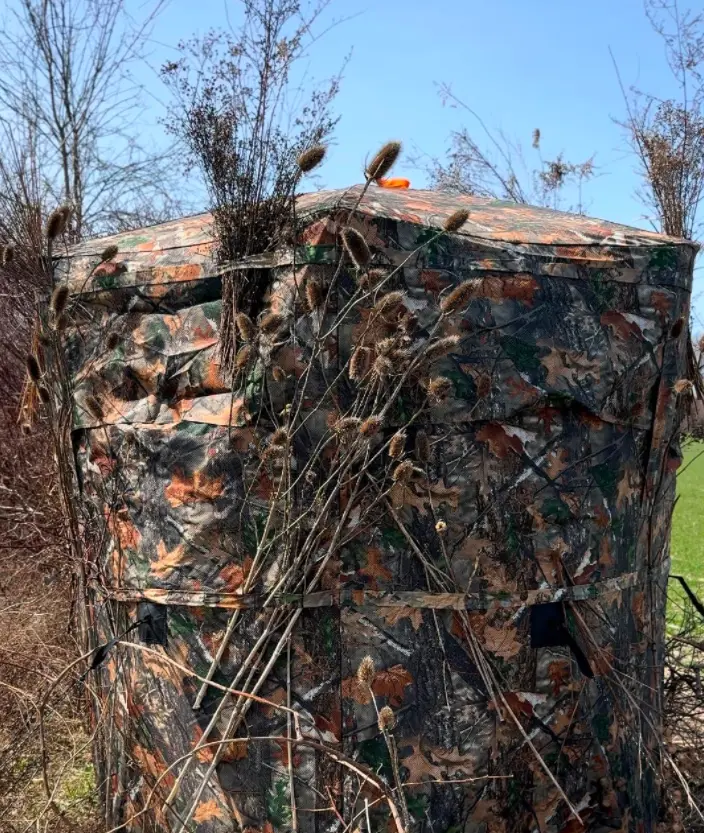
My favorite place to stick a blind is into the woods edge. I just really like the natural camouflage of pressing it into the trees. It helps to add some fallen branches and brush around the base of the blind, too.
You can even rest some fallen branches on top of the blind. These things go a long way in breaking up that boxy outline of the blind.
Capping the end of a brush line can also be a great way to hide your ground blind. One field comes to mind where a set of brambles run parallel and adjacent to those is a large field.
By placing the blind on the end of this line of brambles, it helps it blend in with the brush. If I create a break between the brush and the blind, that will allow an animal to see it better from the field and could put them off from eating there.
Always Consider Shooting Lanes
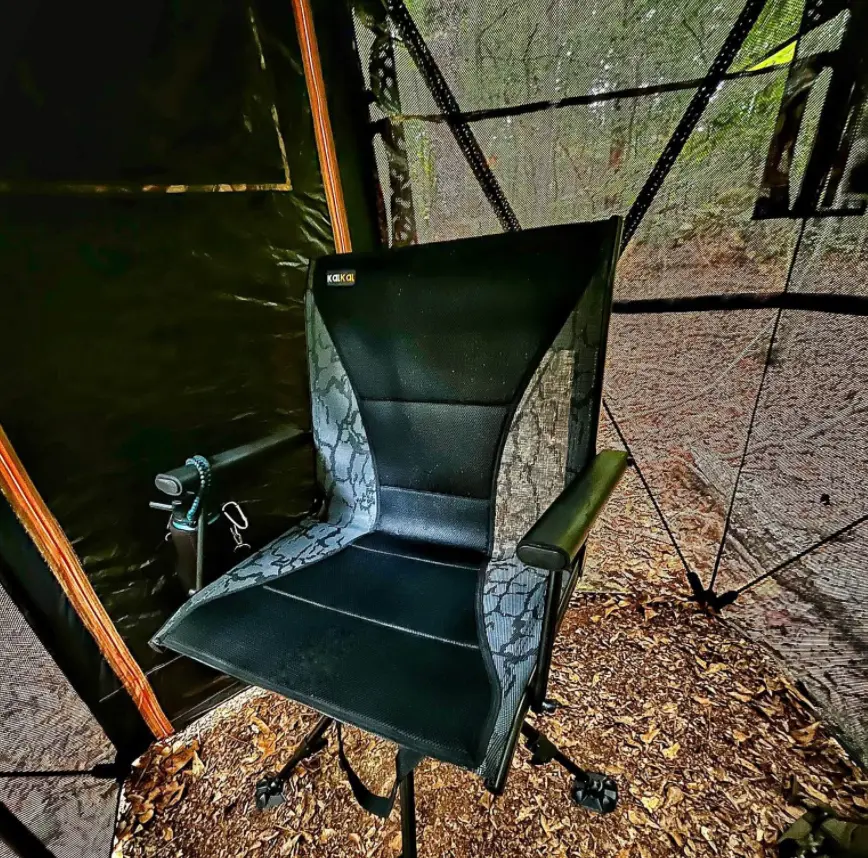
It’s embarrassing to admit, but I have sat down in a hunting blind on more than one occasion only to find my shooting lanes extremely limited. This is why it’s so important to sit down inside your ground blind before you consider it completely “Set Up” and ready for the hunt.
While it might look perfect from the outside, you could find all kinds of problems on the inside! One of the biggest is if your shooting lanes are blocked.
Most ground blinds will have several windows you can shoot from. This gives you a pretty good vantage point to see deer coming but also make a shot on them.
This is especially important if you are hunting a heavily wooded area. A deer might step behind a tree and then emerge, giving you the perfect shot.
You can create shooting lanes in dense forest by cutting away limbs from trees and removing some saplings that might be in the way. However, if the sun rises on your hunting day and you don’t realize that kind of modification needs to happen till that moment, you are done.
I bring a small folding saw that allows me to cut limbs quickly and easily.
The best option is to make sure that all of this cutting and trimming is done the day before. That way, when you set foot into the blind, you are sneaking in quietly and sitting still until the deer show up.
Adjust the Location for Season and Hunting Pressure
Scouting deer paths and activity will help you find the deer, but as you get further into the hunting season, you may find that deer start changing routes. Where you once saw deer feeding consistently, they no longer show up.
The reason for this is that different kinds of food either get eaten down to the ground or die off as you get closer to winter. After a nice freeze, the variety is taken away from a deer’s diet.
That field might not hold anything of value to the deer. This will put them on different paths.
Through the deer hunting seasons, I have to move my ground blind further into the woods as the season progresses. I look for large oaks that drop lots of acorns; deer also eat bark from maple and white pine trees. Another food to look for is honeysuckle, which will produce green leaves well into the winter.
As the season presses on, consider all I have covered thus far and move the blind near these food sources, knowing the animals must visit these locations to eat.
Don’t be afraid to leave the bow and blind at home in order to execute on a mid-season scouting adventure.
Quick Checklist Before You Commit to a Spot
No spot is perfect, so here are some quick notes that help you decide whether yours is good enough to commit to. Remember, things will change, but a good checklist can get you off on the right foot.
Key Factors (fail any one, move the blind):
- Does the wind carry your scent away from where deer approach?
- Can you enter and exit without crossing a feeding area or deer trail?
- Do you have a safe, legal shooting direction?
Strong Signals (aim for at least three):
- Fresh sign within bow or rifle range
- Intersecting deer trails nearby
- An in-season food source
- Natural cover behind the blind
- Little recent human activity
Fixable (adjust, don’t relocate):
- Shooting lanes that need trimming
- Lack of natural cover behind the blind (add brush or branches to break up the outline)
Exclude all the negative factors, and make sure you have at least three strong signals; if that checks out, lock it in. Then do a final walkthrough the day before the hunt and double-check the wind forecast.
Conclusion
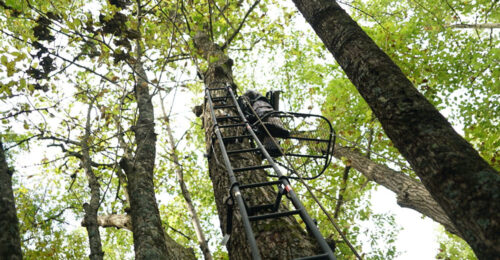
One of the best parts of deer hunting is the variety. It is so much fun to hunt in different ways and do different things. Through archery season, you might sit in a tree stand with a compound bow. Then firearms season starts, and maybe you opt for the ground blind.
Nothing will bring success like thorough scouting. So, take the time and look for deer sign, notice things like wind direction and how the sun hits certain areas of the woods. When you are scouting, you are not just looking for deer, but you are looking for a good place to set up your ground blind.
Remember, the golden spot in November might be dead by the beginning of December. Your ground blind location may have to change throughout the season. Use the land to tell you where your next spot should be.