
If you want to be as successful as possible in November, you’ll have to spend some time in July or August getting to know the habits of the deer you’ll be hunting.
The sign you find here will help you narrow in on your target buck when the leaves have fallen, and the pressure is on. This article will go over tips and techniques to be able to make the most of your off-season preparations.
When is The Best Time to Scout Deer in Summer?
Getting boots on the ground to locate sign can be done at any time of the day; to see exactly where the deer are feeding and moving, you’ll have to be there at the start and end of the day. Deer are crepuscular, which means they mostly move just as the sun is rising or setting.
Summer scouting can also change depending on where you are in the season. Early summer is a great time to locate general deer activity because food sources are usually consistent and deer have not started feeling the pressure that comes with hunting season.
As summer progresses, deer patterns can begin to shift. Crops mature, natural food sources change, and bucks start transitioning toward their fall routines.
This is why late summer scouting can be especially valuable, as it gives you a better idea of where deer may travel once the season arrives.
The goal isn’t always to find the exact tree you’ll hunt months later. It’s to understand what parts of the property deer prefer and how they use the landscape before conditions change.
A popular ritual in my neck of the woods is to drive around surrounding farms during the early and late parts of the day, and spend the middle marking spots on the map.
What to Look For When Scouting Deer in Summer?
It can be difficult to know how, or even where to start looking for deer in the summer.
Especially if you’re hunting public land and have to compete with the army of orange vests that come out during hunting season.
However, whether you’re stalking deer on grandpa’s family farm or a state forest, you’ll want to target the same points of interest for deer.
Start With Food and Water
It seems obvious that the first place you’d want to focus on when targeting an animal is where they eat and drink.
Food sources are one of the easiest ways to confirm deer are using an area, but it is important to understand that summer food does not always equal fall food.
During the summer months, deer may spend a lot of time around green vegetation, crops, and other high-quality forage.
However, once temperatures drop and fall arrives, their priorities can change quickly. Acorns, agricultural fields, and other seasonal food sources can completely change their movement.
Water is another thing that is easy to overlook. Small creeks, ponds, and low areas that hold moisture can influence where deer travel, especially during hot summer months.
While this sounds simple, it can be a fair amount of work to find what the deer are eating, let alone finding them in the act.
▶Learn More: What Plants Do Deer Eat (and Don’t)?
E-Scouting to Find Potential Deer Habitat
Finding food sources can sometimes be as easy as looking at a satellite map. I like to target the areas that have corn or grain on the edge of the forest, giving me a clear spot to guess deer movement is headed. But for wild food sources like apples or acorns, you’ll have to get off the couch and into the field.
To find water from the map have to understand topographic lines. You will want to look for where the terrain could possibly carry water, low parts of the land and flat parts of hills.
They also form natural travel patterns, so even if water isn’t always present, the deer still may be.
Look For Deer Sign and Evidence of Activity
On top of signs, you’ll also find examples of deer meals from last season.
Once you find last years scraps on the ground and this year’s on branches above you’ll be narrowing in on critical spots.
Summer forage is good to find, as it confirms deer are using the area, however it won’t tell you where deer will be in the fall as that food will be long gone.
Finding deer sign is one of the best ways to confirm that an area is worth spending time in. Tracks, trails, beds, and droppings can all tell a story, but they need to be looked at together.
A single track or old pile of scat does not mean you have found the perfect hunting spot. Deer cover a lot of ground throughout the year, and old sign may only show where they were at one point in time.
The more valuable areas are usually places where multiple pieces of information come together. A worn trail near cover, food, or water tells a much different story than random sign scattered throughout the woods.
Find Bedding Areas
Deer need to find places that gives the deer enough cover or that let them get away when threats appear.
These are often the thickest and hardest to navigate areas in the woods, however even a fallen tree can provide a productive spot.
Keep an eye out for long grasses, ferns, cattails, thick shrubs, and similar plants, whatever obscures the deer from view.
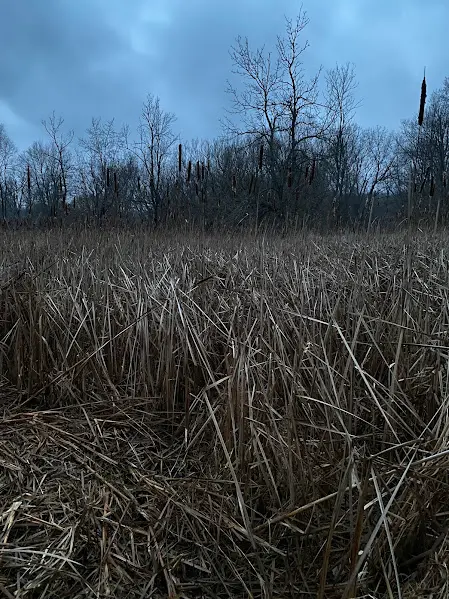
This example here is from the center of a swamp, being at the highest point on the property, and the thick vegetation makes this an ideal inner sanctuary for the deer in the area.
Be sure to focus on finding thick vegetation and terrain that lets deer put an obstacle to their back with their face to the wind.
Finding Fall Deer Signs in the Summer Heat
Between summer and fall, plants will appear and disappear, food sources shift, etc. It can be difficult to translate what you’re seeing in June or August to where the deer will be come October.
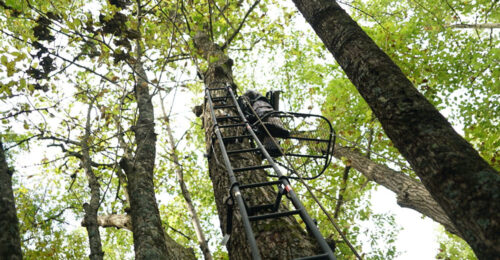
However, there are a few ways to narrow in on where you should hang a stand for opening day.
Rubs and Buck Activity
Finding signs of last year’s deer activity is one of the most effective ways to know where deer will be in the fall.
On top of finding old acorn shells and similar indicators of fall deer food, you will want to look for last season’s rubs and scrapes.
There’s no guarantee that the deer will reuse the exact same trees year after year; however, this doesn’t mean any rubs may be useless to find. Rubs can indicate places to pay attention to.
A rub located near a travel corridor or bedding area can tell you much more about how deer are using the property.
The location of the rub is often more important than the rub itself. Look at what surrounds it and try to understand why a deer chose that exact spot.
Scrapes and Licking Branches
Scrapes can be harder to find as sometimes the leaf litter gets pushed around for one reason or another.
However, they can oftentimes still be found, and the licking branch above it identified. These are also very likely to be reused or at least indicate where deer could be occupying during the fall season.
Scrapes are similar in that the exact location may not always be reused, but they can reveal important information about fall movement. Pay attention to where scrapes are located and what connects to them.
A scrape near a funnel, field edge, or travel route is much more valuable than one found in an area deer rarely need to visit.
▶Learn More: How-To Guide on Mock Scrapes For Deer Hunting.
Highlighting Deer Travel Routes
It’s also important to find the ways that they get from point A to point B. On the map it’s easy to draw straight lines, however once you’ve got your feet on the dirt, obstacles become visible, and you’re able to pick out how the deer are moving.
Deer tend to follow the path of least resistance, and so sometimes a “lazy” walk in the woods can produce quality knowledge.
Road scouting not only shows you where deer are feeding and where they may feed in the fall, but it can show you their entry and exit points into the surrounding woods.
This is where you’re also able to see herd dynamics and give you a chance to find a target buck.
Utilize Trail Camera
Deciding on which location to place a camera in summer can be just as stressful as picking which tree to put a tree stand in.
Summer is the perfect time to set up trail cameras, as disturbing the deer now isn’t likely to be a big deal in autumn. Here are a few points to focus on when looking for a spot for summer camera placement.
Choose Camera Locations Carefully:
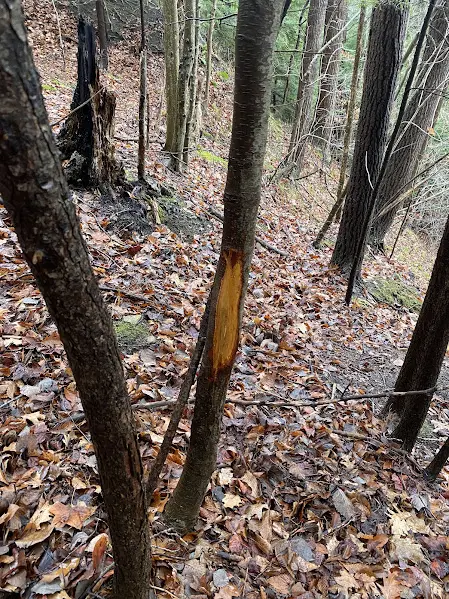
In the image, this well-used rub is in the exact middle of the only level part of the side of the ridge I stood on. It’s likely that more than one buck had used that spot, making both an ideal camera spot and later a tree stand spot.
There are specific points where all traffic is forced into a small area, and your ideal spot can be picked much easier. These are often defined by a combination of terrain and plants.
Track Deer Over Time:
A trail camera is most valuable when you look beyond a single picture.
If you’ve chosen your spot effectively, you are likely to see the same deer over a period of time. One deer showing up once does not tell the whole story, but repeated visits can reveal patterns.
This is where ideas like the 7-day deer hunting rule come into play, helping hunters understand how mature bucks may return to certain areas during similar times and conditions.
Learning their travel patterns as it transitions from summer to fall habits will help you run into your target animal.
Cameras vs Optics:
Trail cameras are usually my best chance of seeing deer during the summer when you can’t get open views.
However, there are places where one can get a better view of deer movement with a spotting scope, showing you exactly how they move across the landscape rather than when they pass a specific spot.
Avoid Pressure and Stay Safe
As you scout for sign, try to keep as much distance as you can to keep your smells from informing the deer of your presence.
Try to scout around potential bedding areas before directly walking into a deer’s bedroom; while they will likely come back, it may not be for a few days.
Scouting for deer is vastly different depending on who owns the property you’re scouting on.
Private land is much more lenient in what you’re able to do as far as putting up cameras without fear of them being stolen.
Public land is much more like the wild west, as anybody who is willing to hike through the property can potentially show up on your camera, or potentially take it home with them.
While keeping your impact on deer behavior low is always a good idea. Public land offers leniency if you end up walking in the middle of deer bedding, as the deer here are more than likely more accustomed to people and will likely return to the beds after a few days.
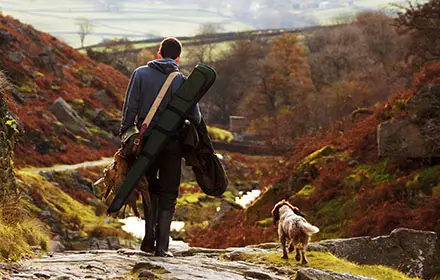
Stay safe when scouting. It’s hot. And every summer keeps getting hotter, it’s vital that you’re able to keep cool and safe while out exploring the woods.
Keep plenty of water with you, even extra if you have the ability to carry it. Heat stroke and exhaustion are potentially deadly if too far from medical attention.
Wearing proper clothing that keeps the impacts of the sun off you while allowing you to sweat and cool freely is vital. Taking plenty of breaks when you begin to get tired will help prevent succumbing to the heat.
How Summer Scouting Helps Fall Hunts?
Mark the locations of the rubs, scrapes, beds, pinch points, and other features like food and water on your preferred mapping system.
Especially keeping in mind where deer may be likely to move through during the fall. There may be patterns in deer use of terrain or plants that will appear and help you focus your search for an ideal tree stand location.
Keep in mind the potential food and water options that may not be ready until closer to opening day.
Common Summer Scouting Mistakes
While committing these mistakes doesn’t mean complete disaster, it’s better to keep the advantage throughout your entire scouting and hunting experience.
Here’s a list of common mistakes and how to avoid them.
#1. Scouting too aggressively
Even on highly pressured public land, it’s possible to overdo it with your presence. While the deer will likely come back, the more they are informed about humans, the easier it is for them to detect you.
As mentioned earlier, utilize a light approach to when walking across the area and utilize finding sign surrounding key spots to help learn behavior without disrupting it
#2. Forgetting about water
Food is a very popular way to interpret deer presence on the landscape. However, after a few years of frustrations and near misses, I looked at other factors.
Water being a key one of them, because it also shapes the landscape in ways that can be taken advantage of. I found my first buck by looking at an area that was covered in oaks but was also in the bottom of a creek bed.
Look for the ways water shapes movement to select an ambush spot on your target buck.
#3. Focusing only on Trail Cam Photos
Everyone loves a good trail camera photo. Yet photos can only tell you so much; it’s too easy to prioritize getting deer on camera rather than focusing on more meaningful sign.
Be sure to use trail cameras to verify what deer are in the area; other than that you’re better off being in the woods finding sign.
#4. Thinking Deer are Always Where The Sign is
It’s easy to think that once you run into deer sign, you’re in their living room.
Unfortunately, even in places that are dense with tracks and scat, only prove deer were here, not where they are now.
To avoid wasting time focusing on spots that deer may be at, look towards pinch points and food sources with limited ways to access them to help find the sign that is current and fresh.
Conclusion
Summer is a very hectic time of the year, not just for humans but for animals too. Everyone is making preparations for the winter ahead, and conditions are constantly changing.
While wandering the woods, looking for deer sign might be a good way to beat cabin fever, be sure to make the best of your scouting by not only focusing on where the deer currently are, but where they eventually will be too.
The information in this article should help you in finding ways to find the areas to focus on as we move closer to opening day.