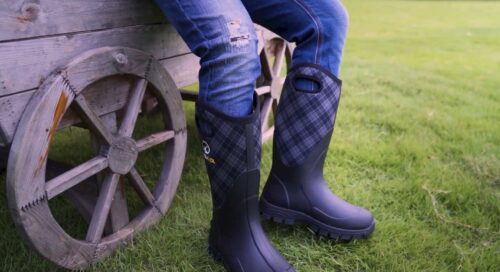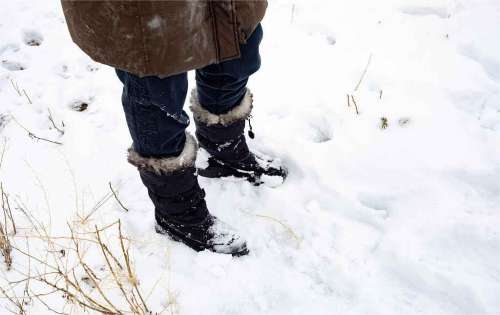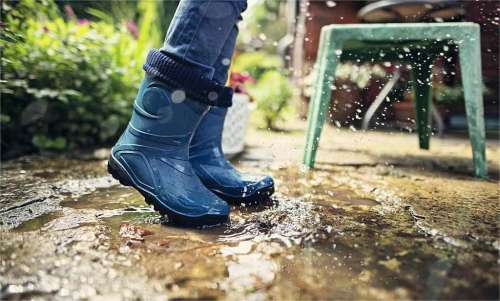

We built these boots for farm work first. That’s the core of the design: deep tread, waterproof neoprene and rubber, reinforced toe and heel.
But we wanted to know how they actually hold up once real people put them through real days, not just a quick unboxing.
So we pulled together feedback from a few outdoor content creators who tested a pair over several weeks, in the conditions they actually work and play in. Here’s what they found.
What’s Actually in the Boot
Under the tread and the neoprene upper, here’s what’s doing the work:
- Upgraded EVA midsole — added for better shock absorption, which takes some of the stress off your feet and joints over a long day standing or walking.
- Neoprene upper + natural rubber shell — 100% waterproof, with a breathable mesh lining that wicks moisture so your feet don’t overheat on warmer days. Comfort range runs from -4°F up to 68°F.
- Deep-tread rubber outsole — built for traction on mud, wet ground, snow, and rough or hard-packed terrain, and easy to rinse clean.
- Reinforced toe and heel — extra protection where boots typically wear out first, plus a pull-on design with a kick-tab for faster on-and-off.
Put to Work on the Farm
This is where the boots are meant to live, so we’re leading with it.
One reviewer wore his pair for three weekends straight, six days total, doing chores around a working homestead, from mowing to netting a blueberry patch on a steep hillside.
He already had steel-toe work boots he trusted, plus an old pair of cheap rubber boots he’d bought for pouring concrete years ago and barely wore because they were uncomfortable.
He wanted something he could actually get muddy without ruining his “real” work boots. That’s the role these filled.
What stood out to him first was the traction. On that steep blueberry slope, he slipped and went down once wearing his regular boots, but never once in the Kalkal pair. The deep tread held on ground that had already given him trouble before.
Warmth was the other thing he kept coming back to. Neoprene traps heat the same way a wetsuit does, so on a hot weekend the boots ran warm.
That’s a real tradeoff worth knowing about if you’re working outside in summer heat. On cooler mornings, though, that same warmth was exactly what he wanted.
A few honest notes from six days of wear:
- The aggressive tread that grips so well on slopes also tracks a fair amount of dirt into the house, something to plan for if you’re going straight from the field to indoors.
- The heel kick-tab sits a little higher than he’d prefer, though it was still easy to pull off.
- After three weeks of regular wear, no odor buildup. This is a small detail, but one that matters if you’re in the same boots most days.
His bottom line after nearly a month: comfortable, genuinely waterproof, good tread, no complaints that would stop him from keeping them in rotation.
Out in the Field
Farm work was the design brief, but a couple of other testers found the same boots useful somewhere else entirely.
One outdoor and metal-detecting enthusiast wore a pair on a full day out in the woods and open fields, climbing over rock walls and working uneven, rocky terrain.
Here is her take: the boots turned out to be far more comfortable than she expected from a rubber boot, kept her feet completely dry and warm without making them sweat, and the tread kept her steady on rocks she normally had to climb carefully over.
She specifically called out the insole — soft underfoot but still supportive, “like wearing slippers” that still held her foot in place.
Everyday Wear for Yard Work
A third tester wore the 12-inch mid-calf men’s version mainly for garden work and outdoor chores. It is his go-to slip-on boots for stepping outside.
He tested through an Alaska spring, with snow still on the ground turning to slush and mud, which he figured was a fair stress test.
A few things he noticed in two weeks of daily wear: the boots don’t have tight ankle support like some boots in this category, but he didn’t miss it.
They slipped on with almost no effort and came off just as easily thanks to the heel kick-tab. Using a shovel, he couldn’t feel the ground through the sole at all. No pebbles poking through, which he’d dealt with in cheaper rubber boots before.
His only caveat, and a fair one: two weeks isn’t long enough to speak to long-term durability. But for comfort and everyday use, he had no complaints.
One Boot, Three Ways to Use It
Put these three accounts side by side, and a pattern shows up. The farm work, the rocky trail, and the muddy yard chores all point to the same two strengths: real waterproofing that holds up over repeated wear, and tread that actually grips on terrain that causes problems for other boots.
The one consistent tradeoff across all three is heat: neoprene keeps water out, but it also holds warmth in, so these run better in cool-to-cold conditions than in peak summer heat.
A Sizing Note Before You Order
These boots run large.
If you’re between sizes or want a snugger fit, size down; if you normally wear a US 10, a US 9.5 is likely your better match.
Worth keeping in mind: none of the testers above ran into a fit issue, and sizing down when in doubt is the easiest way to avoid one.
Care Tips to Keep Your Farm Boots Lasting Longer
Though rubber farm boots are durable and made to last longer, caring for your farm boots is essential to ensure their longevity.
A few simple habits go a long way with rubber and neoprene boots:
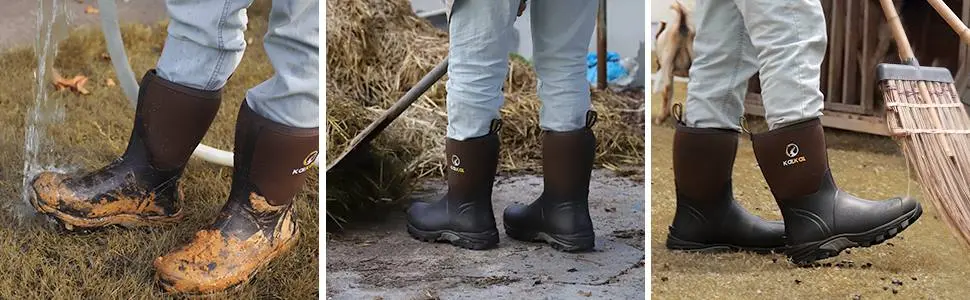
- Rinse with a hose or wipe down with a damp cloth after muddy use; for tougher stains, mild soap works fine. Skip harsh chemicals as they can break down the rubber over time.
- Keep them out of direct sunlight for long stretches, which can cause rubber to degrade faster. If odor builds up, a wipe-down with water and white vinegar, or a few tea bags left inside overnight, takes care of it.
- Let them air dry at room temperature after use. Never use a hairdryer or place them near a heat source, which can warp the rubber.
- Store them somewhere cool and dry, not sealed in plastic, which traps moisture and can lead to mold over time.
The Bottom Line
Remember, proper care and maintenance are integral to prolonging the life of your Boots. By following these care tips, you can ensure that your boots remain comfortable, durable, and stylish for many years of use.
Conclusion
Across a farm, a rocky trail, and a muddy backyard, these Kalkal farm boots offer dry feet, solid traction, and all-day comfort. The trade-off to know going in is heat retention in warm weather.
For everything else, three different testers in three different settings came back with the same answer: these hold up to real use.
If you are interested in getting a pair, check them out here: KalKal Mid-calf Farm Boots.