

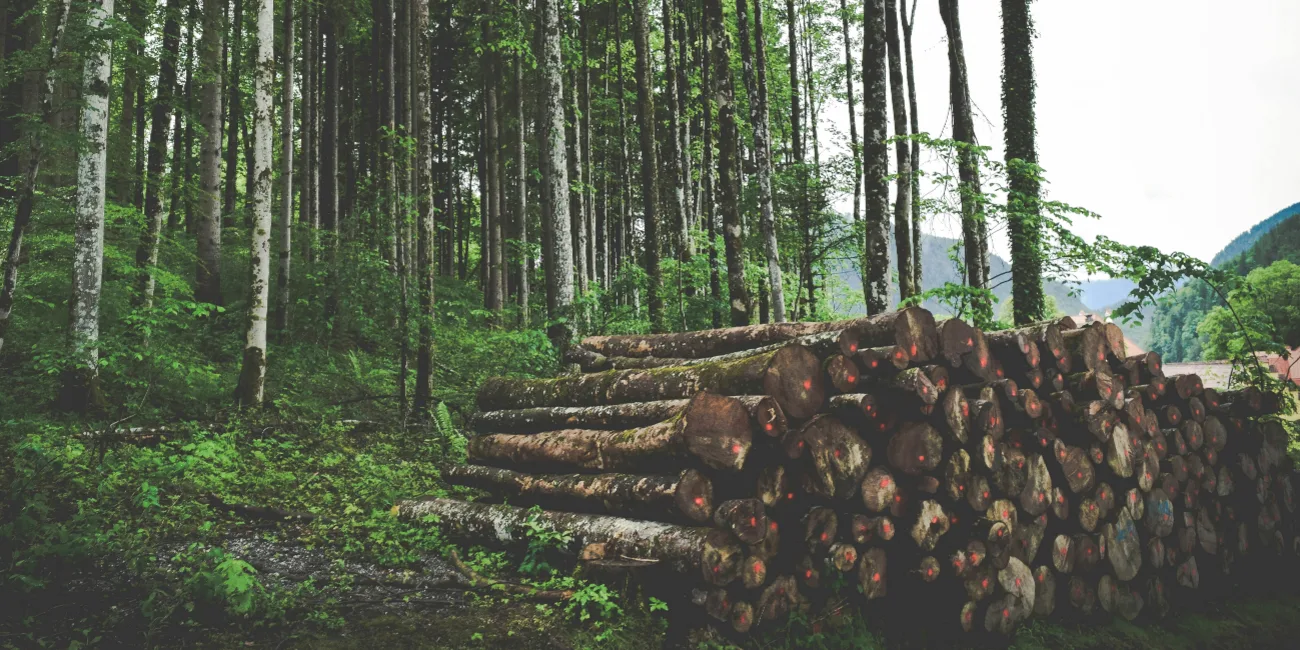
Leather logger boots built their reputation and were the only type of boots that serious workers considered. The reputation still holds, but not everyone working in the woods is falling timber.
A lot of outdoor work involves wet ground: flooded access roads, muddy creek crossings, marshland, or farm fields. In those conditions, heavy leather boots create more problems. They soak through and are slow to dry, and keeping them waterproof takes constant effort.
Rubber boots have picked up a lot of that work over the past decade. No break-in period, no waterproofing treatments, hose them off when you’re done. For people spending long days on wet or muddy terrain, forestry access work, or land clearing, they’re often the more practical choice.
Here we will look at the key features of good logging boots and recommend some of the best options for outdoor and wet-condition work.
What Are Logging Boots Used For?
The term “logging boots” covers more ground than most people think. Yes, they’re used by professional timber cutters, but the same features that make them work for logging make them useful for a lot of other outdoor jobs.
Common uses include:
- Forestry and tree work — walking uneven ground, stepping over brush and roots, standing in wet leaf litter for hours
- Land clearing — dragging debris, operating equipment in muddy fields
- Farm and rural outdoor work — feeding animals in wet paddocks, moving across soft ground after rain
- Outdoor maintenance — trail work, ditch clearing, vegetation management
- Hunting in wet terrain — walking marsh edges, river bottoms, or flooded timber
The common thread isn’t the job, it’s the terrain. Wet, uneven, muddy, and sometimes slippery ground. That’s what logging boots are really built for.
Are Leather Logger Boots Always The Best Choice?
The classic image of a logging boot is a tall, laced-up leather boot with a heel and a thick Vibram sole.
Brands like Danner and White’s built their reputation on this design, and for dry forestry work or jobs that involve climbing, these boots are genuinely excellent.
But for wet-condition work? Leather has some real drawbacks:
- Leather is water-resistant, not waterproof. In sustained wet conditions or standing water, it soaks through.
- Once wet, leather takes a long time to dry, and repeated wet-dry cycles wear it out faster.
- Leather logging boots are heavy. After a long day on your feet, that weight adds up.
- Cleaning them after mud exposure takes real effort, brushing, conditioning, and drying properly.
- A quality pair costs $300–$500+, and they need regular maintenance to stay that way.
Where rubber boots changed the game:
Rubber boots are always waterproof, and there’s no conditioning schedule, no break-in period, no worrying about whether last night’s rain soaked through.
They handle mud and wet ground, exactly the kind of terrain logging boot users deal with most. After work, they rinse clean just in minutes.
For the average person doing forestry crossover work, farm, land management, or outdoor work in wet conditions, rubber is now the more practical choice.
Key Features to Look for in Logging Boots
Waterproof Protection (Must-Have)
If you’re buying logging boots for wet environments, waterproofing isn’t optional. Wet feet cause blisters faster, lead to fatigue earlier, and in cold conditions, create a real safety issue.
Rubber boots offer full waterproofing by design, no treatments needed, and it doesn’t degrade over time.
Leather boots can be treated, but that protection wears off and needs reapplying. For anyone dealing with rain, mud, or standing water regularly, rubber wins here without much argument.
Traction for Mud and Uneven Terrain
A boot that slips in mud is dangerous. Look for a deep lug outsole that grips soft ground and releases mud as you walk. This is especially important on slopes, wet roots, or loose gravel.
Good rubber logging boots use the same outsole engineering that hunting and work boots use. If you’re crossing between farm ground and forest terrain on the same day, make sure the tread pattern works for both.
Comfort for Long Hours
Logging work is on your feet all day. Boots that feel fine for the first two hours but create foot fatigue by hour six aren’t doing their job.
Key things to look for:
- Arch support: especially if you’re covering uneven ground constantly.
- Cushioned insoles: rubber boots can feel stiff without them; many good pairs come with removable insoles you can swap out.
- Shaft height: taller shafts (14″–16″) give ankle support on rough terrain, and it can also protect your whole lower calves.
Lightweight design matters too. A heavy boot multiplies fatigue over a full day of work.
Easy Cleaning & Maintenance
This one often gets overlooked until you’ve spent 20 minutes scrubbing mud out of leather stitching.
Rubber boots rinse clean with a garden hose. That’s it. For farm and forestry workers who come home dirty every day, this is a genuine quality-of-life advantage, and it extends the life of the boot.
Rubber vs. Leather Logging Boots: Which Is Better for You?
| Feature | Leather Logger Boots | Rubber Logging Boots |
| Waterproof | Moderate (treated) | Excellent (built-in) |
| Weight | Heavy | Lightweight |
| Cleaning | Time-consuming | Rinse and done |
| Break-in period | Yes (can be weeks) | Minimal to none |
| Best terrain | Dry forest, climbing | Mud, rain, farm, wet forestry |
| Maintenance | Regular conditioning required | Low maintenance |
| Price range | $200–$500+ | $60–$200 |
| Best for | Professional logging, dry conditions | Outdoor wet work, farm, land clearing, hunting |
For workers dealing with mostly wet and muddy conditions, rubber logging boots make more practical sense.
The traditional leather boot still has its place, particularly for professional loggers or anyone doing pole climbing work. But for the rest of us? Rubber handles the job better and costs less to maintain.
Best Logger Boots for Wet and Muddy Conditions
Traditional Leather Logger Boots
If your work is primarily dry forestry, or you specifically need a traditional logging boot with a heel and climbing capability, leather is still the gold standard.
Brands like Danner, Thorogood and Red Wing make well-regarded leather logger boots built for long-term use in demanding conditions.
Expect a longer break-in period and a higher price point, but these boots reward the investment if the use case fits.
‘‘Danne logger boots are crafted from sturdy full-grain leather that can withstand tough work conditions while still maintaining a fashionable appearance. These boots are designed to be waterproof with moisture-wicking features that keep your feet dry and comfortable for a long-wearing period.
Safety is the top priority, and these boots guarantee it. The non-conductive soles with electrical resistance protect you from electrical hazards, giving you peace of mind in hazardous environments.
These boots feature a 90-degree heel to improve safety, minimizing the risk of slipping and falling. The grip and traction allow you to walk with confidence. In general, it would be one of the best footwear choices.’’
‘‘Thorogood logger boots are expertly crafted from premium waterproof full-grain leather, providing excellent durability and protection against water, and keeping your feet dry and comfortable throughout the day.
Designed with both durability and safety, these logger work boots feature a strong steel shank and a composite safety toe for extra safety protection and stability.
It has an adaptable outsole and footbed created to minimize friction and prevent discomfort during extended wear. The insole containing anti-friction qualities provides support and comfort, and you can wear it all day without causing any foot problems.’’
Recommended Rubber Boots for Logging
While traditional logger boots are usually made of leather, many forestry workers, land managers, and property owners now prefer waterproof rubber boots when working in muddy, wet, or marshy conditions.
Their waterproof protection and aggressive tread make them a practical choice for these environments.
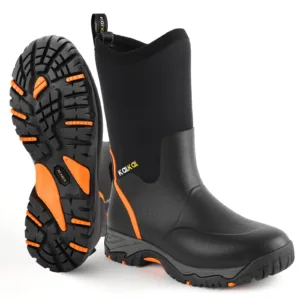
If you only do some easy logging and cutting firewood, and need to spend long days on wet ground clearing brush, maintaining fence lines, working flooded timber, or crossing the farm, these Kalkal Rubber Boots are the ones to look at.
This boot uses a flexible neoprene upper with a waterproof rubber shell to help keep your feet dry in wet conditions. The deep tread provides solid grip on mud, loose soil, and uneven forest ground, while the lightweight EVA-rubber sole cuts weight by about 30% compared to full-rubber boots, and helps reduce fatigue during long days on your feet.
These aren’t chainsaw boots, and they’re not OSHA-rated for active logging operations. But for the kind of wet-ground outdoor work where you need reliable waterproofing and all-day comfort, they cover a lot of ground that traditional logger boots don’t.
If your job involves falling object hazards, you can also choose Kalkal’s rubber boots with steel toes to get extra protection for your feet.
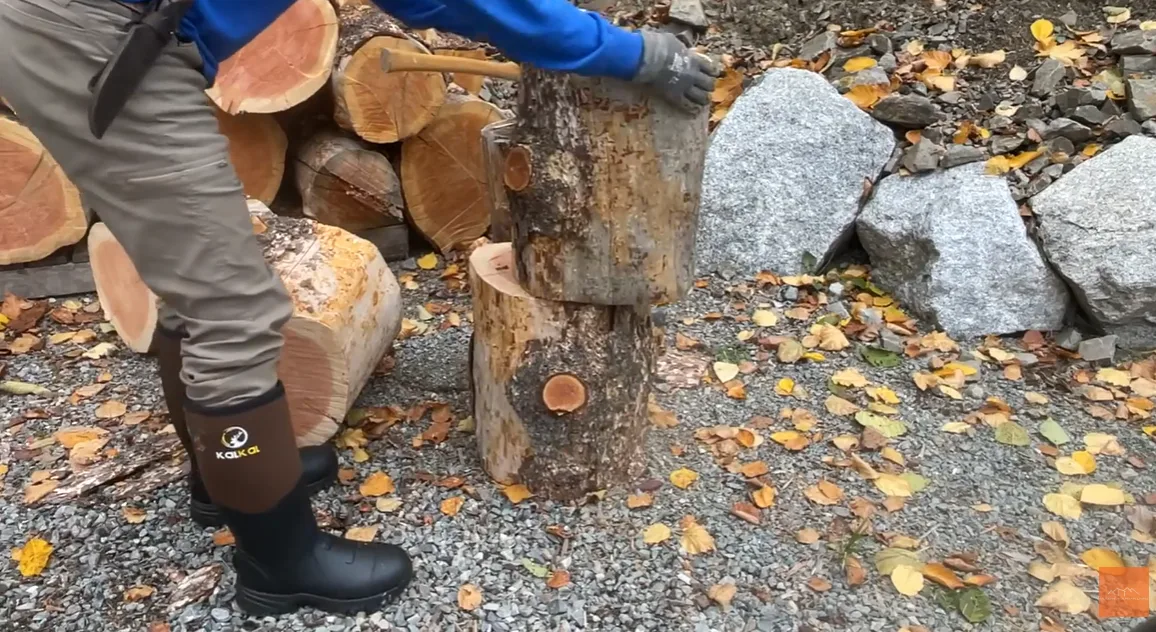
Doing some logging with Kalkal boots
Logging Boots Care Tips
Good boots last longer when you take care of them after the work is done. The good news is: rubber boots are about as low-maintenance as footwear gets.
For rubber logging boots:
- Rinse off mud right after use: dried mud is harder to remove and can work into seams over time. A quick rinse with a hose takes 30 seconds.
- Air dry naturally: don’t put rubber boots near a heat source (wood stove, radiator, direct sunlight for extended periods). Heat can cause rubber to crack or warp over time.
- Store upright in a cool, dry place: boots that sit crumpled lose their shape. A boot rack or a simple pair of boot trees helps.
- Use a rubber conditioner or protectant spray(optional): not strictly necessary, but a UV protectant spray can extend the life of rubber boots that spend a lot of time outdoors.
For leather logger boots:
- Clean with a stiff brush and leather cleaner after mud exposure
- Condition regularly with a leather conditioner to prevent cracking
- Dry away from direct heat and re-treat waterproofing after each season
Final Word
Logging work demands footwear that can handle mud, water, and long hours without breaking down or soaking through.
Traditional leather logger boots still work in the right conditions, but for most people working in wet, muddy, mixed-terrain environments, rubber logging boots are the more practical and cost-effective choice.
If you’re shopping for your next pair, focus on shaft height, outsole traction, and insole comfort, and don’t overlook rubber as an option for serious outdoor work. Check out the Kalkal Rubber Work Boots Collection for your needs.



Add comment