

*The newest Texas hunting seasons have been updated in May, 2026. Prepare for your trip now!
Texas offers some of the most diverse hunting in the country. Hunters can find pine forests in the east, Hill Country ranches, open plains, desert mountains, and thick South Texas brush all within the same state.
The state holds the largest whitetail deer population in the U.S., along with strong opportunities for mule deer, turkey, waterfowl, quail, hogs, and exotic game.
While public land is more limited than in many western states, Texas WMAs still provide solid access for hunters without private leases.
Before the season, learn the key details, including season dates, licensing, major regulations, optimal hunting timing, and several public land areas to consider.
2026 Hunting Season Dates and Zones
Texas runs one of the most complex hunting calendars in the country.
TPWD adjusts season dates annually based on population surveys, harvest data, and habitat assessments across the state.
Texas does not run a traditional zone system either. Regulations vary by county, and some counties carry antler restrictions or bag limits that differ from their neighbors, so knowing the schedule before you go saves real headaches.
Deer Hunting Seasons
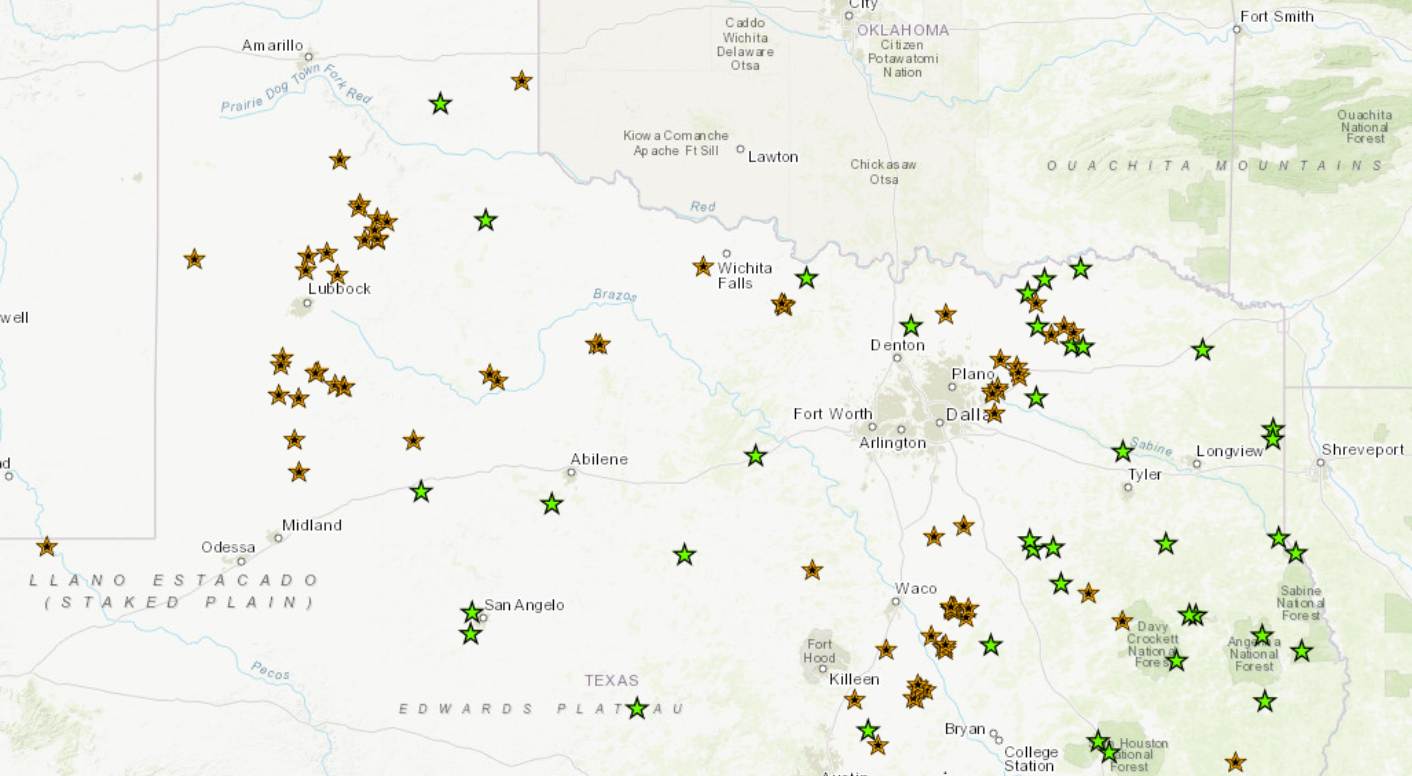
White-Tailed Deer: White-tailed deer hunting is split mainly between the North and South zones, with separate restrictions for archery and muzzleloaders.
The annual bag limit for the season is five white-tailed deer; no more than three bucks.
| Seasons | Zones | Dates |
| Archery Only | 252 of 254 counties | Oct. 3, 2026 – Nov. 6, 2026 |
| General | North Zone | Nov. 7, 2026 – Jan. 3, 2027 |
| South Zone | Nov. 7, 2026 – Jan. 17, 2027 | |
| Youth-Only (Early) | Statewide | Oct. 30, 2026 – Nov. 1, 2026 |
| Youth-Only (Late) | Statewide | Jan. 4, 2027 – Jan. 17, 2027 |
| Muzzleloader-Only | 90 of 254 counties | Jan. 4, 2027 – Jan. 17, 2027 |
| Special Late Season | North Zone | Jan. 4, 2027 – Jan. 17, 2027 |
| Special Late Season | South Zone | Jan. 18, 2027 – Jan. 31, 2027 |
Mule Deer: Mule deer regulations are highly restricted by region to protect populations in the Panhandle and western counties.
Each hunter can hunt an annual bag limit of two mule deer, no more than one buck.
| Seasons | Zones | Dates |
| Archery | Panhandle | Oct. 3 – Nov. 20, 2026 |
| Trans-Pecos | Oct. 3 – Nov. 26, 2026 | |
| General | Panhandle | Nov. 21 – Dec. 6, 2026 |
| Trans-Pecos | Nov. 27 – Dec. 13, 2026 |
In North Texas, look for the rut to peak in mid-to-late November. However, if you’re heading to South Texas (the Brush Country), don’t be too rush; the rut typically heats up until mid-December or even January.
Thanks to decent weather and rain in 2025, biologists are seeing high-quality antlers in Mason and Llano counties.
If you’re looking for a mature 4.5+ year-old buck, South Texas would be your best choice, as nearly 60% of bucks harvested there meet that age criteria.
Antler restrictions apply in a large portion of the state. Many counties require a buck to have at least one unbranched antler or meet a minimum inside spread.
Turkey Hunting Season
Spring turkey season runs from late March through mid-May in most of the state, with the Rio Grande turkey being the primary species.
Fall turkey seasons are generally timed from October to the next year, alongside the general white-tailed deer seasons.
*Note: Matagorda and Wharton counties are closed to wild turkey hunting starting this season due to population declines.
| Year | Season Type | Area | Dates |
| 2026 | Fall Season | North Zone | Nov. 7, 2026 – Jan. 3, 2027 |
| South Zone | Nov. 7, 2026 – Jan. 17, 2027 | ||
| Brooks, Kenedy, Kleberg & Willacy counties | Nov. 7, 2026 – Feb. 28, 2027 | ||
| Archery-only | Oct. 3, 2026 – Nov. 6, 2026 | ||
| 2027 | Spring General | South Zone | Mar. 20 – May 2, 2027 |
| North Zone | Apr. 3 – May 16, 2027 | ||
| East Zone | Apr. 22 – May 14, 2027 | ||
| One-turkey counties | Apr. 1 – 30, 2027 | ||
| Spring Youth-Only | South Zone | Mar. 13–14, 2027 & May 8–9, 2027 | |
| North Zone | Mar. 27–28, 2027 & May 22–23, 2027 |
Turkey Draw Hunts
Some specific turkey hunts need to be applied for; here are the details:
To apply for a turkey drawn hunt in Texas, you’ll need to use the official Public Hunt Drawing System. This system offers various hunting opportunities, including special permit hunts for turkey and other species.
- Visit the Drawn Hunts Page: Start your application by going to the Drawn Hunts page to begin your application.
- Understand the Hunt Types: The Drawing System includes Special Permit Hunts in categories like General, Youth Only, and Adult Only. There are also E-Postcard Selection Hunts available for those with an Annual Public Hunting Permit.
- Checking Your Application Status: After applying, you can check the status of your application at any time. Simply visit the Drawing System Page to verify your application status.
- Receiving Notifications: If you are selected for a hunt, you will receive an email notification at the address linked to your Customer Account. Please note that non-selected applicants will not receive any notifications.
Draw Hunt Schedules and Limits
| Zones | Season Dates | Firearms | Limits | Application Fees |
| Gene Howe WMA | Apr 16 – Apr 18, 2025 | All Archery Equipment Shotguns with Birdshot |
One Turkey; Gobbler or Bearded Hen | $3.00 |
| James Daughtrey WMA | Mar 18 – Mar 20, 2025 Mar 25 – Mar 27, 2025 |
All Archery Equipment Shotguns with Birdshot |
One Turkey; Gobbler Only | $3.00 |
| Kerr WMA | Apr 01 – Apr 03, 2025 | All Archery Equipment Shotguns with Birdshot |
One Turkey; Gobbler Only | $3.00 |
| Mason Mountain WMA | Apr 15 – Apr 17, 2025 | All Archery Equipment Shotguns with Birdshot |
One Turkey; Gobbler Only | $3.00 |
| Matador WMA | Apr 23 – Apr 25, 2025 Apr 28 – Apr 30, 2025 |
One Turkey; Gobbler or Bearded Hen | One Turkey; Gobbler or Bearded Hen | $3.00 |
| Muse WMA | Apr 01 – Apr 03, 2025 Apr 08 – Apr 10, 2025 |
All Archery Equipment and Shotguns | One Turkey; Gobbler Only; Limit 1 Adult Gobbler Only | $3.00 |
| Roger Fawcett WMA | Apr 015 – Apr 03, 2025 | All Archery Equipment and Shotguns | One Turkey; Gobbler Only | $3.00 |
| San Angelo SP | Mar 31 – Apr 03, 2025 | All Archery Equipment and Shotguns | One Turkey; Gobbler Only | $3.00 |
| Hagerman NWR | Apr 22, 2025 – Apr 24, 2025 | All Archery Equipment Shotguns with Birdshot |
One Turkey; Gobbler Only | $3.00 |
| Lower Rio Grande NWR – La Sal Del Rey | Apr 04 – Apr 06, 2025 Apr 11 – Apr 13, 2025 |
Shotguns with Birdshot | One Turkey; Gobbler or Bearded Hen | $3.00 |
| Caddo National Grasslands WMA – Bois d’Arc Unit | Apr 22 – May 14, 2025 | All Archery Equipment Shotguns with Birdshot |
One Turkey; Gobbler Only | Free |
| Moore Plantation WMA | Apr 22 – Apr 27, 2025 | None | One Turkey; Gobbler Only | Free |
| Pat Mayse WMA | Apr 22 – Apr 28, 2025 | All Archery Equipment Shotguns with Birdshot |
One Turkey; Gobbler Only | Free |
What’s New in 2026 Spring Season?
This year should be a turkey-boom year because of excellent nesting conditions in previous years. 2026 is seeing an abundance of 2-year-old birds. These are the most aggressive and fun birds to hunt because they respond eagerly to calling.
In 2026, hunters should be aware of the boundary change in Hill County. The dividing line for turkey zones is now IH-35E.
Also, Lubbock County is now officially open for spring turkey hunting, which will be a huge win for West Texas hunters.
If the spring is early, gobblers might get “henned up” quickly. If you don’t see birds in the morning, try hunting between 11:00 AM and 2:00 PM when hens leave to nest, and gobblers get lonely. Check out this Complete Turkey Hunting Guide.
Upland Birds Season Dates
| Species | Zones | Dates |
| Chachalaca | Cameron, Hidalgo, Starr & Willacy Counties | Oct. 25 – Feb. 22, 2026 |
| Pheasant | Panhandle/South Plains | Dec. 6 – Jan. 4, 2026 |
| Quail | Statewide | Nov 1 – Feb 28, 2026 |
The bag limits for each of them are:
- Pheasant: 3 cocks daily and up to 9 cocks in total
- Quail: 15 daily and up to 45 in total
- Chachalaca: 5 daily and up to 15 in total
Texas Dove Season Dates
| Season | Zone | Dates |
| Regular | North | Sep. 1 – Nov. 9, 2025 Dec. 19 – Jan. 7, 2025 |
| Central | Sep. 1 – Oct. 26, 2025 Dec. 12 – Jan. 14, 2025 |
|
| South | Sep. 14 – Oct. 26, 2025 Dec. 12 – Jan. 22, 2026 |
|
| Special White-winged Dove Days | South | Sep. 5 – 7, 2025 Sep. 12 – 13, 2025 |
Waterfowl Seasons
The main duck season typically runs from early November through late January, split across two segments the way most Central Flyway states structure it.
Teal season opens separately in September and runs for about two weeks, giving hunters a warm-weather early season option.
Hunting pressure peaks in December and January. If you can be on the water during the first week of the main season in November, you will generally see less competition and birds that have not been pushed around yet.
Ducks, Coots, & Mergansers: Texas duck seasons feature a split schedule during the winter months.
| Season | Zone | Dates |
| Regular | High Plains Mallard Management Unit | Oct. 24–25, 2026 & Oct. 30, 2026 – Jan. 31, 2027 |
| North | Nov. 14–29, 2026 & Dec. 5, 2026 – Jan. 31, 2027 | |
| South | Nov. 7–29, 2026 & Dec. 12, 2026 – Jan. 31, 2027 | |
| Youth/Veterans | High Plains Mallard Management Unit | Oct. 17 – 18, 2026 |
| North | Nov. 7- 8, 2026 | |
| South | Oct. 31 – Nov. 1, 2026 |
Goose Season Dates:
| Season | Zone | Dates |
| Early Canada Goose | East | Sep. 12 – 17, 2026 |
| Dark Geese | East | Nov. 7 – Jan. 31, 2027 |
| West | Nov. 7 – Feb. 7, 2027 | |
| Light Geese | West | Nov. 7 – Feb. 7, 2027 |
| East | Nov. 7 – Feb. 19, 2027 |
What Hunters Need to Know:
For the 2025-2026 season, the big news is the increased daily bag limit for waterfowl. Hunters can now take Northern Pintails each day. After years of restrictions, this is great for those who hunt these marsh birds.
This year, pond counts in the northern prairies were below average. This means birds may gather in larger, permanent water sources in Texas instead of being spread out in small ponds.
If you’re hunting along the coast, keep an eye on the “Blue Northers” (cold fronts) closely because that’s when new birds arrive in the Laguna Madre.
Small Game Seasons In Texas
Quail season runs from late October through late February in most of the state, though West Texas and the Rolling Plains are where bobwhite and scaled quail populations are strongest.
Mourning dove season opens in early September and runs through late October. There is no closed season for rabbits, meaning that you can hunt them anytime, and as many as you want, on both public and private lands.
| Species | Zones | Dates |
| Dove (Mourning & White-winged) | North Zone | Sep. 1 – Nov. 8, 2026 & Dec. 18, 2026 – Jan. 7, 2027 |
| Central Zone | Sep. 1 – Oct. 25, 2026 & Dec. 11, 2026 – Jan. 14, 2027 | |
| South Zone | Sep. 1 – Oct. 25, 2026 & Dec. 18, 2026 – Jan. 21, 2027 | |
| Squirrel | East Texas (General) | Oct. 1, 2026 – Feb. 28, 2027 & May 1–31, 2027 |
| East Texas (Youth) | Sep. 25, 2026 – Sep. 27, 2026 | |
| Other Open Counties | Sep. 1, 2026 – Aug. 31, 2027 (Year-Round) | |
| Quail | Statewide | Nov. 1, 2026 – Feb. 28, 2027 |
| Chachalaca | Selected Valley Counties | Nov. 1, 2026 – Feb. 28, 2027 |
| Pheasant | Panhandle / South Plains | Dec. 5, 2026 – Jan. 3, 2027 |
| Sandhill Crane | Zone A | Oct. 31, 2026 – Jan. 31, 2027 |
| Zone B | Nov. 27, 2026 – Jan. 31, 2027 | |
| Zone C | Dec. 12, 2026 – Jan. 17, 2027 | |
| Snipe | Statewide | Nov. 7, 2026 – Feb. 21, 2027 |
| Woodcock | Statewide | Dec. 18, 2026 – Jan. 31, 2027 |
Other Game Birds Seasons
| Species | Zones | Dates |
| Rails, Gallinules & Moorhens | Statewide | Sept. 19 – 27, 2026 Nov. 7 – Jan. 6, 2027 |
| Sandhill Cranes | A | Oct. 31 – Jan. 31, 2027 |
| B | Nov. 27 – Jan. 31, 2027 | |
| C | Dec. 12 – Jan. 17, 2027 | |
| Snipe | Statewide | Nov. 7 – Feb. 21, 2027 |
| Teal | Statewide | Sept. 19 – 27, 2026 |
| Woodcock | Statewide | Dec. 18 – Jan. 31, 2027 |
Season Limits References:
- Rails, Gallinules & Moorhens: 15 (Daily ) and 45 (Total)
- Sandhill Cranes: 3 (Daily ) and 9 (Total)
- Snipe: 8 (Daily ) and 24 (Total)
- Teal: 6 (Daily ) and 18 (Total)
- Woodcock: 3 (Daily ) and 9 (Total)
How Much Does It Cost For Texas Hunting Licenses?
The licenses go on sale on August 15 each year. You can buy the licenses on the official site here: Texas Online Hunting Licenses.
The following is the breakdown of the costs of Texas hunting licenses for residents and non-residents:
Resident Licenses
Texas residents can buy an annual hunting license running from September 1 through August 31. Deer require a separate tag on top of the base license.
For most hunters who pursue deer, turkey, and waterfowl in the same year, the Super Combo package is the best value because it bundles the license, tags, and stamps into one purchase at a lower combined cost.
- Resident Hunting License: $25
- Senior Resident Hunting License(65 years and older): $7
- Resident/Nonresident Youth Hunting License(under 17 years): $7
- Resident Trapper’s License: $19
- Lifetime Resident Hunting Package: $1,000
Nonresident Licenses
Non-residents pay more for the base license but still need separate deer tags on top of it, the same as residents.
If you are only making a short trip, the 5-day special hunting license covers most game species at a significantly lower cost than the full annual license.
Out-of-state hunter education certificates from any IHEA-affiliated state are accepted by TPWD. No retaking the course is required.
- Non-resident Trapper’s License: $315
- Non-resident General Hunting License: $315
- Non-resident Spring Turkey License: $126
- Nonresident Special Small Game/Exotic Hunting: $132
- Nonresident 5-Day Special Small Game/Exotic Hunting: $48
- Non-resident Banded Bird Hunting License: $27
A hunting license is required for anyone, regardless of age, to hunt any animal, bird, or frog in Texas. The license must be valid and appropriate for the type of game you intend to hunt.
In 2026, Texas is now fully digital. You can carry your hunting license on the Texas Hunt & Fish app, no paper license needed.
Texas offers a Youth License for residents and non-residents under the age of 17. This license covers hunting for all legal game birds and animals.
Texas General Hunting Regulations You Should Know
These are the rules that out-of-state hunters most often get wrong in Texas.
- Antler Restrictions by County: In counties with antler restriction rules, a legal buck must have at least one unbranched antler or meet a minimum inside spread of 13 inches. These rules apply only in certain counties, not statewide, so verify the specific requirement before you hunt.
- Tagging and Reporting: Texas requires you to tag harvested deer immediately and report the harvest through the TPWD app or by phone within 24 hours. Most other states do not have real-time reporting, so out-of-state hunters frequently skip this step without realizing it is required.
- Exotic Animals: Axis, fallow, and sika deer on Texas ranches are classified as livestock under state law, not wildlife. They can be hunted year-round but operate under different rules than native deer. Confirm tag requirements with the landowner before you hunt them.
- Sunday Hunting: Texas has no Sunday hunting restrictions on private or public land, which catches hunters from several other states off guard.
- Hunter Education: Anyone born on or after September 2, 1971, needs a hunter education certificate to buy a license. Out-of-state certificates are accepted, so carry your card.
- Bag Limits: Bag limits specify the number of game animals or birds a hunter is allowed to harvest in a single day or during a hunting season. Make sure that you follow the limits.
- Firearm Regulations: Specific rules govern the type of firearms and ammunition that can be used for hunting in Texas. Make sure your equipment complies with these regulations.
- CWD Update: The Texas Parks and Wildlife Department (TPWD) has made some rules about Chronic Wasting Disease (CWD) easier to follow. Many required check stations are now optional, but you still can’t move a whole carcass out of a CWD zone. You need to quarter it in the field first.
When Is The Best Time To Plan Your Hunt in Texas?
Rut Timing
Rut timing shifts significantly across the state.
Central Texas and the Hill Country peak in mid to late November. North Texas and the Panhandle run earlier, closer to early to mid-November, mirroring neighboring Oklahoma.
South Texas runs the latest, with peak breeding often falling in December and sometimes into January. Mule deer in West Texas rut in the second and third weeks of November, which overlaps well with the general whitetail season.
Weather Impact
The single biggest driver of daytime deer movement in Texas is a cold front. In our experience, the two to three days after the first hard cold front of November produce more buck activity than any other period.
When temperatures drop into the 40s after weeks of 70-degree weather, deer that have been largely nocturnal start moving in daylight. The Gulf Coast and South Texas stay warm into November, while the Hill Country and North Texas get genuine cold fronts in October.
West Texas swings hard between warm afternoons and near-freezing nights within the same week.
Early vs. Late Season
Early season in September and October gives you unpressured deer on predictable patterns around food and water. Bucks are not yet chasing, so you are hunting habits rather than rut behavior.
The advantage is lower pressure and velvet bucks for archery hunters. Late season in December and January means cold weather, fewer hunters, and post-rut bucks feeding aggressively to recover weight.
The tradeoff is weeks of accumulated pressure that makes deer noticeably warier by that point.
Best Week to Hunt
Put your one week in the second week of November for most of the state.
The rut is at or near peak, buck movement during daylight is as reliable as it gets in Texas, and temperatures are typically cold enough to keep deer active.
If you are hunting South Texas, shift that window to late November or early December when the rut there hits its stride.
Best Places to Hunt: Public Land Breakdown
1. Davy Crockett National Forest, East Texas (Pineywoods Whitetail)
Davy Crockett covers over 160,000 acres in Houston and Trinity counties. The terrain is pine and hardwood forest broken up by creek bottoms, clearings, and timber cuts where deer feed regularly. Stand hunting over clearings and food plots is the most effective approach here.
Pressure is moderate to heavy near main roads. Moving half a mile off any main access route puts you in noticeably less-pressured country. November weekends are the busiest period by far.
Access tip: Use Ratcliff Lake Recreation Area as your base and pull a Forest Service map before driving in.
Best fit for: New hunters and stand hunters who do not want to cover long distances on foot.
2. Llano Unit, Lyndon B. Johnson National Grassland, North Texas (Whitetail and Turkey)
LBJ National Grassland in Wise and Montague counties covers roughly 20,000 acres of rolling cross timbers, a mix of post oak, juniper, and open pasture. Stand hunting near water works well, and the open ridgelines give hunters a spot-and-stalk option that East Texas does not offer.
Pressure is lighter here than in the Pineywoods, partly because the terrain looks unremarkable from the highway. The first two weeks of November bring the most competition.
Access tip: Sandy Creek and Cottonwood Lake areas within the grassland have reliable parking and consistent deer sign.
Best fit for: Hunters willing to put in pre-season scouting and comfortable hunting without feeders or pre-built stands.
3. Elephant Mountain Wildlife Management Area, West Texas (Mule Deer)
Elephant Mountain WMA in Brewster County covers rugged Trans-Pecos terrain with juniper, sotol, and open desert flats. It is one of the only genuine public land mule deer opportunities in Texas. Access is through a competitive drawn permit, which limits pressure and keeps the experience worthwhile for those who draw.
Glassing from high points at first light is the primary method. This is not country you can hunt passively.
Access tip: All access runs through the WMA check station, so confirm your logistics with TPWD when your permit arrives.
Best fit for: Experienced western hunters comfortable with rugged terrain and open-country glassing.
4. Chaparral Wildlife Management Area, South Texas (Whitetail and Hogs)
Chaparral WMA in Dimmit and La Salle counties sits in the middle of the South Texas brush country. Dense brush, senderos, and scattered water sources define the hunting here. Stand hunting over water and along senderos is the approach that consistently produces.
The WMA runs on a drawn permit system during deer season, which keeps pressure managed. The late South Texas rut makes December hunting genuinely productive for hunters who draw a permit.
Access tip: Contact TPWD directly for parking and camp locations because the WMA is not well-signed from the highway.
Best fit for: Hunters after a genuine South Texas trophy experience who are comfortable with thick brush and patient stand hunting.
Conclusion
The most important timing takeaway for Texas 2026 is to target the second week of November for most of the state, or late November through December if you are headed to South Texas where the rut runs later.
Verify all season dates, county-specific antler restrictions, and WMA permit requirements directly through the TPWD website at tpwd.texas.gov before you finalize anything, because regulations at the county level can differ significantly from general statewide rules.
Texas hunting is worth the planning because no other state gives you this many species, this much terrain variety, and this strong a hunting culture all in one place.
Read more about nearby states:
Add comment