If you’re not cleaning your hunting boots after every trip, you’re shortening their life and possibly blowing your hunt with scent you could have scrubbed off. A solid pair of boots costs real money. A few minutes of maintenance after each outing is the cheapest insurance you can buy.
This guide covers rubber, leather, and synthetic hunting boots. We’ll go through cleaning steps for each type, then get into the maintenance work that most hunters skip: re-waterproofing, scent control, and proper off-season storage.
How to Clean Rubber Hunting Boots?
Rubber and waterproof boots are the most forgiving when it comes to cleaning. They don’t need the careful drying routine that leather demands. That said, they do build up odor faster than people expect, which is a real problem if you’re hunting deer.
What you’ll need: Garden hose or faucet, baking soda, nylon scrub brush, clean rag.
Steps:
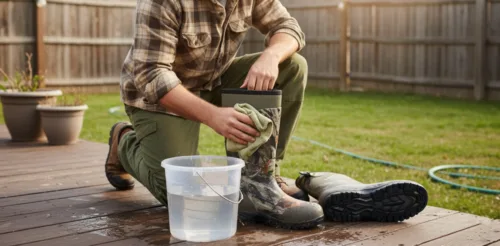
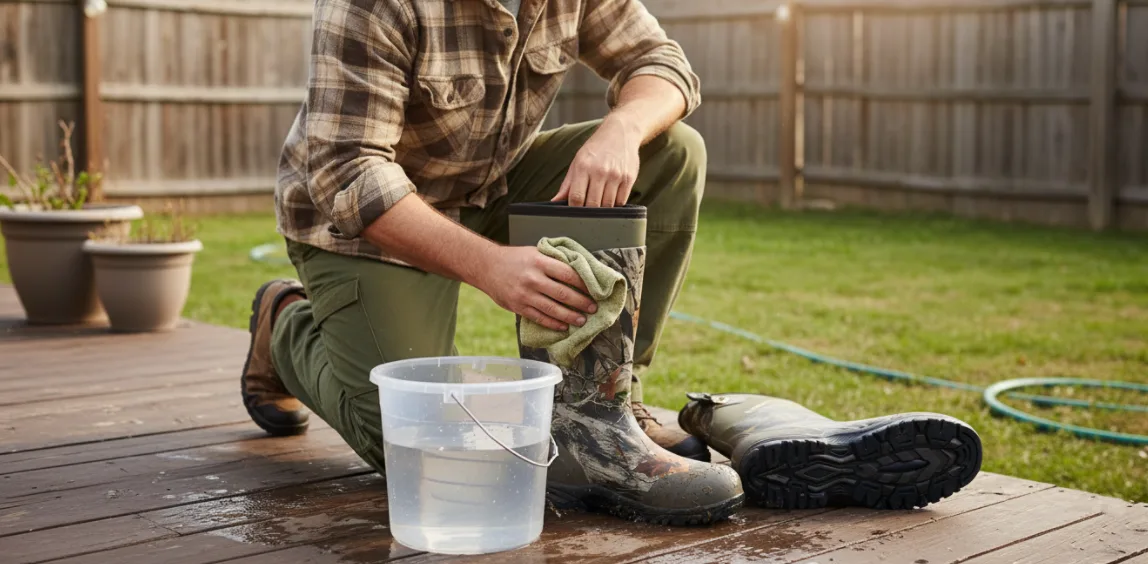
- Rinse the entire boot with clean water to knock off loose mud and debris. A garden hose works best.
- While the boot is still wet, sprinkle baking soda generously over the exterior. For the inside, pour a small amount directly in.
- Scrub the outside with a nylon brush, working in circles over any stubborn mud patches. Don’t use a wire brush; it’ll scuff the rubber surface over time.
- Rinse again thoroughly. Baking soda residue left to dry leaves a white film that’s annoying to clean off later.
- Wipe down with a clean rag and let them air dry in a shaded spot.
Why baking soda matters for hunting:
Baking soda neutralizes acid-based odors rather than masking them. For deer hunters especially, this is important because your boots walk through everything before you do, and scent left on the exterior can alert deer well before you’re in range. Make the baking soda scrub a habit, not an occasional thing.
Read More About: Can Deer Smell You in The Field?
How to Clean Leather Hunting Boots?
Leather boots need a bit more attention than rubber, but the process isn’t complicated. The biggest mistake hunters make is rushing the drying step, more on that below.
What you’ll need: Damp cloth, soft-bristled brush, old toothbrush, mild soap, newspaper.
Exterior:
- Remove the laces and insoles and set them aside. They need to be cleaned separately (hand-wash laces with mild soap; wipe insoles with a damp cloth and let dry).
- Use a damp cloth to wipe down the exterior and remove surface dirt. For dried mud, let it soften with a little warm water before wiping to avoid scratching the surface.
- Work a soft-bristled brush along the seams and welt (where the upper meets the sole) where mud loves to hide. A toothbrush is the right tool for tight crevices and stitching areas.
- Finish with a clean, damp cloth to remove any remaining residue.
Interior:
- Shake out any loose debris.
- Mix a small amount of mild soap with water. Use a soft brush to gently scrub the inside lining in circular motions. Don’t soak the interior.
Don’t skip this:
Never dry leather boots with direct heat. No heater, no campfire, no dryer. Heat pulls all the moisture out of the leather, and causes it to stiffen, crack, and split along the seams. Even leaving them in a hot car for a few hours can do damage.
Stuff both boots with crumpled newspaper and leave them in a well-ventilated room at room temperature. The newspaper absorbs moisture from the inside while the boot dries from the outside.
Swap the newspaper after a few hours if it gets saturated. Full drying usually takes 24 to 48 hours depending on how wet they got.
How to Clean Synthetic Hunting Boots?
Synthetic boots are the easiest of the three to clean. The materials handle water well, and there’s no risk of heat damage from the sun or a warm room (though you still shouldn’t dry them with direct heat).
What you’ll need: Boot brush or toothbrush, mild dish soap, sink or basin, clean cloth.
- Remove laces and insoles.
- If there’s caked mud, use a boot brush or stiff toothbrush to break it up before using water.
- Fill a sink or basin with warm water and a small squeeze of mild dish soap.
- Submerge the boots and use a brush to scrub both inside and out.
- Remove from the water and wipe down with a clean cloth to lift any soap residue.
- Leave to air dry naturally as synthetic materials dry faster than leather, usually within a few hours.
How to Waterproof and Maintain Your Hunting Boots?
Cleaning keeps your boots from degrading. Maintenance keeps them performing. These are two different things, and a lot of hunters only do the first one.
Re-Waterproofing Treatment
Every hunting boot, rubber, leather, or synthetic loses some water resistance over time.
For leather and synthetic boots, the DWR (Durable Water Repellent) coating that makes water bead up wears off with regular use. You’ll notice it happening when water starts soaking into the material instead of rolling off the surface.
When that happens, it’s time to re-treat:
- Rubber boots: Apply a silicone-based rubber conditioner spray evenly over the entire boot surface. Let it dry completely before wearing. This prevents the rubber from drying out and cracking as it ages.
- Leather boots: Apply mink oil or a dedicated leather waterproofing conditioner with a soft cloth, working it into the seams and flex points where water typically gets in first. Let it soak for five minutes, then buff off the excess with a clean cloth. The leather should look darker and slightly glossy; that’s normal.
- Synthetic boots: Use a DWR spray product designed for outdoor gear. Spray evenly, wipe off the excess, and let dry.
Re-treat at the start of each season, or anytime you notice water is no longer beading on the surface.
Scent Control for Hunters
Most boot-care guides don’t mention this, but it matters as much as waterproofing if you’re hunting deer or elk.
Boots pick up gasoline, food smells, and household chemicals just from sitting in your garage or truck, and those odors are nearly impossible to fully remove once they soak in.
After cleaning, store your hunting boots away from the garage, the kitchen, and anything with a strong chemical smell.
Many deer hunters store their boots in an airtight bag or plastic tub between hunts, sometimes adding pine needles, soil from the hunting area, or a commercial scent-elimination product.
It sounds excessive until you’ve watched a deer pick you up from 200 yards downwind.
Seasonal Storage
At the end of the hunting season, don’t just throw your boots in the corner and forget them until fall.
Clean them thoroughly first, then condition leather and rubber boots before storage. Store in a cool, dry location out of direct sunlight. UV exposure breaks down both rubber and leather over time.
Store them upright or use boot shapers to help them hold their shape. Stuffing with newspaper works too. Avoid storing in plastic bags sealed airtight for months at a time as leather needs some airflow to prevent mildew.
How Often Should You Clean Hunting Boots?
The short answer: rinse and wipe after every hunt, deep clean every two to three months, and do a full clean-plus-condition at the end of each season.
The longer answer depends on conditions. If you’re hunting in wet, muddy terrain every weekend, a quick rinse-and-scrub after each trip takes ten minutes and saves you an hour of deep cleaning later.
If you’re out in dry conditions and the boots just picked up dust and light debris, a wipe-down is enough.
| Boot Type | After Every Hunt | Deep Clean | Re-Waterproof |
| Rubber / Waterproof | Rinse + baking soda wipe | Every 2–3 months | Silicone spray 1–2× per season |
| Leather | Wipe exterior with damp cloth | Every 2 months or end of season | Mink oil or leather conditioner 1× per season |
| Synthetic | Wipe with damp cloth | Every 2–3 months | DWR spray 1× per season |
The boots that fall apart early are almost always the ones that sat wet and muddy in a corner for a week after a hunt. Cleaning them while the mud is still fresh takes half the time and effort.
FAQ About Cleaning Hunting Boots
Can You Put Hunting Boots in the Washing Machine?
For rubber boots, no. The heat and agitation from a washing machine can warp the shape and damage the rubber. For leather hunting boots, machine washing is also not recommended because excess water can damage the leather. Synthetic boots should only be machine washed if the manufacturer specifically says they are washable. When in doubt, hand-clean your boots to avoid unnecessary damage.
How Do You Get the Smell Out of Hunting Boots?
Start by removing the insoles and allowing your hunting boots to dry completely after each hunt. For rubber boots, a baking soda scrub during the cleaning process can help remove most odors. After drying, store boots with crumpled newspaper or cedar inserts inside to absorb leftover moisture and odors over time. If the smell persists, check where you store your boots because gasoline, paint, and food odors can quickly soak into boot materials and become difficult to remove.
How Do You Waterproof Leather Hunting Boots?
Start with clean, completely dry boots. Apply mink oil or a leather waterproofing conditioner with a soft cloth, paying extra attention to seams and the area around the welt. Allow the conditioner to absorb for about five minutes, then wipe away any excess. Reapply at the beginning of each hunting season or whenever water no longer beads on the leather surface.
Conclusion
Your boots cover more ground than any other piece of gear you own. A quick rinse after every hunt, a proper deep clean every couple of months, and a season-end conditioning session is all it takes to keep them performing for years.
If your current pair has given everything they’ve got, browse our waterproof rubber hunting boots, built for the same terrain you’ve been cleaning off all season.