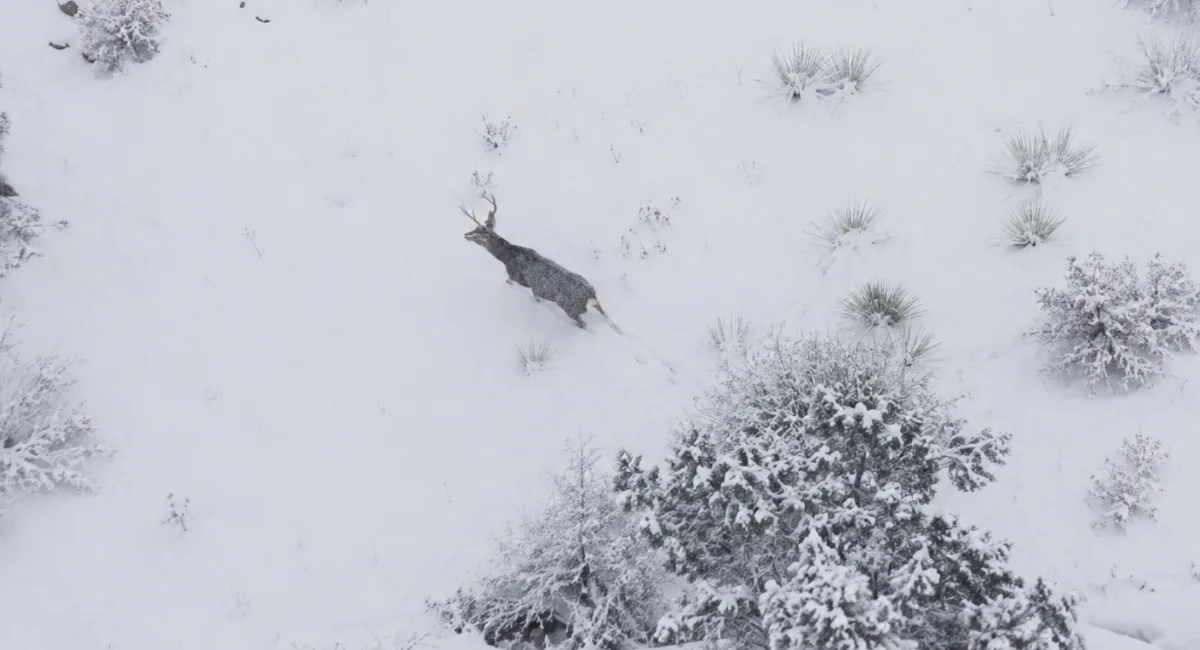
There is a certain type of cold that begins to seep into your bone structure approximately three hours after being stationary while hunting in the snow.
This cold first starts at the base of your toes, and then it makes its slow and careful way upward through your body until you are physically “tensing” and releasing all of your muscles simply to prove to yourself that you are indeed still alive.
I was in a state of utter misery from this condition as I’ve just described it, kneeling in three inches of new powder on a nameless bench in the Kootenai backcountry in north Idaho, when the winds came and slapped me squarely across the back of the neck. In that one cold, ugly moment, everything about the entire morning had shifted.
However, I’m actually jumping ahead a bit. So, let me backtrack and tell it as best as possible since the interesting aspect of this deer hunting story wasn’t the buck itself.
I would like to say here and now that I am by no means a professional hunter or outfitter. Nor do I make money from standing in front of cameras telling people about wind directions. I am simply an Idaho native who prefers to be climbing mountains or hiking through forests rather than virtually anywhere else!
Before Opening Day: Choosing the Right Spot
I’d hunted this area (Kootenai County, Idaho) for several years and I had always found this particular piece of national forest fascinating. Besides Kootenai County, I also like to hunt in the McCall area in the more central parts of the state.
In general, I break my hunting seasons between these two areas of Idaho. There are some pretty drastic differences between them.
North Idaho has dark and dense forests, along with steep terrain and trees that go straight up. A deer can literally disappear in front of you, and if you’re lucky, you may see it again 40 yards away, hidden in the foliage.
The central regions of the state near McCall, by contrast, consist of large open high valleys. Most of the time, you will spend more time spotting deer and elk with your binoculars rather than actually tracking them.
While both areas offer unique experiences and both have made me humble at times, I could say this hunt was definitely a northern Idaho experience due to the steepness of the land, the difficulty of navigating through dense woods, and the ever-present fear of stepping on a bedded deer.
I started this hunt the third week of November. By then, the “rut” had all but ended. Any foolish deer would likely be removed from the population by now, either by being harvested or killed.
What remained were ghostly shadows of what once existed. I had spent nearly two weeks now hunting and had accomplished little other than bruised toes and a developing confidence that I had somehow forgotten how to hunt.
On the night prior to this hunt, however, we received three inches of snow. This type of snow is ideal, as it provides a blank slate, which allows you to read each track anew. Instead of seeing tracks from previous days or weeks, you are viewing current information.
The next morning, it dawned dull and grey. The sky resembled the color of a nickel that has been sitting in a pocket for months. The temperature was cold enough that my truck door creaked loudly when I opened it, which alone indicated that temperatures were well below freezing.
Temperatures like this fool you, as it feels quite manageable when moving, but after sitting outside long enough, it finds its way into any gaps in your clothing.
This was public land and I was alone. As mentioned earlier, I prefer to hunt solo as I am slow, methodical, and easily distracted. When hunting with others, I dislike the idea of holding anyone back while I examine a rub for the third time.
My plan was quite simple. To arrive at first light and begin slowly working my way up the timbered side of a mountain using a technique called “still-hunting“, which involves making minimal movement while walking through an area.
Once I reached a small bench where two small drainages met, creating a naturally formed funnel, I planned to set up shop for the day.
What Made Me Hunt This Spot
It had been months since I first walked this area at the beginning of the Idaho hunting season.
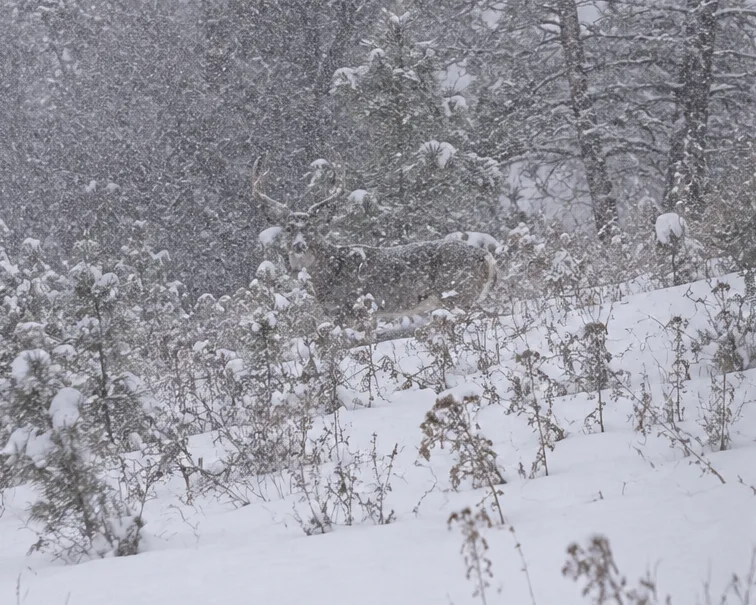
What caught my eye that earlier September day when I was scouting was a continuous line of rubs across the area from where the black timber ended and a century-old logging road began.
It wasn’t just one or two rubs; it was multiple rubs that were all connected by their location. A few were also rubbed so badly that they had torn the bark completely off, leaving long strings of bark dangling with the white wood still showing.
This is a sign of a mature buck who has made this spot home.
Another reason I knew it was the right place was what wasn’t present. There were no footprints in the dirt from boots. There was no shiny brass shell casing reflecting light. And, there was no bright orange ribbon someone had looped around a tree branch to identify a path.
This bench was roughly a mile away from the closest public road. More than half of this mile would have been a steady climb through the darkness.
Most hunters know exactly why they don’t go to this much trouble. I think for many years I sat by my tailgate and wondered the same thing!
Cold Hours of Waiting and Doubting Myself
I arrived at the bench at least forty minutes before daylight, during which time most of my time was spent either tripping over things I could not see, as well as taking one spectacular fall onto a snow-covered log (for which I am thankful there were no other people around to witness).
After I had recovered my breath, cleaned the snow off my knees and rifle (and out of one glove!), I located a large fir tree where I could sit down behind some good cover at my back, and also be able to clearly observe both valleys.
After this point, I encountered the really difficult task, which is chiefly to do absolutely nothing for a considerable amount of time while your body continues to beg you to move.
I will admit that I have little faith in using anything like bottled scents, or cover sprays. The deer in these parts are too familiar with all of the “tricks” to smell and hear them.
My overall plan was to remain completely still, so much so that I would cease being a man-shaped figure on the hillside and become simply another lumpy aspect of the hillside itself.
That may seem simple enough. However, it is far from easy, and particularly so when your toes go from being cold, to being numb, and finally to some undefined third stage.
My first hour produced absolutely nothing. The second hour yielded more of the same. The light developed slowly and without shadows, and the new-fallen snow began to take on that slightly pale color that it sometimes displays even though the sky above is completely covered by clouds.
At this point, my mind wandered completely away from reality. When a person’s body has been required to stay motionless for an extended period of time, their mind tends to follow suit.
When the Wind Changed Everything
And then comes the point where I almost blew the entire operation. By about 10 A.M., the steady, head-on wind that had blown into my face since before first light, simply stopped. It just went completely flat for an instant.
And next thing I knew, that same breeze came slapping back at me from behind. It was cold on the back of my neck, and by that time, my guts were in the bottom of my boots.
The reason I say this is that new wind was blowing straight down the very draw I’d been watching all morning, and it was pouring my scent into that funnel.
There wasn’t a faster way to empty out that entire hillside without having seen anything. Every deer downwind would take one sniff of me and be three ridges away before I even realized they were within shooting distance.
That’s when things got serious. I had to make a choice. Everything inside me wanted to stay right where I was. I had managed to get myself warmed back up, and I had a solid resting place against that fir tree.
But if I stood up now, everything I had worked hard to accomplish would go right out the window. And to top it off, I would be standing around in the snow like a big ol’ moose.
Warmth and comfort have never gotten a deer killed. I gritted my teeth and slowly stood up and made my way (as best I could) about 80 yards along the rim of the bench to turn the wind back in my favor.
When I finished, I ended up knee-deep in the powder on the opposite side of the draw, with no trees to lean against. My left leg was already starting to cramp and, needless to say, I was not happy.
One Shot, Then More Waiting
I had hardly sat on both knees before he stepped out.
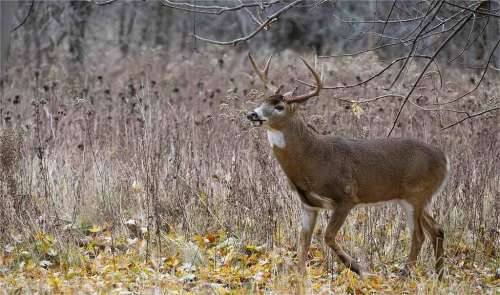
A 2×2 whitetail buck emerged from the black timber directly at the top of the draw. He moved slowly, cautiously. As bucks do, he paused frequently to raise his head and test the air. Carefulness was evident in each of his movements.
His body position was nearly perpendicular to me, about 130 yards out. At that moment, he halted abruptly. He raised his head high. Then, he sniffed the same spot in which I had just spent a considerable time struggling to extricate myself.
Had I remained there, he would have detected me immediately, and this would have been a completely different story (and likely a considerably shorter one).
I believed my heart was pounding so violently that I was concerned he could possibly feel it vibrating beneath the earth! I needed to calm myself down, slow down significantly, steady my hands, align the crosshairs of my .270 tightly on his left shoulder, and simply inhale.
I breathed deeply once. Exhaled some of it. And then I pressed the trigger.
The buck jerked upward forcefully. He lunged ahead and then crashed off into the timber.
Finding My Buck and Facing the Hardest Work
The reason hunters need to be patient even when the shot looks perfect is that we owe it to the animals to wait until they are completely down. That’s when I had to settle back down while everything inside me wanted to run over.
I put a mark right where he was standing, as well as the specific line of trees he went into before disappearing from view. After that, I waited another 15 minutes, though it felt like an hour.
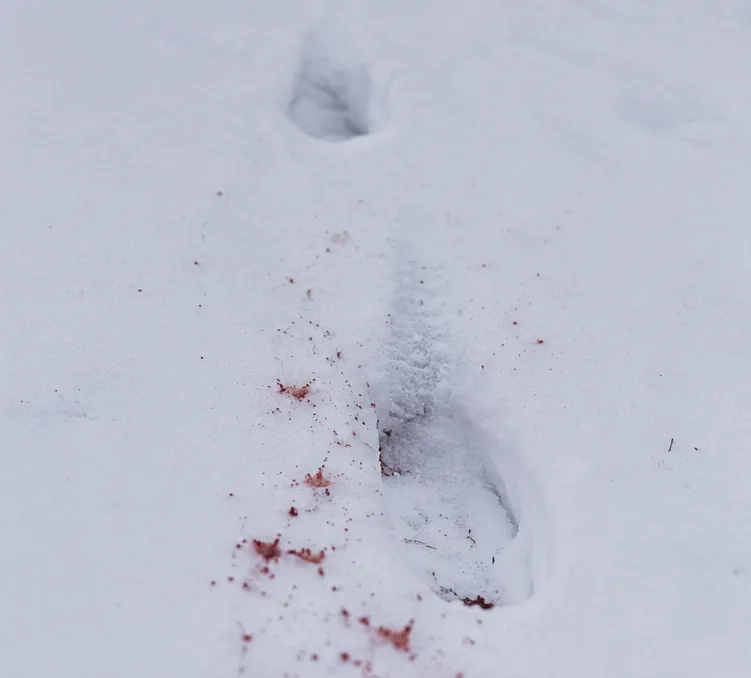
When I decided to go check on things, there was some blood at the point he was standing, and it looked very “frothy” (the term used for blood coming from the lungs), which is one of the best sights a hunter can see.
The blood trail moved into the woods from the tree line, with much easier tracking due to the recent snow. Small red drops and smudges were visible every few yards.
As soon as I reached the area where the deer was lying, I could tell that he was deceased, but I would have preferred for him to have died more quickly than he actually did.
To make things worse, I had to do a field dressing of the deer in the frigid cold and snow, where my fingers would be freezing, and after completing that, I had to start dragging him down the mountain (something many honest hunters will admit they hate doing almost as bad as anything else).
To do this, I attached a rope made of paracord to his antlers and began pulling him (mostly downhill), stopping multiple times to catch my breath.
Lessons I’ll Take Into Every Future Hunt
Here are some of the lessons I learned from this trip.
DO THE LEG WORK EARLY, THEN TRUST IT ENOUGH TO SIT
My scouting in early August gave me the confidence to locate myself before the deer migration began. This legwork allowed me to locate my stand in advance of the rest of the herd. But the fact remains, legwork only takes you to the location!
THE WIND WILL BEAT YOU EVERY SINGLE TIME
Deer are very forgiving animals. Deer will forgive small movements, some noise, and some awkward positioning by a hunter. However, deer will never tolerate the presence of human scent when they are within their comfort zone.
PACK LIGHT BUT DON’T PACK FOOLISH
The absolute least amount of gear I take includes:
- a water bottle with purification tablets and a LifeStraw filter
- a poncho, some beef jerky, and hard candies
- three methods to create fire (a lighter, matches
- a magnesium flint striker),
- a fixed blade knife
- additional rounds of ammo
- sufficient clothing to maintain body temperature
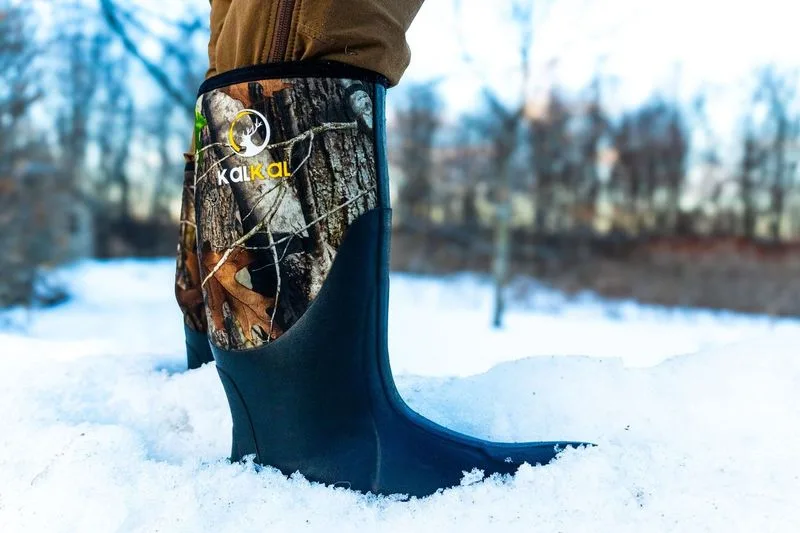
The clothing and boots I usually wear are a flannel shirt, a wool sweater, a warm coat, a warm hat, and hunting boots with Thinsulate insulation.
THE RIFLE IS NOT AS IMPORTANT AS YOU THINK
I shot my first whitetail buck at age 16 using an antique Winchester Model 1894 in .25-35 caliber (which, by the way, is a cartridge that has received virtually no respect from gun store clerks since Calvin Coolidge’s presidency).
Since then, I have primarily hunted with Winchester Model 70s in .30-06 Springfield and .270 Winchester, Ruger M77s in .308 Winchester, and Marlin 336s in .30-30 Winchester. It was the Model 70 that I held in my hands on the morning I’m referring to.
But regardless of whether I have used a Model 70 or other rifles, I have learned through the years that not a single deer has ever died due to the numbers stamped on the barrel of a rifle. They die because of the accuracy of the shooter!
Read more about: These Worst Deer Hunting Calibers You Should Never Use.
Why This Hunt Still Stays With Me
Ultimately, the most important lesson I learned from that hunt is that the mountains are not going to reward someone based on their price tag for their optics, or how much patience they have, or what beautiful rifle they have in their truck.
The mountains reward those who will adapt.
—Deer hunting story contributed by Hunter Nicholas O.