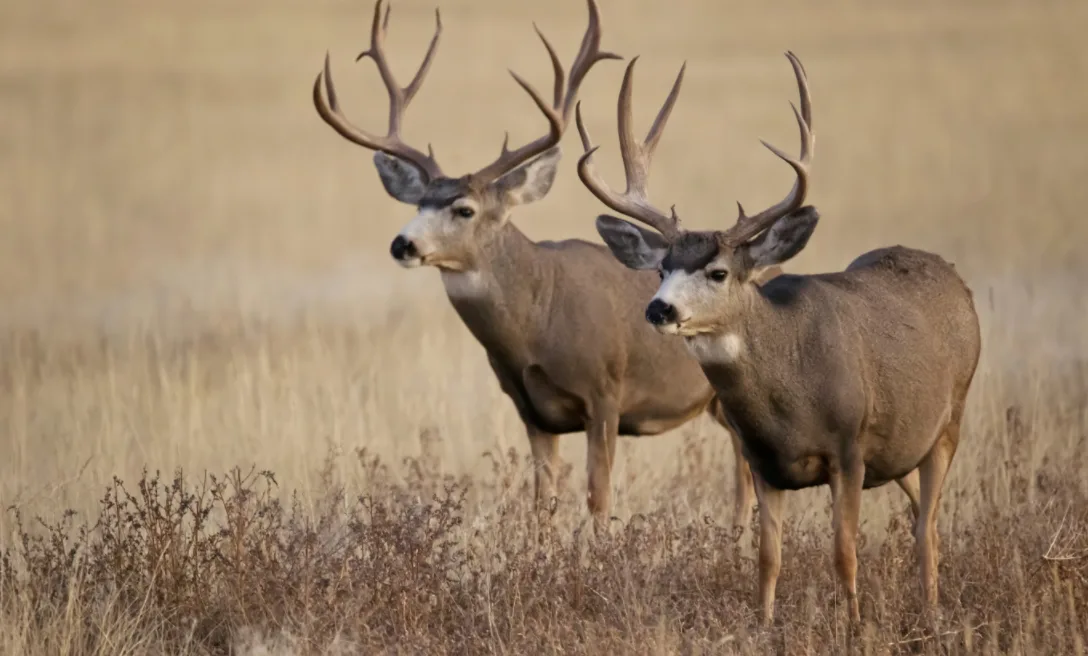
One good thing about making a mistake on a deer hunting trip is that it’s actually one of the very best ways to learn if you are willing to take the lessons to heart rather than simply placing blame on the wind, the deer, or anything else.
Admittedly, I’ve done my share of blaming. However, when I am looking at my own mistakes honestly, the majority of my years without an empty freezer were due to something that I did incorrectly, and not because the deer did something correct.
Now with that in mind, let’s get you ahead of the game by listing off ten things I have done wrong while hunting over the years in Idaho throughout both the timber of Kootenai County and the high country surrounding McCall.
Take a moment and pour yourself a cup of coffee, learn from my biggest deer hunting mistakes before your next hunt. These 10 lessons can help you avoid common errors and tag more deer.
Mistake #1: Hunting Old Sign Instead of Fresh
At first, I simply viewed signs as signs. I believed that every time there was any rub (deer rubbing) in an area, I could expect to see deer. Likewise, every time I located multiple deer tracks in a single location, it was assumed this was where the deer would be feeding for the day.
I would simply take my stand in the middle of a ripped-apart wooded area, and then spend the entire day waiting for something to show up. But usually nothing did. My problem, as I later ascertained, was that I wasn’t determining whether or not the signs were old or new.
One time during the early part of November, for example. I set up over a very heavily used deer trail that had numerous lines of deer tracks, so many that I considered this to be a deer superhighway.
I hunted this same deer trail for three consecutive days and didn’t see anything the entire time. It turned out these tracks were weeks old, and by then the deer had moved due to changes in food availability and the changing weather patterns.
I was essentially hunting a ghost area while congratulating myself!
Mistake #2: Scouting Too Much
I think this one works in reverse order, so let me explain first. For a few years, I thought if some scouting was helpful, a whole lot would have to be better. So I spent a lot of my pre-hunting hours in the spots where I’d anticipate going hunting.
I’d be walking through them, looking at them, and crawling around in the bedding areas to see who else was around. I assumed each trip gave me some sort of knowledge.
In reality, this will only make sure the deer know that a two-legged predator is always showing up in their living room! I worked over those spots so much before the season started that when I finally came to hunt them, most of the deer simply moved away from the area altogether.
I basically hunted the deer out of the county with my boots.
Mistake #3: Ignoring the Wind
If I earned money on every deer I’ve educated by letting my scent blow in an unfavorable direction, I could probably afford a whole new rifle.
In my youth, I did very little to think about the wind. I would typically climb to the highest spot possible (that provided a view) and situate myself in what seemed to be the best position based on that view. I never thought about how bad my scent was traveling.
Any hunter should be humbled by the incredible sense of smell that deer have. Deer will either hunt and survive or avoid and perish as a result of their ability to smell.
Whitetail deer, in particular, are capable of smelling a human at distances that are greater than most hunters’ senses allow, and mature bucks consistently use their noses to make decisions over their visual observations and auditory awareness.
This is precisely why I plan all aspects of hunting around the wind. Prior to selecting a hunting location, I determine which way the wind is blowing.
Then, I select the orientation of my blind so that it allows the scent carried by the wind into my face or, at a minimum, across my front.
Mistake #4: Hunting the Same Stand Too Often
The ideal spot to hunt deer is a point where two draws come together and create movement early. Early in my hunting career, I thought that as long as I could find an ideal hunting place and just sit, I’d score a deer every season. It was wrong.
Remember, deer are not dumb. Each time you went into that location, your scent was left behind on the ground. And, you may have broken some branches in the process of getting there. Deer see and hear things like that. That’s why by the end of the first week there was no longer any daytime activity coming from that location.
However, I discovered later through more scouting work that the deer were continuing to use the area; they had just begun sneaking through during nighttime hours and then resting in an area further away, because they had been alerted to my presence in the first area.
Mistake #5: Getting to My Stand Too Late
I think there is one type of remorse: you might regret leaving the truck too late while driving into an area with deer that is very specific. The number of times I have made this mistake myself is far greater than I would prefer.
When I am exhausted, and when I assume that a little extra time of sleep will make no difference (15 to 20 min) at all, is precisely when I arrive to hunt when daylight is beginning to creep over the horizon.
And that’s the absolute worst time to arrive at any hunting location because deer often move in that small window of time before dawn fully breaks. The idea is to be already positioned before the deer are even up and moving.
So if you’re walking in during first light, the deer are probably already moving, and you’ll be creating chaos in the worst manner possible!
Read more about: Best Time to Hunt Deer: When You Should Actually Go?
Mistake #6: Rushing the Shot
The memory that still gets to me is a great buck in McCall country. It was probably the best mule deer I have ever seen. At about 90 yards or so, he came into view.
A full 5×5 beautiful buck. My heart started pounding. Buck fever hit me like a ton of bricks. I raised the Springfield .308 rifle I had with me and pulled the trigger when the crosshairs were slightly beyond his chest!
And I completely missed him. I literally sailed the bullet right over his back. He took off running and disappeared into the trees, and I never saw him again.
It is safe to say that this single missed shot has given me more knowledge than any number of successful kills. There is no use shooting quickly without really aiming, and I can also assure you that the deer will run far faster than your nervous system would suggest.
To make sure I avoid this, when a deer suddenly appears from behind some trees or other vegetation, I now remind myself to breathe first before attempting to fire, because in that breath is when I’ll make sure my sights are actually on the animal before I squeeze the trigger.
Mistake #7: Tracking Too Soon
I hit a deer one afternoon. It was a really good, solid hit with the .30-30. I was excited, worried all at once, and I also had such an urge to run to him right away. That was bad. He had settled in to die from my hit; many deer do that when they are left alone.
However, when I barreled into the thicket thirty yards behind him at full speed, he woke up and started running on adrenaline. He continued on for half a mile before I could catch him again, which made a long and difficult afternoon even worse and longer than it would have been otherwise.
The fact about hitting a deer is this: the most important decision (patience) is whether you let him be (lie down) or try to follow him. When you follow him, he runs. When you allow him to lie down and stiffen up, he dies where he fell.
Mistake #8: Carrying Too Much Gear
Another common deer hunting mistake is that some hunters usually have too much gear.
I used to hunt like I was preparing for a siege! I carried a pack full of anything the catalogs said I needed. Three types of calls I had but never used. A folding saw. Extra batteries for everything.
I was too tired to even climb the mountain when I finally arrived, and I was drenched in sweat. It was miserable.
At some point, it dawned on me that almost none of this gear ever left the pack. Therefore, I took a lot of things off.
Now, the absolute least amount of items that are absolutely necessary to bring into the field includes items like the following:
- Canteen w/ purification tabs & Life Straw
- Poncho
- Jerky & hard candy
- Matches and/or lighter
- Knife (fixed blade)
- Spare Ammunition
I can carry all of those items on me in the pockets of my pants and jacket, and these are essential items that would keep me alive if I had to spend a night out in the woods.
If I take a small pack at all, it will have additional items in it, such as:
- Emergency blanket
- Hammock with straps
- Dry socks
- More fire starters
- Paracord
And that’s it! I like to travel as light as I can now when I hunt. All other calls and all other gadgets and all of the backups stay home to be utilized for other adventures.
Mistake #9: Leaving the Woods Too Early
My worst decision-making has occurred during the last hour of daylight, which is precisely when I am tired, hungry, and completely exhausted.
In fact, I remember an occasion very clearly when I was hunting on a really good funnel, and I was feeling cold and defeated. I stood up and left an hour prior to sunset.
The next morning, another hunter said he had seen a nice buck walk across that same location (the funnel) at exactly dusk. He could have shot me as I was walking away, and I would still have had an hour of daylight left on my clock.
The last hour of daylight and the first hour after sunrise are both prime time for movement. If you leave early due to being uncomfortable, then you are leaving at the highest point in terms of your odds of getting a deer.
Hunters who consistently harvest deer tend to be those who can stay seated for the final miserable hour, when everyone else has abandoned ship and is heading back to their vehicle to get warm.
Mistake #10: Hunting for Antlers Instead of the Experience
I remember when I used to be an “antler” person. I would see a perfect shot at a decent deer, yet wait for something bigger. And just like that I’d have nothing to show after a full day of hunting.
I’d leave with frustration and anger and tell myself that only a deer hunt counts if he has a set of antlers worthy of bragging about.
There have been a lot of great hunting days and deer taken because of my need to find that “number”. Currently, however, I do hunt for the experiences.
And I am so much happier as a result. While a large buck is a tremendous accomplishment, it’s not necessary to gauge the success of a hunt based on how long his antlers are.
Instead, I now measure the quality of a hunt by the morning spent, the area hunted, the challenge that came with the hunt, the food we will eat from the deer’s meat, and the stories I can share with my family and friends.
Conclusion
Looking back over all of these deer hunting mistakes as a whole, I have come to realize just how many ways they have influenced the hunter I am today.
Today, for example, I am hunting “fresh” signs as opposed to “old.” I now scout much more effectively and from a distance rather than trampling the area around my spots.
I live or die based upon the wind, vary my location throughout the season, arrive at the stand early and stay until after dark. I have slowed down on my shot and will wait longer before tracking. I carry less gear and enjoy it more.
And most importantly, I no longer chase antlers. I am now after the overall experience, and that has been the difference that makes all of the other differences worthwhile.
It did not happen easily. I earned every single one of these lessons through loss of deer and empty freezers and long walks back to the truck feeling like an idiot.
That is, however, how it works. The woods do not give you knowledge, and you have to work hard for it, one lesson at a time.
Now get out there and be proud enough to learn from your own mistakes!
—First-hand hunting story contributed by Hunter Nicholas O.