
When asking for hunting advice, I’ve been told to look for tracks, scat, and different forms of scratching for just about every critter in my woods. However, what I don’t see as much is how to read that sign, exactly what I could learn from it.
Sign can be incredibly useful for hunters pursuing whitetail, and this article will go over different types of sign and ways to read them to allow yourself as much of an advantage this fall as possible.
Fresh Sign is Better Than Big Sign
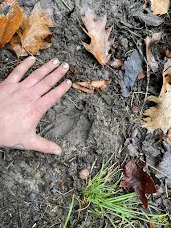
We’ve all taken a glove off to measure tracks with our hand, trying to guess the size of the gait of the mystery deer. However, when tracking deer, the freshness tells you more than the potential size.
A deer track’s size can be misleading for a number of reasons. Smaller deer can make larger tracks that don’t match their size when they step into softer ground or snow.
I’ve often come across tracks from a young deer that have left tracks that would excite any hunter.
Look to see what’s fresh; if a large sign is old, the deer may have just been passing through.
Fresh From Old
Tracks in soft mediums like snow or mud can be somewhat easier to read for freshness than other kinds of tracks.
In mud, the track will be moist, the top layer fresh, and any leaves or grass is pushed into the dirt. In snow, the small crumbs of snow will be loose and light, the print clearly marked and the impression clear and white.
Over time, the imprint will freeze and lose some definition as it melts again; the crumbled snow will stick to the track, and overall it will sag closer to the ground.
Older tracks will often have debris like leaves and grasses loosely packed in over the top of the track and its bottom.
Mud will crack as it dries, while snow often becomes stained by leaves or mud, turning the snow dark. If rain has come in the area, it will deteriorate the quality of the track quicker than baking in the sun.
Avoid Misleading Signs
While old sign is still important, it can only tell you where deer have been in the past, and rarely tells you much about where they are right now.
Keep an eye on old sign, but make sure that it lines up with the fresh stuff to ensure you stay on deer.
Deer Trails Indicate Where Deer Want to Go
Deer have preferred paths that etch themselves into a visible path. Think about how many times you’ve blindly wandered the woods and suddenly found that you walked the exact path of the local deer.
There are ways of reading these trails.
Heavy vs Light Trails
Heavily used trails stick out like neon at night when you walk by one. Unfortunately, sometimes a heavily eroded trail is simply used by humans and other critters and rarely deer.
Other times it’s a trail that’s been around for a very long time; it doesn’t get as much attention as you would think.
Light trails can give you good insight into how the deer want to veer off the trail and can show you what caught their attention.
Trail sign isn’t the most important sign to use when selecting spots to hunt from, but it is important to factor in.
Crossing Trails
Sometimes we find the areas where deer cross paths. These intersections often come at the juncture of different terrain features like several hollows or a large drainage into a narrow shelf.
These are important to note because they can often be used to trace deer travel back to bedding, food, or water sources to target.
Trail Direction
Larger trails often follow the path of least resistance between a deer’s daily visits. Smaller trails are often the ones that veer off at seemingly random directions.
This is where you need to keep in mind the surrounding bedding, food and water sources, and other features that the trails could lead to.
Deer Beds vs Trail Cameras
Depending on where the camera is located, getting a deer on camera doesn’t help you much.
You also may only find the travel patterns of does that the buck you’re looking for may or may not even be following.
However, following the deer’s bedding activity in the area can be more informative about where you can stage an ambush, providing you with the knowledge needed to make the best selection for a tree stand or blind.
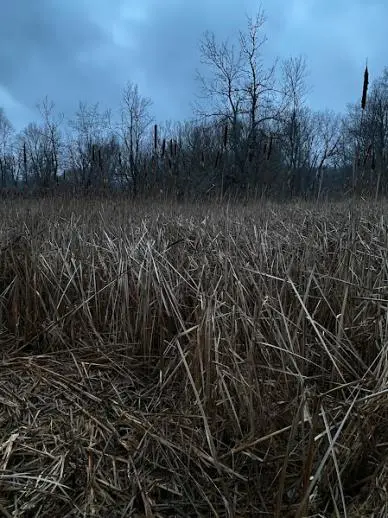
What does a deer bed look like
In warmer months, a deer bed will look like flattened grass, leaves, and other debris. Often shaped like an oval, they can be over two feet in diameter.
During the wintertime, they will be ovals of flattened snow sometimes turned to ice by the body heat of the deer.
Single vs. multiple beds
It’s thought that single beds are most likely to be made by bucks. You will find them in places where there’s some obstruction (brush, trees, a cliff), and their back and their face can be pointed into the prevailing wind.
Meaning they can smell anything coming down the trail while nothing can easily sneak up on them.
Multiple beds in close proximity usually means family groups of fawns and does. But it could also be a group of bachelor bucks depending on the time of year.
Reading the grouping of bedding can tell a hunter what to expect to see in terms of how many large or small groups travel through the area.
What beds reveal about security and pressure
Deer beds are a sacred part of deer life. Being a prey animal, they won’t lay down unless they feel safe enough to do so.
This means that there is something about this particular spot that allowed the deer to leave behind the patch of flattened grass.
Deer behavior changes when they figure it out once the first hunter’s boot touches the ground. Knowing where the most used bedding areas are can let you know where to go when the deer tighten their defenses.
What Beds tell you about how deer use the area
Beds also tell us how they navigate around the other obstacles they find between food and other needs.
Knowing where they are in relation to food and water can help a hunter figure out which particular path may be the most productive, and where their potential escape routes might loop back around to their bedding.
Not Every Rub is Worth Getting Excited About
Rubs are some of the charismatic signs that jump out at hunters as they wander the trails around their honey holes.
However, sometimes they can be misleading, especially if the deer that originally made them is no longer in the area.
Recognizing Old vs Fresh Rubs
Once you’ve seen a few good examples, fresh rubs start leaping out to you on your walks.
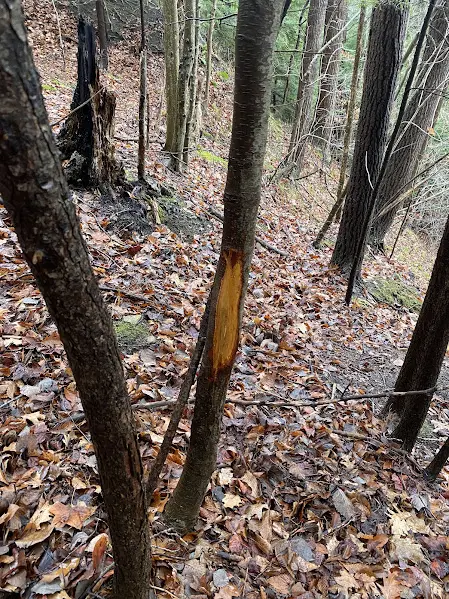
Fresh rubs will often be raggedy; strips of bark will cling to the edges, and the inner layer of the tree will be a bone to yellowish white.
Old rubs are brown to gray, older ones scarring up and making the tree grow in a lumpy way around the scar. The bark and scar will be smooth with no fraying.
Does Rub Size Matter?
Large bucks are thought to create large rubs, which on certain trees is probably true. However, this can be another misleading factor when trying to exactly size a buck from the size of its scrape.
Tree shape, antler shape, tree species, and other factors can make a smaller deer create a rub larger than people expect it to.
Buck Behavior Revealed
Rubs can tell you a few things about a buck’s personality. Sometimes you see them having a favorite tree, or creating a line of rubs to define a certain territory.
For those hunting in and around the rutting season, these are spots that a buck will check to see if any others have laid their scent. It also shows you how a buck may like to travel through the area along the terrain.
Scrapes Can Tell You What’s Happening Right Now
While fresher scrapes can last into the summer, older ones will be covered and lose their shape; the more defined the scrape, the more well used.
Focus on the ones that remain open and obviously used before finding the outliers.
Deer scrape as a way to impose their dominance on their neighbors. Deer will often compete on the same scrape, using urine and several glands. Recent deer scrapes are dark and exposed soil, under younger trees.
Don’t Forget To Look At Deer Scat
Might sound a little gross to the uninitiated, but yes, there are lessons to be learned by looking at what comes out the back end of a deer.
Mainly how to target their movements across the landscape and when they do or don’t matter.
Identifying fresh scat
Fresh droppings are steaming and shiny, normally firm, and keep their round shapes. As it ages, deer scat will dry out and harden somewhat, still retaining its shape, and will eventually mush and melt into the ground.
Deer constantly drop scat, because deer don’t wait to put their waste into one specific spot; the way that they bunch up or spread out tells you where they are concentrating their time.
You can find where the deer are feeding by seeing where the scat is building up in short areas; you can then track what deer are feeding on and where.
One thing about droppings that gets misconstrued is that the size of droppings, specifically whether it’s the normal shape or it’s clumped together into one large shape, is an indication of the sex of the deer.
However, big irregularly shaped clumps of scat have no bearing on gender and are just random results of diet and slow movement. Density and location are much more important
When is Sign Still Relevant?
Old sign can be informative to a hunter as it can tell one about what’s been going on in the area weather-wise.
Sign wears down quicker in rain and similar weather conditions. When scouting and searching for the freshest sign, sometimes there is no truly fresh sign, and instead you’re selecting the best options from day-old signs.
Weather also plays a factor. Since rain, sun, even snow all break down tracks quicker than simple exposure does, tracks that appear to be decrepit and over a week old may be from the day before but a serious rainstorm moved in overnight.
The Best Sign Before Opening Day
All signs have the potential to lead to a successful hunt. Several of my hunts have been successful one way or another based on different conditions.
One hunt would have ended in a successful harvest had I paid attention at the final moment, but I got within spitting distance of a doe I tracked into a thick swamp, having to determine where the fresh track went in a few track crossings.
Another was successful because a scrape line led to a draw that held a bedding buck. The closer to opening day you get, the more important it is to find as fresh sign as you can.
Conclusion
Often it’s not hard to find deer sign, especially in places like the East Coast where deer are thick as flies, in some areas. However, the difficult part is reading how fresh it is and if it tells you anything useful about the deer you potentially will harvest.
Freshness is king when looking at sign, but patterns and habits can still become obvious to those who consider older sign as well.
No matter what season it is, learning to read sign will make your deer hunting more successful hunter in general.
-Hunting Tips Contributed By Hunter Logan O.