

*Post last updated in: May 2026. Season info is checked via the official site.
What makes Maine worth the trip is the combination of over 17 million acres of forest, strong whitetail deer populations, one of the best black bear programs, accessible public land, and low hunter density outside southern wildlife management areas.
In our experience hunting the western mountains and the Downeast woodlands, you can go full days without crossing another hunter’s track if you know where to go.
Here we share everything you need before your 2026 Maine hunt: season dates by game type, the Wildlife Management District system, how to buy licenses and tags, rut timing, fall weather patterns, and four public land areas worth trying.
Maine Hunting Season Dates and Zones
Maine hunting season dates and bag limits can change each year slightly, so always check the current regulations before planning a hunt.
The state uses 29 Wildlife Management Districts (WMDs), and each district has its own deer density, habitat conditions, and harvest rules.
Northern Maine WMDs are mostly large timber and remote wilderness country, while southern and coastal districts generally hold higher deer populations and more private land.
Understanding your WMD is important because season dates, permit availability, and antlerless deer rules may vary by district.
Deer Hunting Seasons
Archery deer season typically opens in late September and runs through late December. Firearm season for deer falls in early to late November and usually runs about four weeks. Muzzleloader season follows firearms and typically closes in very early December.
| Seasons | Dates | Bag Limits |
| Expanded Archery Season | September 12 – December 12, 2026 | One antlered deer (at least 3 inches long) |
| Regular Archery Season | October 3 – October 30, 2026 | |
| Youth Deer Hunt Season | October 23 – October 24, 2026 | |
| Maine Resident Only Day | October 31, 2026 | |
| Firearms Season | November 2 – November 28, 2026 | |
| Muzzleloader Statewide Season | November 30 – December 5, 2026 | |
| Muzzleloader Season (zone 12, 13, 15-18, 20-26, 29) | December 7 – December 12, 2026 |
*If you have the Antlerless Deer Permits, you may take the antlerless deer.
In much of Maine, early November is usually the best time to hunt deer because the rut is active and firearm season is opening in many areas.
WMDs 12 through 18 in central and western Maine are popular for public land deer hunting and often produce solid harvest numbers.
Before hunting in northern Maine, always check current MDIFW regulations, since antlerless permit allocations and bag limits can change between WMDs each year.
Bear Season
Black bear season opens in late August and runs into November, with baiting, hound hunting, and still hunting all permitted depending on zone and date window.
Maine carries one of the highest black bear densities in the eastern United States, and harvest success rates here are legitimate.
| Season Type | Dates |
|---|---|
| Youth Bear Day | August 28 – 29, 2026 |
| Youth Bear Hunting with Dogs | September 12, 2026 |
| General Hunting Season | August 31 – November 28, 2026 |
| Hunting with Bait | August 31 – September 26, 2026 |
| Bear Trapping | September 1 – October 31, 2026 |
| Hunting with Dogs | September 14 – October 30, 2026 |
Note:
- Each hunter can only take two bears. One by hunting and one by trapping.
- The legal hunting hours are from 1/2 hour before sunrise to 1/2 hour after sunset.
Moose Hunting Season
The moose seasons vary in different hunting zones. Make sure to familiarize yourself with the units you are going to hunt in.
- Bull-Only Season( 1- 6, 10, 11, 18, 19, 27, 28): September 28 – October 3, 2026
- Bull-Only Season( 1-15, 17-19, 27, 28): October 12 – October 17, 2026
- Antlerless-Only Season(1-6, 8): October 26 – October 31, 2026
🔔*Note:
- You need to apply for the moose permit from April to May each year.
- The legal hunting hours are 1/2 hour before sunrise to 1/2 hour after sunset.
- The bag limit is one moose per year.
Turkey Seasons
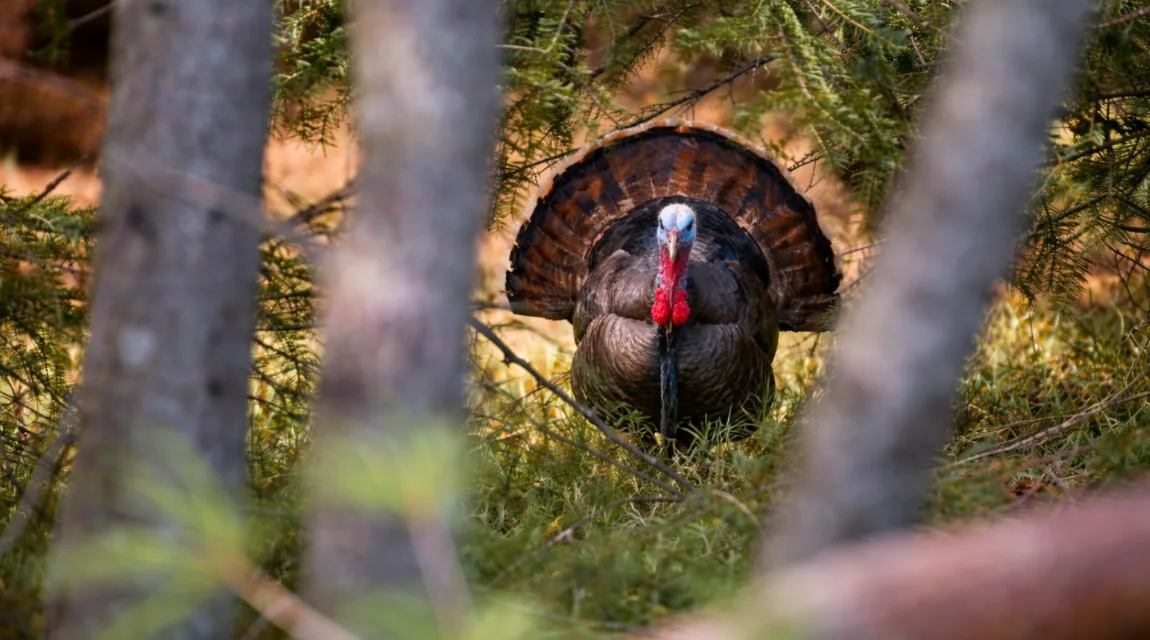
Maine has a high turkey population and vast public land. And, the spring is one of the most exciting times to be in western and central Maine, as the birds are active and responsive.
Spring turkey season runs from early May through June. Fall turkey is available in select WMDs, typically opening in September and running into November, with different bag limits.
The new season follows a similar structure each year, but there are still a few things hunters should be aware of.
Spring Turkey Season
| Hunter Type | Units | 2026 Seasons | 2027 Seasons | Bag Limits |
| All Hunters | 7, 9-29 | May 4 – June 6, 2026 | May 3 – June 5, 2027 | 2 bearded turkeys |
| All Hunters | 1-6, 8 | May 4 – June 6, 2026 | May 3 – June 5, 2027 | 1 bearded turkey |
| Youth Day | — | May 2, 2026 | April 30 – May 1, 2027 | Up to 2 bearded turkeys |
Fall Turkey Season
| Seasons | WMDs | Dates | Limits |
| General Hunting Season | 15-17, 20-25 | September 14 – November 7, 2026 | 5 Wild Turkeys |
| 26 | September 14 – November 7, 2026 | 3 Wild Turkeys | |
| 28 | September 14 – November 7, 2026 | 2 Wild Turkeys | |
| 3, 6-8, 10-14, 18-19, 27, 29 | September 14 – November 7, 2026 | 1 Wild Turkey | |
| 1, 2, 4, 5, 9 | No open seasons | ||
| Youth Fall Wild Turkey Day | Statewide | September 12, 2026 | None |
🔔*Turkey Hunting Note:
- Hunting Hours: The legal hunting time is 30 minutes before sunrise to 30 minutes after sunset.
- Shotguns: 10 to 20 gauge are standard. You can use shot sizes 4, 5, or 6.
- Small Gauges (.410 and 28 gauge): These are legal only if you use Tungsten Super Shot (TSS) sizes 7, 8, or 9.
- Bow & Arrow / Crossbow: Both are legal for turkey hunting.
- Calls: Unlike some states, electronic calling devices are legal for turkey hunting in Maine.
- Immediate Tagging: You must attach a tag to your turkey as soon as you harvest it.
- Registration: You must “check in” or register your turkey within 18 hours of the kill. Many local stores act as registration stations.
Upland Game Bird Seasons
| Species | Units | Season Dates | Daily Bag Limit | Total (Possession) Limit |
| Bobwhite Quail & Ruffed Grouse | Statewide | Sep 26 – Dec 31, 2026 | 4 | 8 |
| Pheasant | Statewide | Sep 26 – Dec 31, 2026 | 2 | 4 |
| Crows | Unit 1–6 | Aug 1 – Sep 20, 2025; Feb 6 – Apr 15, 2025 |
No limit | No limit |
| Unit 7–29 | Aug 1 – Sep 20, 2025; Jan 22 – Mar 31, 2026 |
|||
| Woodcock | Statewide | Not Released Yet | 3 | 9 |
| Snipe | Statewide | Not Released Yet | 8 | 24 |
| Sora & Virginia Rails | Statewide | Not Released Yet | 25 | 25 |
Waterfowl Hunting Season
Waterfowl seasons in Maine follow federal flyway frameworks set by the US Fish and Wildlife Service.
Duck season typically runs from September through December, with split seasons depending on species.
Coastal and Downeast Maine offer some of the best sea duck hunting in the Northeast, with eider and scoter hunting drawing dedicated hunters from multiple states every fall.
*The 2026 waterfowl season is to be determined. Please stay tuned, and we will update the info once the schedules are released.
Small Game Seasons
Small game seasons normally start in September and run through winter, with some of the species that can be hunted year-round with a valid hunting license.
| Species | Start Date | Daily Limit | Total Limit |
| Gray Squirrel (Firearms) | Sept. 26 – Jan. 30, 2027 | 4 | 8 |
| Snowshoe Hare (Statewide) | Sept. 26 – Mar. 31, 2027 | 4 | 8 |
| Raccoon | Oct. 1 – Dec. 31, 2026 | No Limit | No Limit |
| Skunk & Opossum | Oct. 19 – Dec. 31, 2026 | No Limit | No Limit |
| Coyote (Night Hunting) | Dec. 16 – Aug. 31, 2027 | No Limit | No Limit |
| Woodchuck, Porcupine, Red Squirrel | No Closed Season | No Limit | No Limit |
| Spruce Grouse, Lynx, Cottontail Rabbit | No Open Season | / | / |
▶Official Download Resources: 2026 Maine Hunting Season PDF.
Trapping Season In Maine
The following are the hunting dates and open areas of the Maine trapping seasons for certain wildlife.
| Early Fox & Coyote | Statewide | October 19 – November 1, 2025 |
| Early Muskrat | Units 1-6 & 9-11 | October 26 – November 1, 2025 |
| Beaver | Units 1-4 | October 19, 2025 – April 30, 2026 |
| Units 5, 6 & 8-11 | October 26, 2025 – April 30, 2026 | |
| Units 7 & 12-29 | October 26, 2025 – April 15, 2026 | |
| Bear | Statewide | September 1 – October 31, 2025 |
| General Trapping (bobcat, coyote, fisher, fox, mink, muskrat, opossum, otter, raccoon, red squirrel, marten, skunk, weasel) |
Statewide | November 2 – December 31, 2025 |
*Remember that it is not legal to trap any game animals that are not listed in the above seasons. There are different regulations for different species in trapping seasons; you can check them completely HERE.
Maine Hunting Licenses and Permits
The hunting license fees vary for different species, hunting methods, and your residency.
Resident License Options
Maine residents can purchase a combination hunting and fishing license that covers most game species at a bundled price.
For a typical resident deer hunter, the Resident Combination License paired with an archery permit and firearm license covers all three deer seasons and represents the best value available.
Residents who also chase bear, turkey in both seasons, or plan to trap should look at the full sporting license, which adds those species at a reasonable step-up in cost.
Non-Resident License Options
Non-residents need a base hunting license plus any species-specific add-ons that apply to their hunt.
A non-resident coming for firearm deer season needs the base license and, if pursuing antlerless deer, must apply through the lottery for an antlerless permit separately.
Maine accepts hunter education certificates from other states, so you do not need to take a Maine-specific course if you already hold a valid certificate from home.
Maine offers few license discounts for non-residents, though MDIFW occasionally runs promotions for first-time hunters as part of the recruitment efforts. Check the official regulations before buying a license.
Big Game Draw Hunts
Maine moose hunting is permit-only, and drawing a tag can be difficult, especially in the more accessible areas. Applications usually open in the spring, with northern WMDs often offering better draw odds.
If you miss the application deadline, you will have to wait until the following year to apply again.
Antlerless deer permits are also managed by WMD. Some southern districts offer more opportunities, while northern districts are typically more limited because of lower deer populations.
Hunting License and Permits Costs
| Category | License Type | Resident | Nonresident | Permit Fee |
|---|---|---|---|---|
| Deer | Firearm / Archery / Muzzleloader / Expanded Archery | $26 | — | — |
| Deer | Firearm / Muzzleloader | — | $115 | — |
| Deer | Archery / Expanded Archery | — | $75 | — |
| Deer | Deer Permit | $12 | $12 | — |
| Moose | Firearm | $26 | $115 | $52 |
| Moose | Archery | $26 | $75 | $585 |
| Bear | Firearm | $26 | $115 | $10 |
| Bear | Archery | $26 | $75 | $74 |
| Turkey | Firearm | $26 | $115 | $20 |
| Turkey | Archery | $26 | $75 | $20 |
| Bird/Small Game | Resident Small Game Hunt | $15 | — | — |
| Bird/Small Game | Nonresident Small Game Hunt | — | $75 | — |
| Bird/Small Game | Pheasant Permit | — | — | $27 |
| Bird/Small Game | Coyote Night Hunting Permit | — | — | $4 |
| Bird/Small Game | Waterfowl Permit | — | — | $7.5 |
*The costs of the Resident’s lifetime hunting licenses range from $150 to $10. The older the age, the cheaper the price.
Maine Hunting Regulations And Tips
Hunters in Maine need to follow a set of rules, regulations, and ethical guidelines to ensure safe, legal, and responsible hunting practices.
Here is a comprehensive list of what hunters need to pay attention to and follow when hunting in Maine:
- Hunting License and Permits: First, obtain the appropriate hunting license and any necessary permits for the specific game species and hunting methods. Antlerless deer require a separate permit, and it is only valid in the district where it was issued.
- Hunting Dates and Bag Limits: Sunday hunting is prohibited. Don’t hunt outside of the seasons and don’t exceed the bag limits.
- Wildlife Management District (WMD): Know the boundaries and regulations for the Wildlife Management Zones in which you plan to hunt because different districts may have different rules.
- Hunting Orange Requirement: Wear at least 200 square inches of blaze orange clothing during firearm hunting seasons to increase visibility to other hunters and avoid any accidents.
- Safe Firearm Handling: Practice safe firearm handling at all times. Keep your firearm pointed in a safe direction, keep it unloaded until ready to use, and only place your finger on the trigger when you are prepared to shoot.
- Hunting Methods: Use legal and ethical hunting methods. Baiting deer is prohibited in Maine. Several neighboring states allow it, so hunters coming from those places need to adjust their approach entirely. Attractant scents are legal, but placing food or mineral licks is not.
- Hunter Education: Complete a hunter education course if you are a new hunter or if it is required by law. This course covers firearm safety, hunting ethics, and other essential knowledge for hunters.
- Private Property: Respect private property rights and obtain permission from landowners before hunting on private lands. Be aware of land use regulations and boundaries.
- Reporting Requirements: Deer must be registered through a MDIFW check station or via the online reporting system within 18 hours of harvest. Failing to register is one of the most common violations among out-of-state hunters.
- Leave No Trace: Leave no trace by packing out all trash and adhering to ethical field dressing and game retrieval practices.
- Youth Hunting: If participating in youth hunting activities, ensure that youth hunters are supervised and educated about safe and ethical hunting practices.
- Transportation of Game: Properly tag and transport harvested game as required by law. This may include attaching a tag to the animal and keeping records of the harvest.
- Check for Updates: Regularly check for updates to hunting regulations, as rules and requirements may change from year to year.
When to Hunt During the Maine Hunting Season?
Rut Season
Maine whitetail rut typically peaks in the first two weeks of November.
Northern WMDs and higher elevations can see rut activity start a few days earlier than southern and coastal regions, but the difference is not dramatic enough to reorganize an entire trip around.
Scrapes and rubs become active in late October, and chasing behavior peaks roughly between November 4 and November 14 in most years across the majority of the state.
Cold Weather
Cold fronts moving through in late October and early November are the strongest trigger for deer movement in Maine.
After a front pushes through and overnight temperatures drop into the 30s, morning sits near ridgelines, and travel corridors can be exceptional. Warm and wet October weather consistently suppresses movement.
In our experience, the two to three days following a hard cold front during the first week of November are as productive as Maine deer hunting gets.
Early Season vs. Late Season
Early archery season in late September and early October offers warm weather, predictable food source patterns near apple orchards and oak flats, and almost no hunting pressure.
The tradeoff is thick foliage that makes shot windows tighter and wind management genuinely difficult.
Late season, after firearm pressure has moved through, produces pressured deer that are harder to pattern, but any buck that survives into late November is a real trophy in terms of wariness.
Late-season deer hunting rewards patience and favors hunters who can sit through cold mornings without rushing.
Best Timing Recommendation
If you only have one week to hunt Maine in 2026, target November 4 through 11. That window covers the firearm opener, the beginning of peak rut chasing behavior, and typically the first serious cold front of the month.
Deer are on their feet in daylight, bucks are making mistakes, and the pressure from other hunters has not fully locked deer into nocturnal patterns yet.
Best Public Land to Hunt
1. Bigelow Preserve Public Reserved Land
Terrain and habitat:
The Bigelow Preserve covers over 35,000 acres of steep ridgeline, mixed hardwood, and boreal forest in the western mountains near Stratton.
Deer transition between softwood bedding on the upper slopes and hardwood feeding areas on the lower benches. Stand hunting works well on those lower-elevation transition zones.
Still hunting along the eastern slopes during November is productive for hunters who move deliberately and manage wind carefully.
Hunting pressure:
Pressure is moderate on the main access trails and drops considerably once you are a mile beyond any trailhead. The physical demand of the terrain keeps casual hunters close to the road and rewards anyone willing to put in the walk.
The main trailhead off Route 27 near Stratton is the primary entry point. Getting past the first mile quickly separates you from most of the competition.
Best For: Hunters in good physical condition who are comfortable navigating by topo map and prepared for a real pack out if they connect on a deer.
2. Fryeburg Wildlife Management Area (Major Gregory Sanborn WMA)
Terrain and habitat:
The Sanborn WMA sits in the Saco River valley near the New Hampshire border with flat agricultural field edges, alder swales, and open meadow transitions that deer use consistently during morning and evening movement. This is stand hunting and field edge country where deer patterns are predictable when conditions cooperate.
Hunting pressure:
Opening weekend draws a crowd, but pressure spreads quickly across the property. Midweek hunting here is noticeably more productive than weekends throughout November.
Access off Route 5 is straightforward and multiple designated parking areas make day trips easy without needing to camp.
Best For: Newer hunters, hunters with limited mobility, or anyone who needs reliable deer sign without a serious hiking commitment before and after the site.
3. Duck Lake Public Reserved Land
Terrain and habitat:
Duck Lake sits in Maine’s Downeast region of Washington County, surrounded by spruce timber, mixed forest, and bog country that holds deer during the rut. Bears are also common in the area during late summer and early fall.
Still hunting works well along the bog edges and in more open terrain near the lake and outlet areas.
Hunting pressure:
Hunting pressure here is usually low because of the remote location. Many hunters stay closer to central and western Maine instead.
A truck with decent ground clearance helps on the access roads, and canoe access can reach sections that see very little hunting pressure.
Best For: Experienced, self-sufficient hunters who are comfortable in remote terrain and do not need cell coverage or nearby services.
4. Eagle Lake Public Reserved Land
Terrain and habitat:
Eagle Lake is in Aroostook County in northern Maine, where agricultural potato fields meet boreal forest.
Timber harvest openings on the surrounding public land function similarly to food plots, concentrating deer movement along predictable edges during the early season and into the rut. Stand hunting and field edge setups both work well here.
Hunting pressure:
Very light compared to central or southern Maine. The drive north filters out most casual hunters, and the deer population here is noticeably less educated about human pressure as a result.
The northern forest road system provides vehicle access to most of the property. Confirm road conditions before the trip because seasonal closures affect certain sections in early fall.
Best For: Hunters willing to drive north for an unpressured deer population. Early November is particularly productive here as rut activity in the north tracks a few days ahead of southern regions.
Conclusion
Maine remains one of the best states in the Northeast for hunters looking for large public land access, remote woods, and a traditional whitetail hunting experience.
For most deer hunters, early November is usually the best time to plan a trip because it overlaps with peak rut activity and firearm season in many areas.
Before hunting, always confirm current season dates, WMD regulations, and permit requirements through MDIFW, since rules and permit allocations can change from year to year.
Add comment